
Table of Contents
This blog post may contain affiliate links. As an Amazon Associate I earn from qualifying purchases.
Introduction
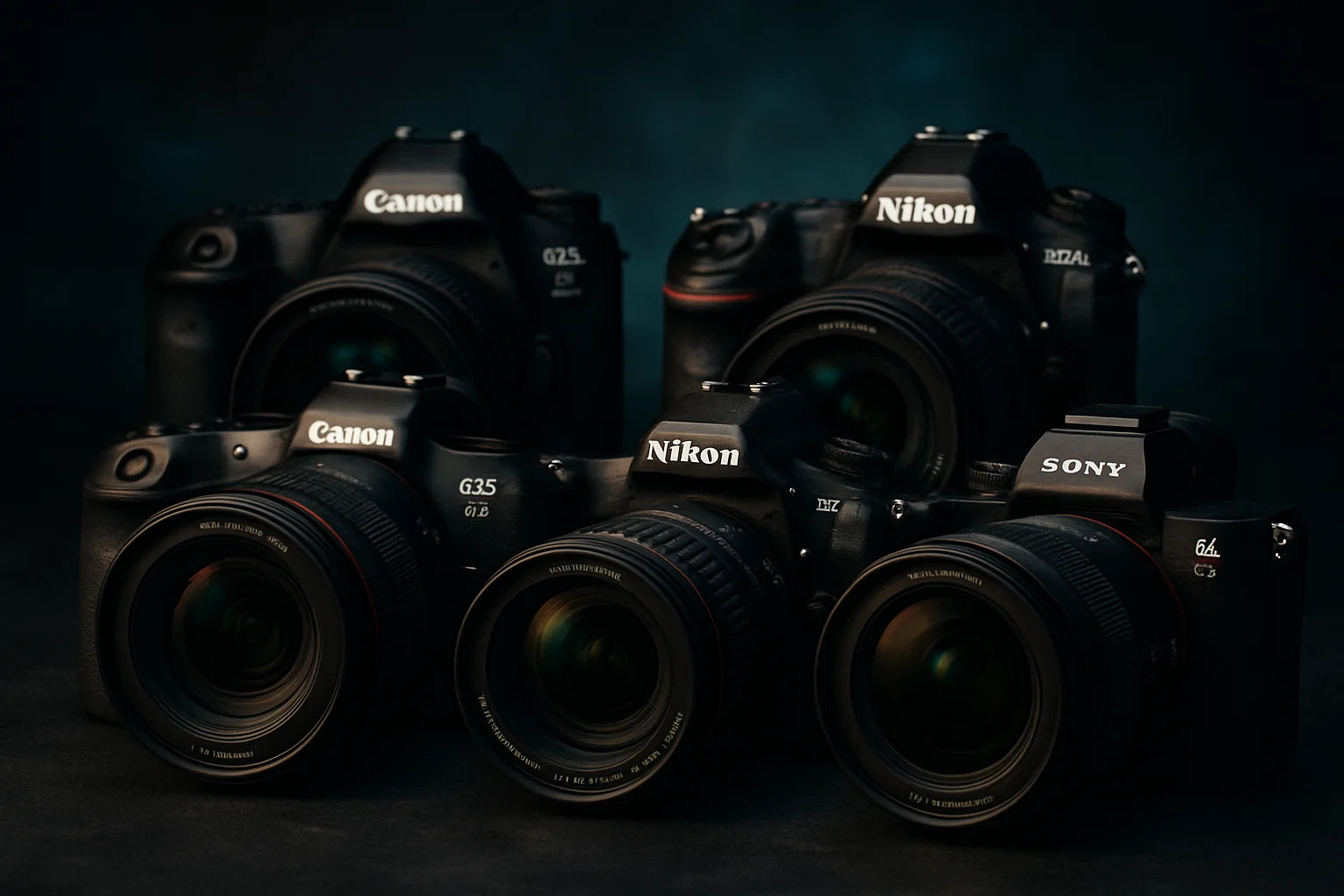
In the rapidly evolving world of photography gear, DSLRs continue to hold a meaningful place—even as mirrorless systems dominate new product launches. For small businesses, educational institutions, content creators and photography enthusiasts in the USA, understanding the top DSLR camera makes and models in 2025 ensures you invest in a camera that delivers longevity, reliability and excellent image quality.
- Why DSLRs are still relevant in 2025
- Key factors you must evaluate before purchase
- A curated list of the best DSLR camera models and makes for different budgets and use-cases
- Practical comparisons, pros/cons and use-case recommendations
- Frequently asked questions (FAQ) to help you decide
By the end of this article, you’ll be equipped to choose a DSLR camera with confidence—whether you’re upgrading an institutional photography kit, deploying equipment for corporate content creation, or supporting clients with imaging hardware.


Why Consider a DSLR in 2025?

DSLR Advantages still hold
- Optical viewfinder: Many DSLR cameras offer a traditional pentaprism optical viewfinder, delivering zero-lag real-time view. This remains a benefit for certain forms of photography like events, press or fieldwork where you rely on direct sight. Digital Camera World+2TechRadar+2
- Established lens ecosystems: For brands like Canon, Nikon and Pentax, DSLR systems have decades of compatible lenses—both native and legacy—giving excellent value and choice. DIY Photography+1
- Battery life & build quality: DSLRs often outperform similarly priced mirrorless models in endurance and weather-sealing because the optical viewfinder consumes less power. Amateur Photographer+1
- Value proposition: With new DSLR releases dwindling, existing models are often discounted and represent excellent value for imaging needs. DIY Photography
But there are trade-offs to know
- Fewer future model releases: Many manufacturers are focusing their R&D on mirrorless systems, meaning fewer new DSLR bodies. TechRadar+1
- Advanced video features lag mirrorless: If your requirement is 6K/8K video, high-frame-rate live view or in-body IBIS, mirrorless often pulls ahead. Digital Camera World+1
- Heavier and bulkier: Many DSLR bodies are larger due to the mirror mechanism and viewfinder prism, which may matter for mobile or on-the-move shoots.
Bottom line: For photographers or organisations that prioritise reliability, lens investment, still-image quality, and optical viewfinder experience, a DSLR remains a robust choice. For those entering mirrorless territory or needing cutting-edge video features, consider both options side-by-side.
What to Evaluate When Choosing a DSLR in 2025
Here are the key decision-factors you should treat as checkpoints before purchase:
Sensor size & resolution
- Full-frame vs APS-C: Full-frame sensors offer better low-light performance and depth control; APS-C bodies are lighter and often more cost-effective.
- Megapixel count: Higher resolution gives more flexibility for cropping or large prints but may result in heavier files and require faster storage.
Autofocus & burst speed
- Modern DSLRs still deliver excellent AF systems via phase-detect viewfinder AF and live-view hybrid AF.
- Evaluate continuous shooting (fps) if you shoot action (e.g., events, sports).
Lens ecosystem & mount compatibility
- What lenses are available from the brand? Are legacy DSLR lenses supported?
- For institutions or MSPs deploying across multiple users, ease of lens replacement, serviceability and availability matter.
Ergonomics, viewfinder & build quality
- Weather-sealing, dual-card slots, battery life, grip comfort matter—especially for professional or mobile users.
- Optical viewfinder vs live-view: If you still value optical view, many DSLRs excel here.
Video & hybrid functionality
- If you also need video capability, check for 4K/60fps capability, live-view autofocus performance, and features like input jacks or clean HDMI.
- While DSLRs may not match mirrorless for cutting-edge video, many still deliver robust results. (For example, some review sites list DSLR models offering 4K). TechRadar
Value & longevity
- With fewer new DSLRs being released, go-to models may be older but proven. Consider the used market, service support and future-proofing. DIY Photography+1
Top DSLR Camera Makes & Models of 2025
Here’s our curated list of DSLR models worth serious consideration in 2025, grouped by use-case:
Professional Full-Frame Workhorses
Canon EOS 5D Mark IV
- 30.4 MP full-frame sensor, Canon’s Dual Pixel CMOS autofocus system and a proven body for pro workflows. TechRadar+2Digital Camera World+2
- Balanced for stills but capable for video (4K) if required. TechRadar
- Excellent for corporates, agencies or educational institutions where reliability and lens investment matter.
Nikon D850
- 45.7 MP full-frame sensor, high resolution, outstanding image quality; often listed as the best all-round DSLR of 2025. TechRadar+1
- Strong for landscape, studio and high-detail work.
- Considered a “timeless” DSLR for those who prioritise image quality above bleeding-edge video specs.
Enthusiast / Hybrid DSLRs
Nikon D780
- Full-frame but more affordable than flagship; offers strong stills and usable video. Photography Life+2Digital Camera World+2
- Great for advanced users looking to step up without going full pro cost.
Canon EOS 90D
- APS-C format with 32.5MP resolution and 4K video capabilities. Ranked highly for everyday enthusiast use in 2025. TechRadar
- Ideal for content creators, corporate communications, social media teams who still need robust DSLR feel.
Budget / Value / Entry-Level DSLRs
Nikon D7500
- APS-C sensor, decent resolution, balanced features for enthusiasts and semi-pro shooters. Digital Camera World+1
- A strong pick if your budget is constrained but you want performance.
Pentax K‑1 Mark II
- Full-frame DSLR from Pentax/Ricoh, still developed and supported. 36-40MP range; weather-sealed and built for durability. Photography Life+1
- Limited lens ecosystem compared to Canon/Nikon, but a unique alternative for rugged use-cases such as fieldwork or outdoor corporate shoots.
ADDITIONAL OPTIONS / Considerations
- Many sources highlight that while the DSLR market is “slowing,” it still offers excellent value and serviceable gear in 2025. DIY Photography+1
- If your workflow has many legacy DSLRs and lenses, staying within the system can maximise reuse and minimise new investment.
- If heavy video, vlogging or hybrid content creation is required, mirrorless may be worth exploring in parallel.
Which DSLR Make & Model Should You Choose?
Here’s a practical breakdown by scenario:
| Use-Case | Recommended Model | Why it fits |
|---|---|---|
| Professional studio, print or landscape work | Nikon D850 or Canon EOS 5D Mark IV | High resolution, full-frame, proven build and lens ecosystems. |
| Mixed stills + occasional video, full-frame budget | Nikon D780 | Balanced spec for stills/video, good value for full-frame. |
| Enthusiast/content creator, APS-C format | Canon EOS 90D or Nikon D7500 | Great features at accessible price-point and size. |
| Rugged outdoor or fieldwork use | Pentax K-1 Mark II | Weather-sealing, full-frame, durable build for harsh conditions. |
| Legacy lens investment / upgrade path | Stay within Canon EF or Nikon F mounts | Avoid switching mounts if you already own many lenses. |
Additional Considerations for Organisations & Small Businesses
- Ensure accessory ecosystem (memory cards, batteries, chargers) is consistent and supported.
- Plan for servicing and firmware updates: older DSLR bodies may eventually no longer receive manufacturer support—check warranty and service life.
- If you integrate with video production, verify output options (e.g., HDMI, external monitor, log profiles).
- When deploying multiple kits, asset tagging, configuration management and standardisation improve uptime and support efficiency
- Training: DSLR operation still requires familiarity—give teams quick start guides and best-practice checklists for exposure, lens care, calibration, workflow.
- Budgeting: Even though DSLR price pressure is favourable, factor in lens replacements, sensors (if used heavily), and backup solutions.
FAQs
What is the best DSLR camera make for 2025?
There’s no single “best” make—but Canon and Nikon remain the dominant ecosystems for DSLRs due to lens availability, service support and body options. Pentax continues to provide a niche but strong alternative. Top models from these brands (listed above) cover nearly all professional, enthusiast and budget use-cases.
Are DSLRs still worth buying in 2025?
Yes. While new model releases have slowed, DSLRs offer excellent value, mature performance, wide lens availability and strong still-image results. As noted by DIYPhotography: “The DSLR is still an amazing tool … battery life, optical viewfinder and huge lens selections.” DIY Photography If you prioritise those features and already own DSLR lenses, it remains a viable choice.
Should I choose full-frame or APS-C in 2025?
It depends on your needs.
- Choose full-frame if you shoot professional stills, need shallow depth-of-field, print large, or work in low-light.
- Choose APS-C if you’re budget-sensitive, carry gear frequently, or shoot for corporate/social media where portability and cost matter.
What about video capabilities in DSLRs?
If you require advanced video features (e.g., 6K/8K, high-frame-rate, in-body stabilisation), mirrorless cameras may serve you better. DSLRs still perform strongly for 4K/30-60fps and high-quality stills with video secondary. For photo-first workflows, DSLRs are still very capable. TechRadar+1
Is lens support still good for DSLRs?
Yes. Canon EF and Nikon F mounts have decades of lenses. This means cost-effective upgrades, access to high-quality glass and used market deals. Pentax has fewer lenses but still supported. Choosing a DSLR system now often means leveraging existing optics rather than switching mounts.
How long will DSLRs be relevant?
While DSLR new releases are fewer, the existing catalogue of high-quality bodies and lenses means they’ll remain relevant for years—especially in still-image applications. As one review noted, “DSLRs represent proven technology at reasonable prices.” DIY Photography For organisations, this means a DSLR investment in 2025 can serve for many years with proper maintenance.
Useful Reads on Amateur Photographer Guide
- DSLR or Mirrorless: Which Camera Actually Fits Your Photography Style
- Are DSLR Cameras Better Than An iPhone?
- Best Camera for Landscape Photography: Hidden Features & Pros You Actually Use
Conclusion

Selecting the right DSLR in 2025 is about matching your real-world needs to reliable, proven hardware and supporting it with the right ecosystem.
If you focus on still-image excellence, lens investment and dependable robustness, then models like the Nikon D850, Canon 5D Mark IV, Nikon D780 or Canon 90D represent excellent choices. For rugged field use or unique workflows, Pentax K-1 Mark II offers a compelling alternative.
Happy shooting! 📸
Last update on 2026-03-13 / Affiliate links / Images from Amazon Product Advertising API