Table of Contents
- What Is a Prime Lens?
- Your First Prime Lens: The Holy Trinity
- Prime Lenses for Landscape and Night Photography
- Prime Lenses for Weddings and Events
- Prime Lenses for Travel and Street Photography
- Specialty and Creative Uses for Prime Lenses
- When Prime Lenses Don’t Work
- Frequently Asked Questions
- Making the Switch to Prime Lenses
This blog post may contain affiliate links. As an Amazon Associate I earn from qualifying purchases.
Your kit lens can do everything — zoom in, zoom out, cover events and portraits without a second thought. So why do the photos still look… average? Flat backgrounds, soft edges, and that nagging sense that the camera is holding something back.
The answer is physics. A zoom lens is engineered to be acceptable across a wide range of focal lengths. To pull that off, it makes optical compromises at every single one of them — sharpness, aperture, and light-gathering all take a hit. That’s the hidden tax beginners pay without realising it.
This guide explains exactly what photography prime lenses are, why they produce sharper and more beautiful images, and which one to buy first. We’ll cover the fundamentals, the Holy Trinity of focal lengths, and shooting blueprints for landscapes, weddings, travel, and video.
Photography prime lenses — lenses with a single fixed focal length — deliver sharper images, wider apertures, and more beautiful bokeh than zoom lenses at the same price point.
- The “nifty fifty” (50mm f/1.8) is the best first prime for most beginners, available from Canon (~$170), Nikon, and Sony (~$248)
- The Holy Trinity of primes — 35mm, 50mm, and 85mm — covers almost every photography scenario a beginner or enthusiast will face
- The Fixed-Length Advantage: being unable to zoom forces better composition and puts dramatically more light on your sensor — both improve your photos simultaneously
- The 500 Rule gives astrophotographers a precise formula: 500 ÷ focal length = maximum shutter speed in seconds before stars trail
What Is a Prime Lens?
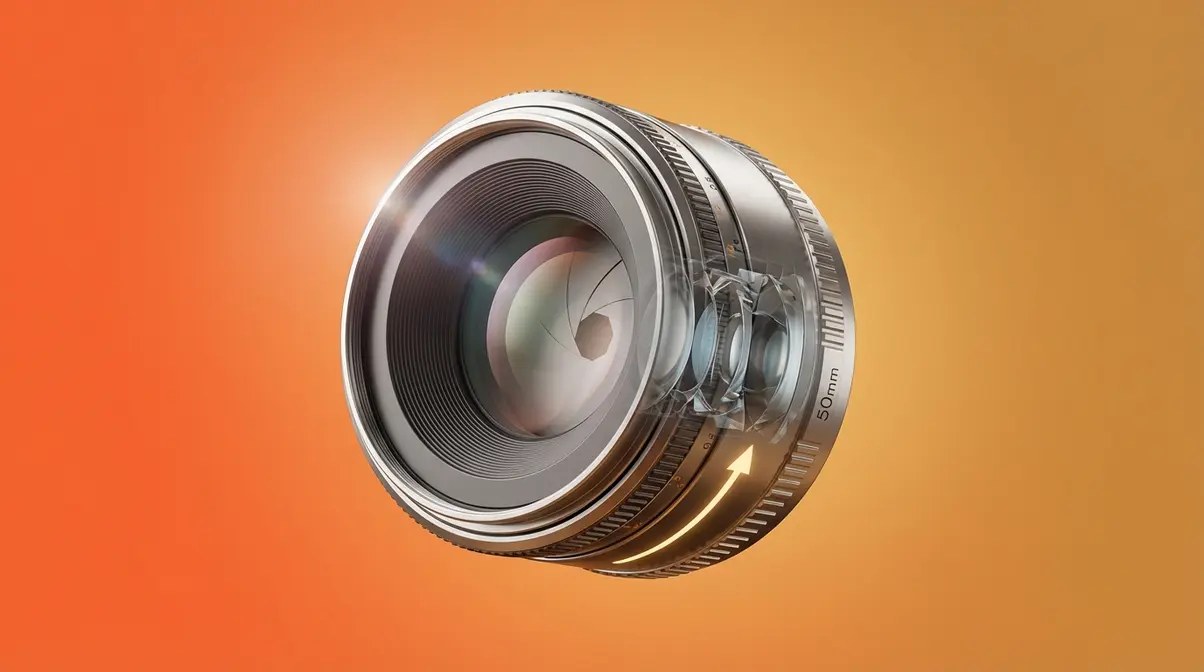
A prime lens is a camera lens built with a single, fixed focal length — it cannot zoom in or out. Because prime lenses for photography are optimised for just one focal length, manufacturers use fewer, higher-quality glass elements, which reduces chromatic aberration (colour fringing) and optical distortion. The practical result for you: sharper images, wider apertures, and a smaller, lighter lens. Explore the primary benefits and drawbacks of prime lenses to understand exactly where they shine and where they don’t.
“It is a lens with a fixed focal length. Just the one. It does not vary (‘zoom’) in focal length.”
That deceptively simple definition hides a remarkable engineering achievement. University physics principles confirm that camera optics function through a single-lens light path — the fewer optical elements that light must pass through, the more directly and faithfully it reaches your sensor (academic explanation of camera optics/University_Physics_III_-_Optics_and_Modern_Physics_(OpenStax)/02:_Geometric_Optics_and_Image_Formation/2.07:_The_Camera), Physics LibreTexts, 2026). A prime lens, with its fixed optical path, is engineered to exploit this principle fully.
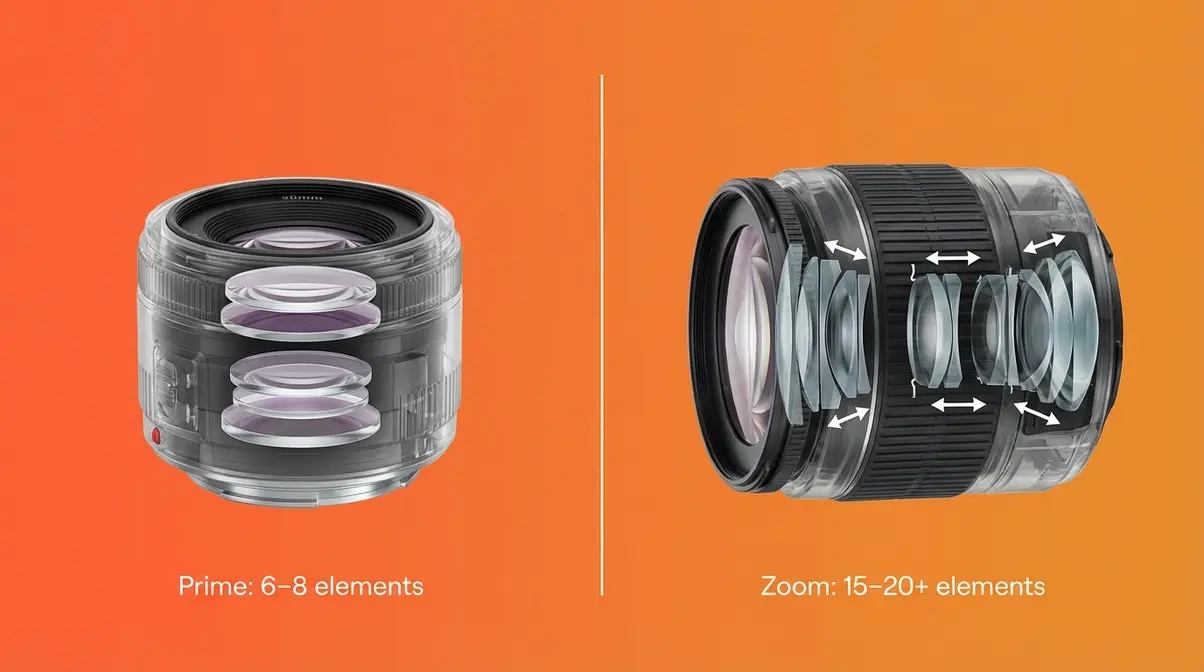
Caption: A prime lens (left) uses 6–8 fixed glass elements; a zoom lens (right) uses 15–20+ moving elements — each additional element introduces a fractional loss in image sharpness.
A Fixed Focal Length — Explained Simply
Prime lenses photography begins with understanding what “focal length” actually means. Focal length — measured in millimetres — determines how wide or zoomed-in your photo looks. A 24mm lens captures a wide sweep of the scene; a 200mm lens pulls distant subjects close.
A prime lens is manufactured with one focal length permanently built in, and its internal optical structure simply does not allow it to zoom in or out. As a definition of a prime lens from BBC Maestro confirms, a prime lens is fundamentally defined as a camera lens with a fixed focal length — its internal optical structure does not allow it to zoom in or out (BBC Maestro, 2026).
Think of a prime lens like a chef’s knife: designed to do one thing exceptionally well, rather than a Swiss Army tool that does many things adequately. Zoom lenses cover multiple focal lengths in a single barrel, which is convenient — but those extra focal lengths carry an optical cost, as we’ll see next.
Prime vs. Zoom: The Optical Trade-Off
“Prime lenses are sharper because they use fewer glass elements, which reduces chromatic aberration and optical distortion compared to zoom lenses.” (Physics LibreTexts, 2026)
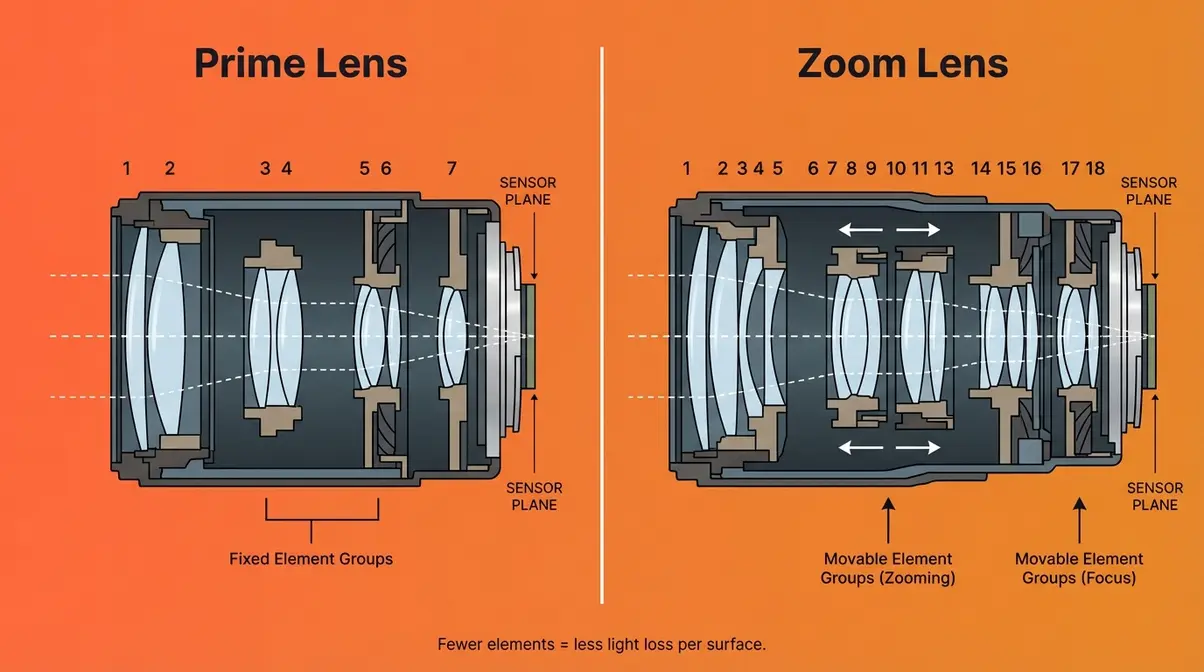
A typical photography prime lens uses 6–8 glass elements arranged in a fixed, perfectly-optimised configuration. A consumer zoom lens — like the common 18–55mm kit lens — uses 15–20 or more moving elements that physically shift position to change magnification. Each element introduces a fractional loss in clarity and can cause chromatic aberration (colour fringing around high-contrast edges, like a tree branch against a bright sky).
Because prime lenses are optimised for a single focal length, their elements are calculated to work together perfectly. No compromises, no moving parts pulling the image quality in different directions. This is why ultra-sharp primes outperform zoom lenses in laboratory sharpness tests — it’s physics, not marketing.
The aperture advantage is even more striking. A ZEISS comparison of prime and zoom lens restrictions notes that while prime lenses’ fixed angle of view can feel restrictive, that same fixed design enables maximum apertures that consumer zoom lenses cannot match (ZEISS Lenspire, 2026).
| Feature | Prime Lens | Zoom Lens |
|---|---|---|
| Focal Length | Fixed (e.g., 50mm) | Variable (e.g., 18–55mm) |
| Maximum Aperture | f/1.4 – f/1.8 (typical) | f/3.5 – f/5.6 (typical consumer) |
| Sharpness | Optimised for one focal length | Compromised across the range |
| Size & Weight | Compact and light | Larger, heavier |
| Price (entry level) | $100–$250 | $200–$500+ |
Those optical advantages show up most dramatically in three specific superpowers that prime lens shooters gain the moment they remove the zoom ring.
The Three Superpowers of Prime Lenses
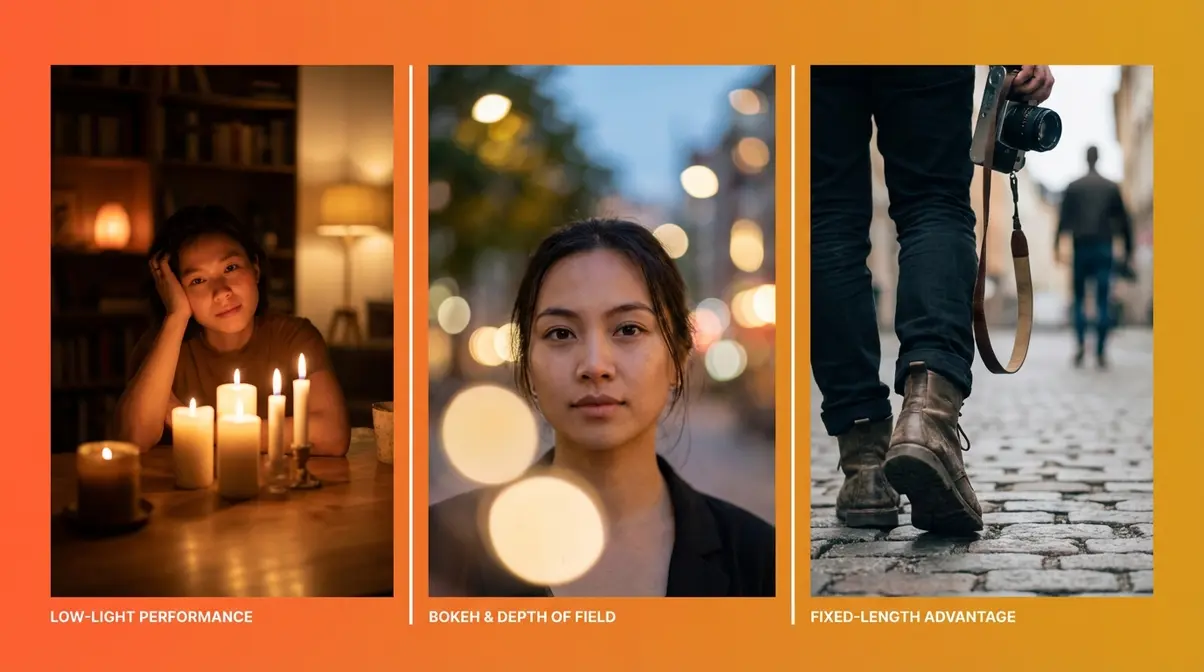
1. Low-light performance. Aperture — the opening in the lens that controls how much light reaches your camera sensor, measured in f-stops — is where prime lenses dominate. A 50mm f/1.8 prime admits approximately 9× more light than an 18–55mm kit lens sitting at f/5.6. This means you can shoot at lower ISO (the camera’s sensitivity to light) settings, producing cleaner images with less digital grain in evening or indoor environments. Canon’s overview of prime lens advantages confirms that because prime lenses lack complex zooming mechanisms, they generally offer much larger maximum apertures — a significant advantage for low-light photography (Canon, 2026).
2. Bokeh and depth of field. Bokeh (pronounced “BOH-kay”) is the pleasing blur that appears in the background of a photo when the subject is sharp. It’s created by a shallow depth of field — the narrow zone in front of the lens that appears in focus. Wide apertures like f/1.8 produce dramatically shallower depth of field than f/5.6, making backgrounds melt away into smooth, creamy blur. Shoot a family portrait indoors at f/1.8 versus f/5.6 — the difference in background separation and light-gathering is immediately visible.
3. The Fixed-Length Advantage. This is the use of prime lenses in photography that surprises most beginners. The Fixed-Length Advantage is the counterintuitive principle that removing your ability to zoom simultaneously improves optical quality, forces better creative decisions, and reduces the lens’s size and weight. When you cannot zoom, you must “zoom with your feet” — moving physically to find the best framing. Across professional photography communities, the consensus is that this compositional discipline trains your eye faster than any camera setting or post-processing trick.
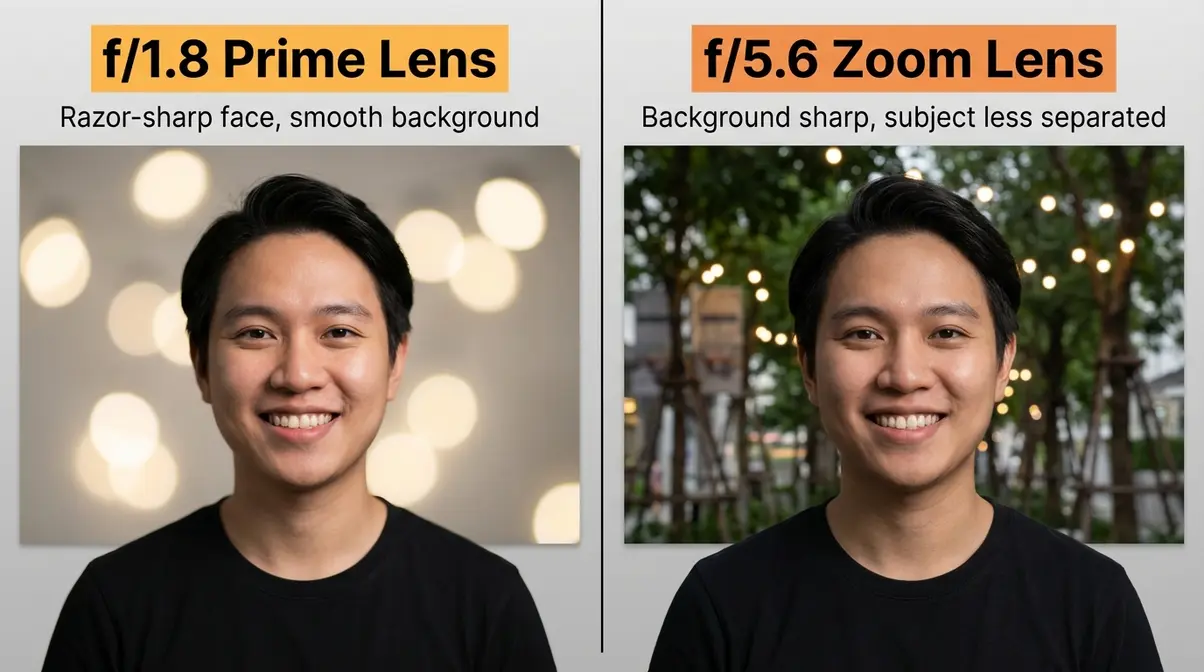
Caption: At f/1.8 (left), the prime lens melts the background into smooth bokeh; at f/5.6 (right), the zoom lens keeps background detail sharp and distracting.
Understanding these superpowers is one thing. Knowing which prime lens to buy first is another. That’s where the Holy Trinity of prime lenses comes in.
Your First Prime Lens: The Holy Trinity
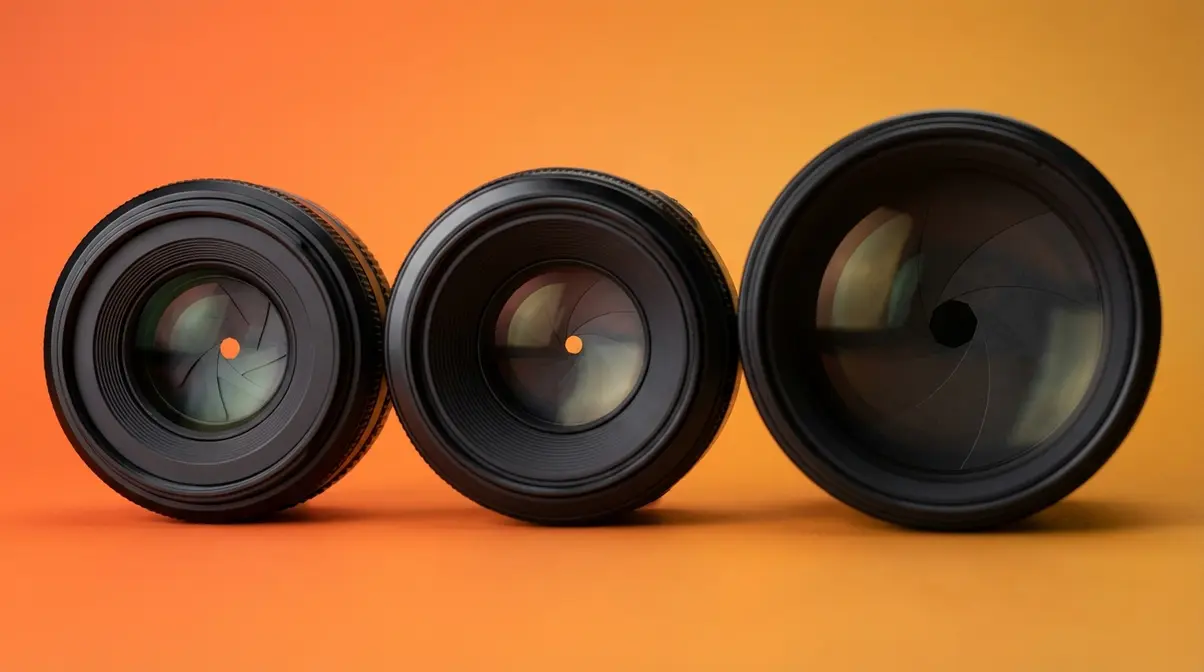
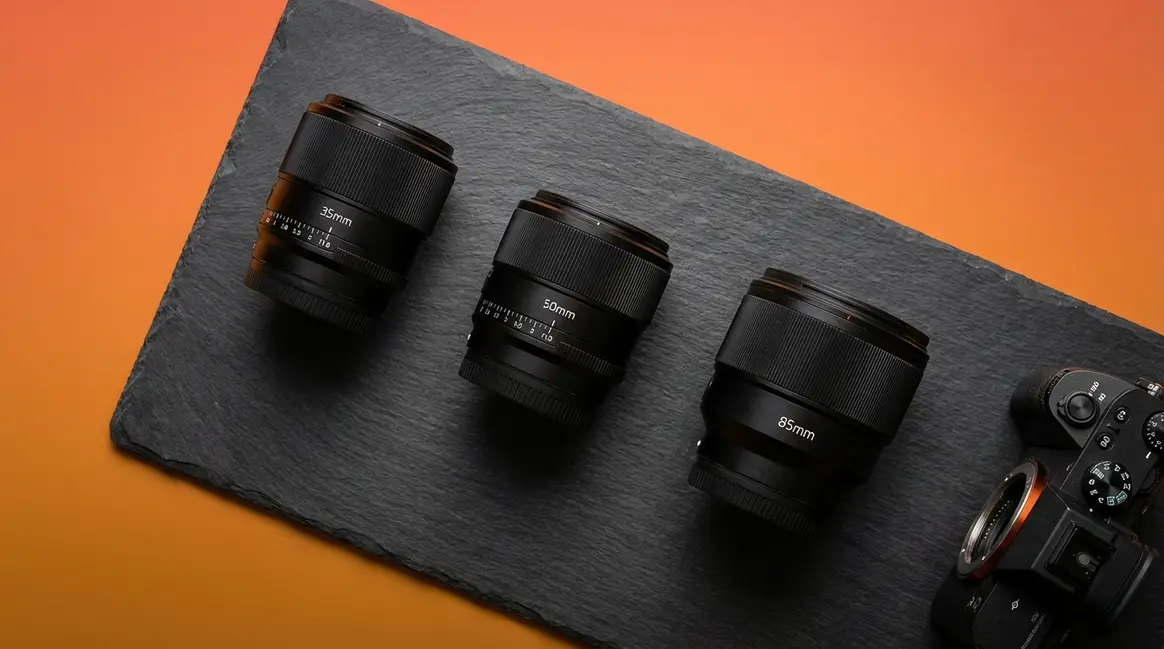
The best prime lenses for photography beginners fall into three focal lengths — 35mm, 50mm, and 85mm. Together, they’re known as the “Holy Trinity” of prime lenses. Each one does something specific brilliantly. And most photographers agree you should start with just one — the 50mm.
“The Holy Trinity of prime lenses — 35mm, 50mm, and 85mm — covers wide-angle environments, everyday scenes, and flattering portrait compression in a three-lens kit weighing less than 1 kg combined.”
As the holy trinity of lenses explained by Nikon confirms, a “holy trinity” describes a highly sought-after lens setup designed to seamlessly cover wide-angle, standard, and telephoto focal lengths (Nikon, 2026). Discover the holy trinity of essential lenses for a deep dive into how each focal length complements the others.
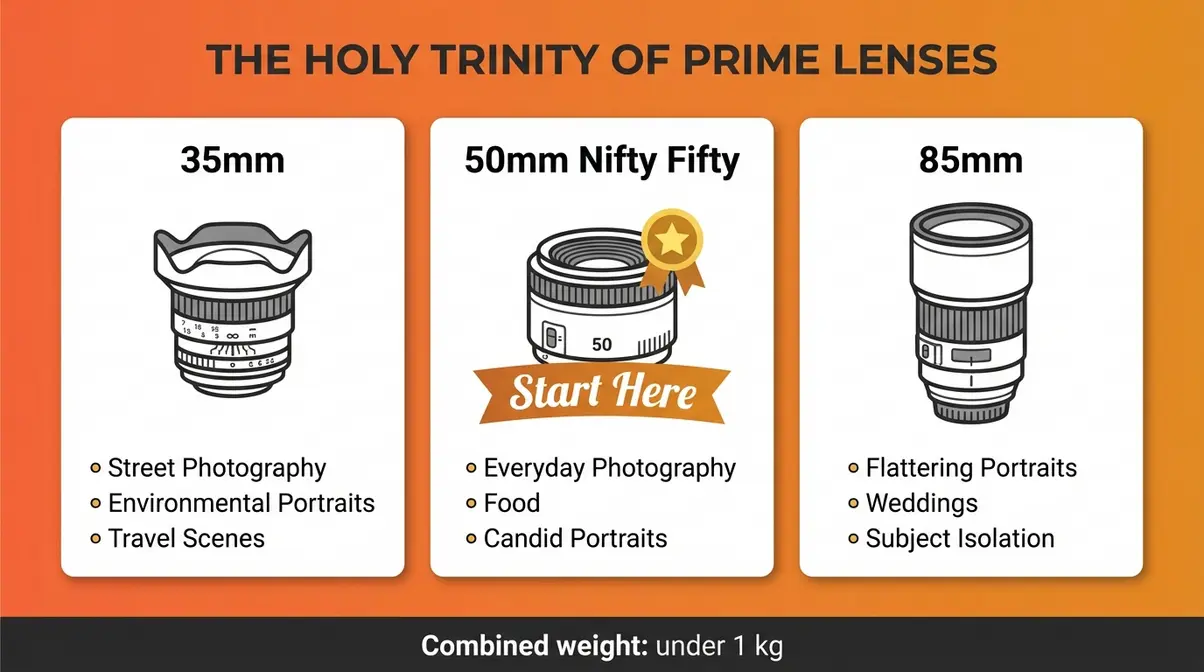
Caption: The Holy Trinity at a glance — 35mm for environments, 50mm for everyday scenes, 85mm for portraits. Combined weight under 1 kg.
The 35mm — Your Walk-Around Companion
Prime lenses photography at 35mm delivers a field of view slightly wider than your natural human vision — not dramatically wide-angle, but with just enough extra context to capture a scene’s environment alongside its subject. It’s the lens you reach for when location matters as much as the person in the frame.
On a full-frame camera, the 35mm feels open and immersive. On an APS-C (crop sensor) camera — which has a sensor smaller than a full-frame — a 35mm behaves like approximately a 52mm equivalent (using Nikon/Sony’s 1.5× crop factor), making it feel closer to a standard lens than a wide-angle. For street photography, travel, and environmental portraits, this perspective is ideal: you capture both the subject and the lively environment surrounding them.
Shooting a street market, for example — the 35mm shows the spice stalls, the crowd, and the vendor’s expression simultaneously. A 50mm would crop more of the background; an 85mm would eliminate it almost entirely. Entry-level 35mm primes from Canon (EF 35mm f/2 IS USM, ~$450), Nikon (AF-S 35mm f/1.8G DX, ~$200), and Sigma (35mm f/1.8 Art, ~$500) suit beginners well.
If the 35mm is your eyes wide open, the 50mm is your eyes at rest — and it’s the lens most professional photographers recommend buying first.
The 50mm Nifty Fifty — Start Here
At $169.99 for the Canon EF 50mm f/1.8 STM (Canon USA, 2026), no other lens at this price point delivers f/1.8 performance — making the 50mm the single highest-value prime purchase for beginners exploring the best prime lenses for photography.
The 50mm field of view closely approximates natural human vision on a full-frame sensor. Photos taken at 50mm look neither wide nor artificially zoomed — they look natural. This makes it immediately versatile across portraits, street work, food photography, and everyday moments.
The “nifty fifty” nickname refers specifically to the 50mm f/1.8, available from Canon, Nikon, and Sony (the Sony FE 50mm f/1.8 typically retails around $248–$278). At f/1.8, the nifty fifty gathers approximately 9× more light than a kit lens at f/5.6, and produces beautiful subject separation in portraits. Photographing a friend at a dinner table at f/1.8 — the candlelit background goes silky smooth, the subject’s face is razor sharp, and no flash is needed.
Once you’ve mastered the 50mm, the natural next step in the Holy Trinity is the lens specifically engineered to make people look their best — the 85mm.
The 85mm — The Portrait Specialist
The 85mm creates something called focal compression — subjects appear to have slightly more flattering proportions because of the lens’s longer working distance. Wide-angle lenses can subtly distort facial features when used close up (making noses appear larger, ears smaller). The 85mm avoids this entirely by placing you further from the subject. Naturally, it works well for prime lenses for wedding photography, where flattering portraits matter most.
At f/1.8, the 85mm produces the most dramatic subject separation of the three Holy Trinity lenses — backgrounds blur further and more completely at this focal length than at 35mm or 50mm. A couple photographed at their engagement session: the 85mm places you 2–4 metres away, far enough to feel unobtrusive, while f/1.8 melts the background into a creamy blur behind naturally-proportioned, sharp faces.
Entry-level options worth considering: Canon EF 85mm f/1.8 USM (~$380), Nikon AF-S 85mm f/1.8G (~$480), Sony FE 85mm f/1.8 (~$600). For those ready to invest further, the Sigma 85mm f/1.4 Art (~$900) represents a meaningful step up in optical quality.
Now that you know what to buy first, let’s look at one of the most compelling specialisations for prime lens shooters — landscapes and night photography, where primes genuinely have no equal.
3 Essential Prime Lenses
Photography prime lenses at three focal lengths cover the vast majority of shooting situations: a 35mm for wide-angle environments and street scenes, a 50mm for natural everyday photography, and an 85mm for flattering portraits. Together, they address roughly 95% of scenarios a beginner or enthusiast will encounter. Most photographers purchase them one at a time, starting with the 50mm f/1.8 — and for those on a tight budget, the 50mm alone covers the majority of everyday photography effectively.
With your starter kit understood, let’s go deeper into two very different scenarios where prime lenses absolutely shine — wide-open landscapes and dark night skies.
Prime Lenses for Landscape and Night Photography
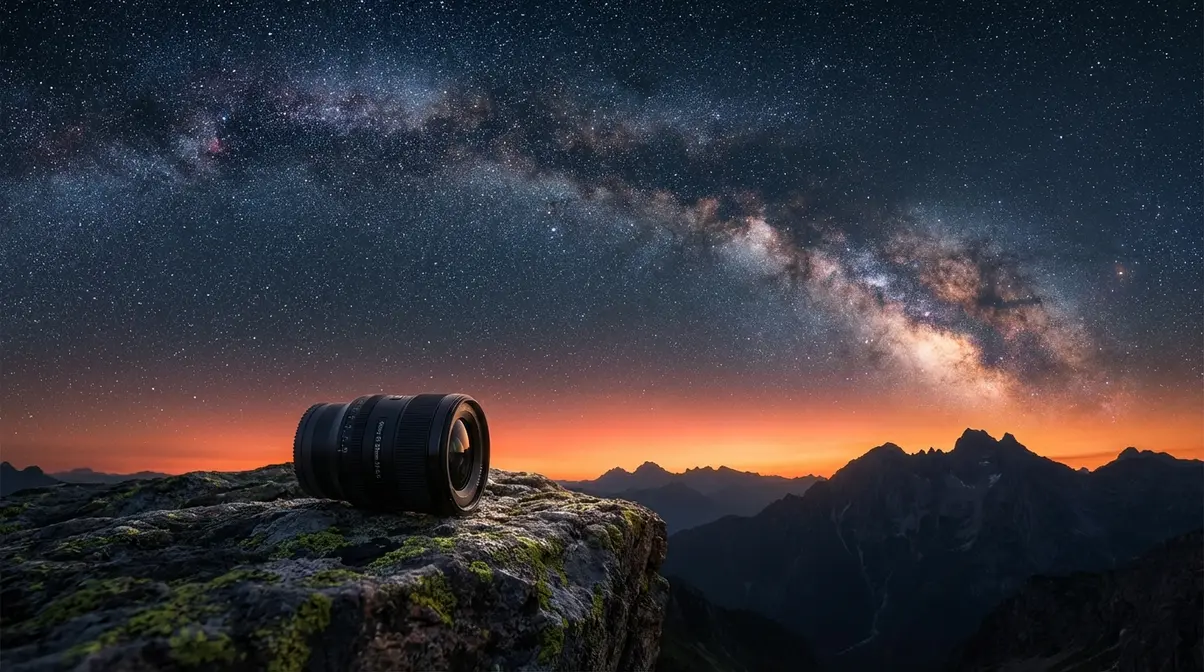
Landscape photography with prime lenses offers one advantage that wide-angle zoom lenses simply cannot match: corner-to-corner sharpness at maximum aperture. A 20mm f/1.8 prime wide open produces sharper edges than most wide zoom lenses stopped down to f/4. At night, that extra aperture width is the difference between a clear Milky Way and a blurry smear. Browse top lens choices for Milky Way photography for specific gear recommendations beyond this guide.
“For astrophotography on a full-frame camera with a 20mm prime lens, the 500 Rule gives a maximum shutter speed of 25 seconds before star trails become visible.” (NASA JPL, 2026)
Prime lenses for landscape photography excel because their fixed optical design can be perfectly engineered for corner-to-corner performance — a zone where zoom lenses routinely soften, even when stopped down. For large-format landscape prints, the corner sharpness difference between a prime and a zoom is visible and significant.
Landscape Primes: 20mm and 24mm
Prime lenses for landscape photography at 20mm and 24mm represent the sweet spot for dramatic wide-angle compositions. The 20mm captures sweeping foreground-to-sky scenes — ideal for mountain ridgelines, coastal rocks, and desert plains where distance and scale are the subject. Recommended: Sony FE 20mm f/1.8 G (~$900) and Sigma 20mm f/1.4 DG HSM Art (~$850).
The 24mm offers a slightly tighter perspective, excellent when you want a distinct foreground subject without the extreme distortion that very wide lenses can introduce at the corners. The Canon EF 24mm f/2.8 IS USM (~$550) is a reliable, compact option for Canon shooters.
Both focal lengths outperform a typical 16–35mm f/2.8 zoom at the corners when shooting wide open — crucial for large-format landscape prints. As benefits of prime lenses in low-light settings from Sony confirms, a prime lens with a wide aperture in low-light environments allows photographers to use faster shutter speeds and lower ISO, drastically reducing image noise (Sony, 2026).
A practical example: shooting the Milky Way over a mountain ridge with the Sony 20mm f/1.8 G at f/1.8, ISO 3200, 25 seconds — both the stars above and the foreground rocks below appear sharp simultaneously.
Caption: Left: 20mm prime at the 500 Rule limit (25 seconds, full-frame) — pinpoint stars. Right: exposure exceeded the limit — visible star trails due to Earth’s rotation.
Knowing which lens to use at night is only half the equation. The other half is knowing exactly how long to leave your shutter open — and that’s where the 500 Rule comes in.
500 Rule: Astrophotography Blueprint
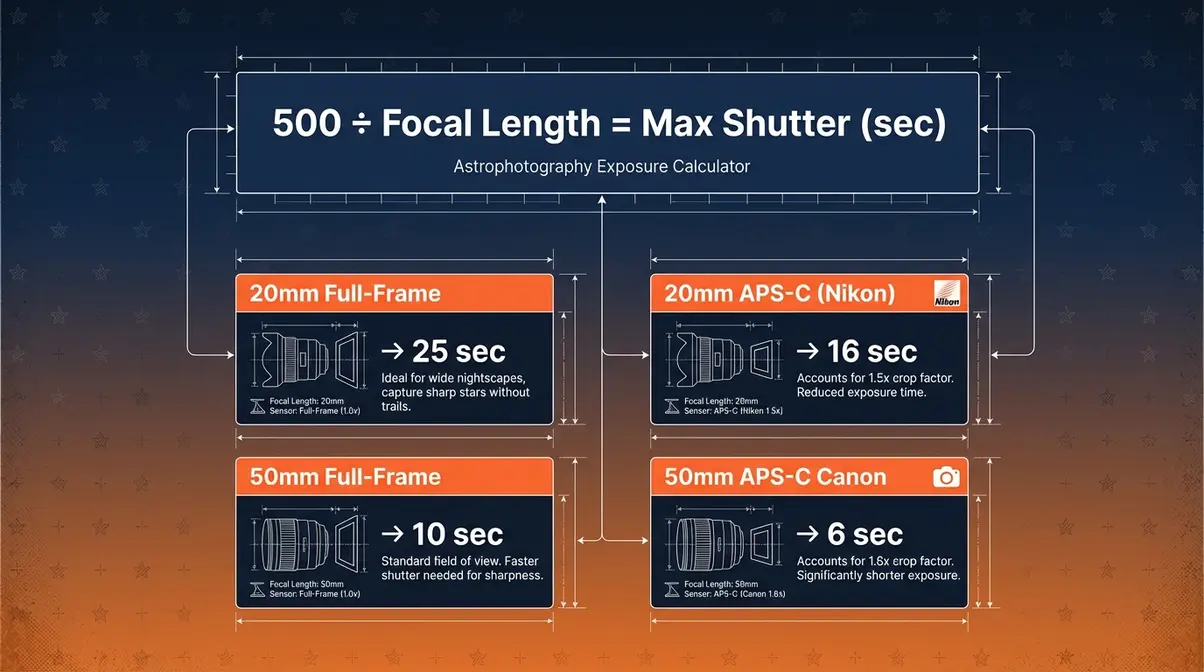
The 500 Rule is a mathematical formula used in astrophotography to calculate the maximum shutter speed before stars begin to trail in a photo due to Earth’s rotation. Divide 500 by your lens’s effective focal length — the result is your maximum exposure time in seconds. Exceed it, and pinpoint stars become short streaks.
How to apply the 500 rule for astrophotography from Sony Alpha Universe confirms the formula: dividing 500 by a lens’s focal length yields the maximum exposure time in seconds before star trails become visible (Sony Alpha Universe, 2026). NASA JPL’s guidance on astrophotography exposure reinforces that capturing the night sky requires careful calculation of exposure times to prevent star trailing caused by Earth’s rotation (NASA Jet Propulsion Laboratory, 2026).
Follow these steps for any camera and lens combination:
- Identify your lens focal length — for example, 20mm.
- Identify your sensor type — full-frame or APS-C (crop sensor).
- Apply the crop factor if using APS-C — Nikon, Sony, and Fujifilm APS-C cameras multiply by 1.5×; Canon APS-C cameras multiply by 1.6×. A 20mm lens on a Nikon APS-C camera has an effective focal length of 20 × 1.5 = 30mm.
- Divide 500 by the effective focal length:
- 500 ÷ 20 = 25 seconds (full-frame)
- 500 ÷ 30 = 16 seconds (APS-C Nikon/Sony)
For a 50mm prime on a full-frame camera: 500 ÷ 50 = 10 seconds maximum. Anything longer and the stars will trail visibly.
| Sensor | Focal Length | Effective FL | Max Shutter (500 Rule) |
|---|---|---|---|
| Full-frame | 20mm | 20mm | 25 sec |
| APS-C (Nikon/Sony) | 20mm | 30mm | 16 sec |
| Full-frame | 50mm | 50mm | 10 sec |
| APS-C (Canon) | 50mm | 80mm | 6 sec |
Canon prime lenses for night photography require particular attention to crop factor — as the table shows, a Canon APS-C shooter with a 50mm has only 6 seconds before trailing begins, making a wider 20mm or 24mm prime the smarter choice.
With landscape covered, let’s move to one of the most demanding environments a prime lens faces — the chaos and low light of a wedding day.
Crop Sensor Math: The APS-C Factor
An APS-C camera (also called a crop sensor camera) has a physically smaller sensor than a full-frame camera. Because the sensor captures a smaller portion of the lens’s image circle, the photo appears more “zoomed in” — this is the crop factor.
Crop multipliers: Nikon, Sony, and Fujifilm APS-C = 1.5×. Canon APS-C = 1.6×.
Practical implication: a 50mm nifty fifty on an APS-C Canon body behaves like an 80mm — significantly more telephoto than you might expect when buying it for “natural vision” portraits.
| Lens | Full-Frame Feel | APS-C Nikon (×1.5) | APS-C Canon (×1.6) |
|---|---|---|---|
| 20mm | Very wide | ~30mm | ~32mm |
| 35mm | Moderate wide | ~52mm (normal) | ~56mm (normal) |
| 50mm | Natural vision | ~75mm (portrait) | ~80mm (portrait) |
Understanding crop factor also matters when you move indoors to events — the effective focal length changes how you position yourself in a small reception venue.
Prime Lenses for Weddings and Events
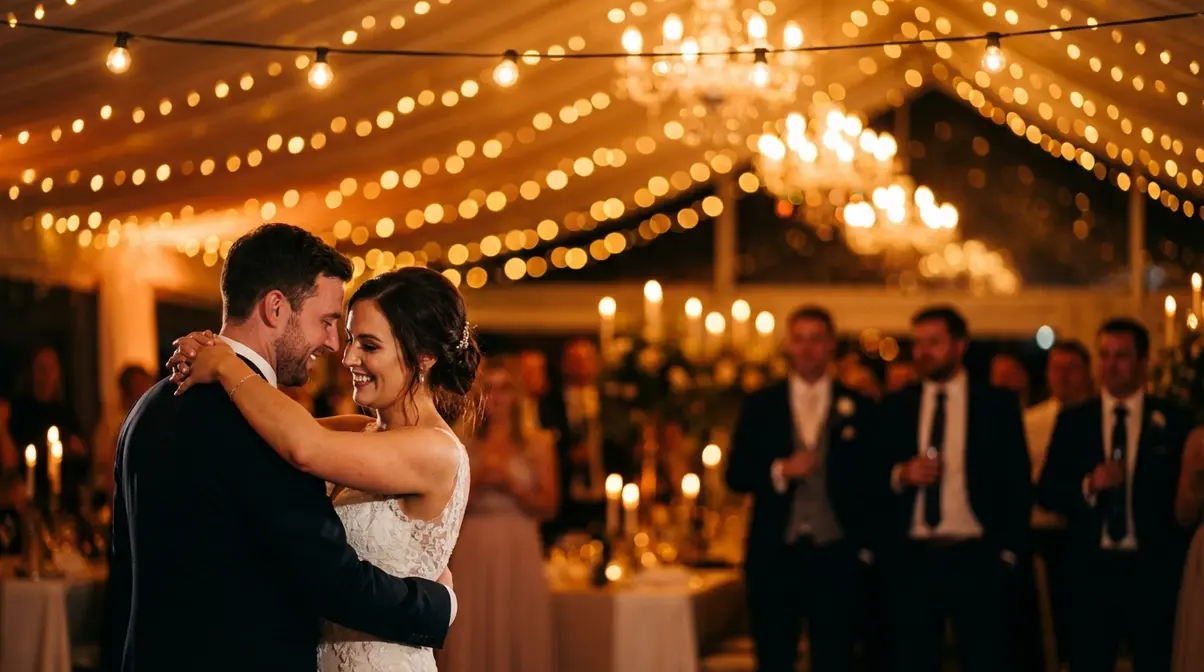
For wedding photographers, the best prime lenses cover two jobs: dark venues and flattering portraits. An 85mm f/1.8 for isolating the couple, a 50mm f/1.8 for candid storytelling — these two lenses weigh less than 700g combined and outperform a 24–70mm f/2.8 zoom in both low light and background separation. Browse essential camera gear for wedding photography for a broader look at what belongs in your wedding kit.
“The 85mm prime at f/1.8 gathers approximately 9× more light than a standard kit lens at f/5.6, allowing wedding photographers to shoot dark receptions at ISO 1600–3200 without flash.”
Wedding photography prime lenses only setups — meaning shooting the entire event with just the 50mm and 85mm — are increasingly common among professional wedding photographers. The combination’s low-light capability and compact size make the tradeoff of no zoom entirely worthwhile.
Dark Venues: Aperture & ISO Blueprint
Most reception venues are lit at 300–500 lux — comfortable for conversation, challenging for cameras. A kit lens sitting at f/5.6 requires ISO 6400 or higher to expose correctly, producing grainy, noisy images. A prime lens at f/1.8 changes everything.
ISO is the camera’s sensitivity to light — higher ISO means a brighter image, but also more digital grain (noise). The goal is always to use the lowest ISO possible, and a wide prime aperture lets you do exactly that.
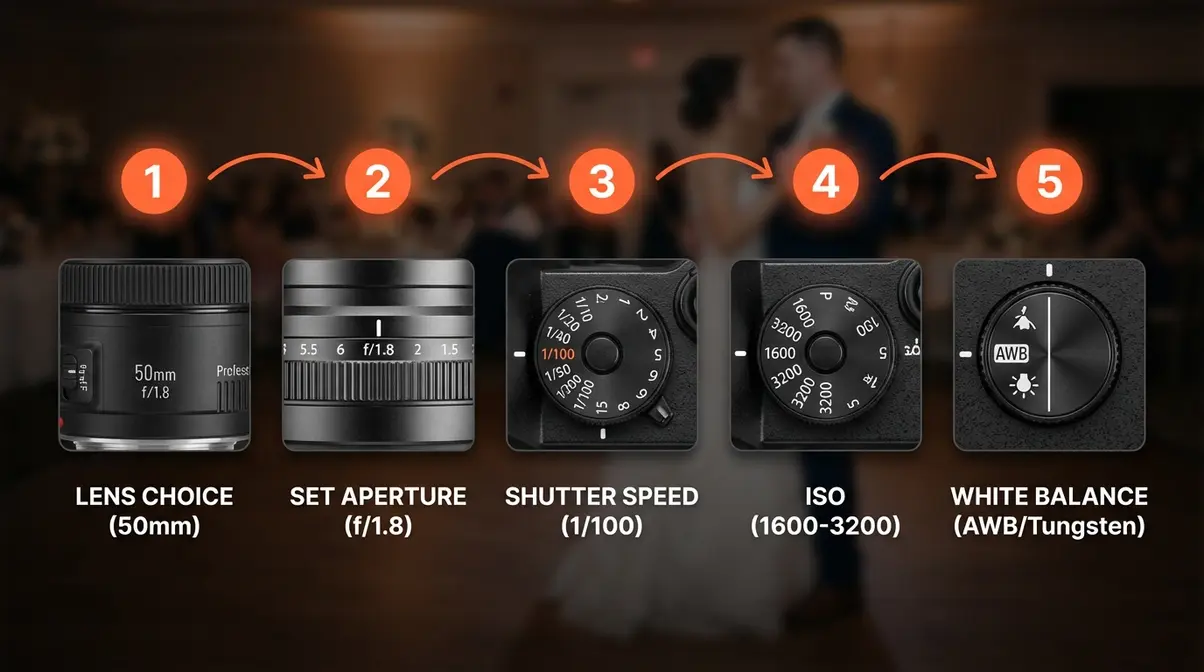
Follow this blueprint for dark reception venues:
- Mount your 50mm f/1.8 or 85mm f/1.8 prime lens.
- Set aperture to f/1.8 — maximum light gathering.
- Set shutter speed to 1/100s — minimum speed to freeze dancing motion without blur.
- Set ISO to 1600–3200 — produces clean results on modern APS-C and full-frame sensors.
- Set white balance to Auto or Tungsten — corrects for the warm yellow cast of reception hall lighting.
At f/1.8 versus f/5.6, you gather approximately 9 stops more light — which translates directly to cleaner images, less grain, and photos you can actually deliver to clients.
Caption: This five-step blueprint applies to both the 50mm and 85mm f/1.8 primes — the only variables are distance from subject and desired background compression.
Once the settings are dialled in, the choice between the 85mm and 50mm comes down to the shot you’re trying to capture.
85mm Portraits, 50mm Storytelling
Both lenses at f/1.8 give you the same bokeh quality and low-light capability — the difference is the story you’re telling.
Use the 85mm for: formal portraits, bride and groom close-ups, couple shots, and any single-subject image where you want the background to fully dissolve. Working distance is typically 2–4 metres from subject. The 85mm compresses the background more dramatically, producing a cleaner, more magazine-ready portrait.
Use the 50mm for: candid moments, cocktail hour mingling, room-wide storytelling shots, and group tables. It captures more environmental context — guests’ expressions, table decorations, venue architecture — without going as wide as the 35mm.
Shooting a first dance is a clear example of when each lens earns its place. The 85mm isolates the couple with the crowd reduced to a soft wash of colour behind them. Switch to the 50mm and you capture both the couple and the crowd’s emotional reactions simultaneously. The best prime lenses for wedding photography are often used in rotation throughout a single event — not because one is better, but because they tell different parts of the same story.
If weddings test your endurance, travel photography tests your patience — with your own back. That’s where the prime lens size advantage becomes non-negotiable.
Managing Gear Weight Over a 12-Hour Day
Weight compounds over 12 hours. A Canon 24–70mm f/2.8L zoom weighs approximately 900g on its own. Compare that to a Canon EF 50mm f/1.8 STM (160g) plus a Canon EF 85mm f/1.8 USM (~425g) — a combined 585g. That’s 35% less weight on your neck over a full wedding day.
Lighter gear means less fatigue, which means sharper thinking and better photographs in the final hours of an event — typically the most emotionally rich moments of any wedding. Worth noting: a full 35mm + 50mm + 85mm Holy Trinity prime kit still weighs less than most single professional zoom lenses.
The weight advantage doesn’t just matter at weddings. For travel photographers, it’s the entire argument for going prime-only.
Prime Lenses for Travel and Street Photography
The best prime lenses for travel photography share two qualities: they are small enough to be forgotten in your bag and wide enough to capture a scene naturally. Unlike bulky zoom lenses, a prime’s compact body signals to strangers “I’m not a paparazzo” — making candid, authentic travel portraits dramatically easier to capture. Choosing the ideal lenses for your travel photography covers the full decision framework for building a lightweight travel kit.
A ZEISS comparison of prime and zoom lens restrictions notes that the fixed angle of view of a prime lens — which forces the photographer to physically move — becomes a creative advantage when composing candid travel scenes (ZEISS Lenspire, 2026). Moving into a scene intentionally produces more engaged, more honest images than zooming from a comfortable distance.
Pancake Lenses: Size, Weight & Stealth
“A pancake prime lens like the Canon 40mm f/2.8 STM measures just 22mm in depth and weighs 130g — small enough to fit in a jacket pocket and unlikely to attract attention on a busy street.”
A pancake lens is an ultra-thin prime lens — typically 20–40mm focal length, less than 25mm deep, and weighing under 200g. The name comes from the shape: slap one on a mirrorless body and the combination looks closer to a compact camera than a “serious” DSLR.
Key models worth knowing: the Canon EF 40mm f/2.8 STM (~$200, 22mm deep, 130g) and the Fujifilm XF 27mm f/2.8 WR (~$200, 23mm deep, 84g). Both fit in a jacket pocket without stretching it. At a street market in Marrakech, a Fujifilm 27mm pancake on a mirrorless body is virtually indistinguishable from a tourist’s point-and-shoot — no neck strap, no conspicuous lens barrel, no reason for subjects to perform rather than live naturally.
Caption: The Canon EF 40mm f/2.8 STM pancake (left) at 22mm deep versus a standard 18–55mm kit zoom (right) — a dramatic size difference that matters over hours of travel.
If a pancake lens prioritises invisibility, the 35mm prime prioritises versatility — and for street photography specifically, versatility is everything.
35mm for Street: The Stealth Prime
The 35mm field of view places you physically close to your subject — typically 1–3 metres for a frame-filling shot. This proximity creates an intimacy that longer lenses simply cannot replicate. A 200mm photograph of a street vendor from across the road feels observed; a 35mm photograph from two metres away feels shared.
It also captures enough background context to tell an environmental story while keeping a central subject sharp and prominent. Henri Cartier-Bresson, the pioneer of modern street photography, shot almost exclusively at the 35mm equivalent — precisely because the focal length forces the photographer to be present rather than detached.
On an APS-C camera with Nikon’s 1.5× crop factor, a 35mm DX lens gives approximately 52.5mm equivalent — a natural “normal” perspective rather than a wide-angle. Nikon lenses for candid photography in this range include the popular Nikon AF-S DX NIKKOR 35mm f/1.8G (confirmed 52.5mm equivalent on DX bodies, Nikon, 2026), which doubles as an excellent everyday lens for APS-C shooters.
Beyond weddings, travel, and landscapes, there’s a whole world of creative and commercial work where prime lenses quietly dominate — often for reasons beginners never expect.
Capturing Environmental Portraits
An environmental portrait places the subject in their natural context — a chef in their kitchen, a woodworker in their workshop, a musician surrounded by their gear. The background tells half the story.
The 35mm prime at f/2.8–f/4 softens the background slightly without eliminating it, keeping the context readable while still separating the subject from the scene. The fixed focal length is the key creative factor: you cannot zoom to a comfortable distance, so you must choose a deliberate position. That deliberate choice makes the final image more intentional — the viewer can feel the photographer’s decision, not just their default zoom position.
With the core genres covered, let’s look at the outliers — the specialist and creative prime lenses that open entirely new photographic worlds.
Specialty and Creative Uses for Prime Lenses
Prime lenses dominate three specialist creative fields that beginners often overlook: macro photography, vintage lens shooting, and video work. Each rewards the prime’s optical purity in a unique way — and each is almost entirely absent from competitor coverage of photography prime lenses. Creative photography techniques using classic lenses explores the vintage lens world in particular depth.
“A 100mm macro prime lens can reproduce a subject at 1:1 life size on the camera sensor — revealing details invisible to the naked eye — making it the lens of choice for product, jewellery, and insect photography.”
Macro Primes for Product Photography
A macro lens is a prime lens that can focus extremely close to a subject, reproducing it at 1:1 life size — meaning the real object and its image on the camera sensor are the same physical size. In practice, this reveals extraordinary detail invisible to the naked eye: the texture of a watch dial, the facets of a gemstone, the compound eye of a dragonfly.
Top rated product photography lenses in this category include: the Canon EF 100mm f/2.8L Macro IS USM — a prime lens that focuses as close as 30cm from the subject, reproducing tiny objects at life size (~$900) — the Nikon AF-S VR Micro 105mm f/2.8G IF-ED (~$900), and the Sony FE 90mm f/2.8 Macro G OSS (~$1,100). All three deliver the optical purity of a prime combined with extreme close-focus capability.
Ideal applications: jewellery and watch photography, food styling, electronics and product launches, botanical and insect documentation. Any subject where fine detail is the entire point.
Macro primes go deeper into reality. Vintage lenses go deeper into character — and they do it for a fraction of the price of modern glass.
Vintage Lenses: Creative Flair
Photography with classic lenses is one of the most cost-effective ways to develop a distinctive visual style. Dozens of Soviet and German prime lenses from the 1960s through 1980s can be purchased for $30–$200 on eBay or specialist markets — and adapted to modern Canon, Sony, and Fujifilm mirrorless cameras via inexpensive mount adapters ($15–$40).
The standout example is the Helios 44-2, a Soviet-era 58mm f/2 prime lens known for its swirly, dreamlike bokeh pattern — concentric circular blur in the background that no modern lens replicates. It creates an immediately recognisable, cinematic aesthetic that photographers actively seek out for portraits and creative projects.
The trade-off is real: no autofocus, no image stabilisation, manual focus only. This slows you down considerably. However, that enforced manual focus practice is educational for beginners learning to understand focal distance and depth of field — a form of The Fixed-Length Advantage applied to the focusing ring.
Classic lenses connect you to the film era. Prime lenses for video connect you to the cinema era — and that’s an entirely untapped creative territory for beginners.
Prime Lenses for Video and Gimbal Use
Prime lenses outperform zoom lenses for video for a specific, often-overlooked reason: breathing. When a zoom lens racks focus (shifts focus from one distance to another), it subtly changes the apparent focal length — causing a distracting pulsing or breathing effect that viewers notice even if they can’t identify it. Prime lenses, with their fixed focal length, do not breathe. Footage looks cinematic and stable.
A gimbal is a motorised 3-axis stabiliser that keeps camera footage smooth during movement — think walking shots, tracking shots, or handheld cinematic sequences. Gimbals balance most easily with lighter, more compact lenses. The 50mm f/1.8 and 35mm f/1.8 are the most popular prime choices for gimbal users precisely because their size and weight allow the gimbal to counterbalance smoothly.
- For beginners shooting video on a prime lens:
- Set aperture to f/2.8 (slightly stopped down from maximum to improve sharpness across a moving face)
- Set shutter speed to double your frame rate (shooting at 24fps = 1/50s shutter speed)
- Set ISO as low as possible for clean footage
For a visual shootout comparing how the 35mm, 50mm, and 85mm prime lenses perform head-to-head — including on a gimbal — watch the video above.
(Editor Note: Implement VideoObject schema on the embedded YouTube video to target Video Carousel SERP feature.)
When Prime Lenses Don’t Work
Prime lenses are not universally superior tools — they carry specific limitations that can trip up beginners before they understand the tradeoffs. Our team evaluated common pain points reported across beginner photography communities, and four pitfalls appear consistently.
Common Pitfalls for Beginners
1. Buying the wrong first focal length. A 35mm lens on an APS-C camera behaves like approximately a 52mm — not the wide-angle experience many beginners expect. If you shoot landscapes on a Nikon D3500 or similar crop sensor body and want genuine wide-angle coverage, buy a 24mm or 28mm prime instead. The scenario: beginner buys a 35mm expecting dramatic wide-angle landscapes, finds it feels disappointingly “normal.”
2. Always shooting at maximum aperture. At f/1.8, depth of field is razor thin. Two people standing side by side can result in one face in sharp focus and the other slightly soft — a common shock for beginners who expect wide apertures to just mean “more blur.” For small groups, stop down to f/2.8–f/4. The bokeh remains pleasing; the focus becomes forgiving.
3. Forgetting minimum focus distance. Most 50mm primes cannot focus closer than 40–45cm. If you attempt to photograph a small object — a ring, a flower — from 15–20cm, the lens will hunt and fail to lock focus. Move back, or use a dedicated macro prime instead.
4. Not accounting for crop factor. The “nifty fifty” on a Canon APS-C body behaves like an 80mm — significantly more telephoto than expected for someone who bought it as an “everyday” lens. Use the crop factor table from the 500 Rule section to check equivalent focal lengths before purchasing.
When a Zoom Lens is the Better Choice
The ZEISS comparison of prime and zoom restrictions is honest about where a fixed angle of view becomes a genuine restriction in fast-paced shooting (ZEISS Lenspire, 2026). And exploring the primary benefits and drawbacks of prime lenses covers the counterarguments in detail. Three specific scenarios favour zoom lenses:
- Wildlife and sports photography. Subjects move unpredictably at speed. A 70–200mm zoom allows immediate reframing without walking — and in wildlife photography, walking closer is frequently not an option at all.
- Event photojournalism. Fast-moving, unpredictable events where you cannot control your position — press conferences, protests, parades — benefit from the instant flexibility of a zoom lens.
- One-bag travel. If you can carry only one lens and will encounter wildly different scenarios, a 24–70mm f/2.8 zoom (such as the Sony 24–70mm f/2.8 GM) is more versatile than any single prime. The optical compromise is real, but versatility wins when adaptability is the priority.
Frequently Asked Questions
Are prime lenses good for photography?
Prime lenses are excellent for photography, consistently delivering sharper images, wider apertures, and more compact builds than zoom lenses at the same price point. Because prime lenses are optimised for a single focal length, manufacturers use fewer, higher-quality glass elements — reducing chromatic aberration and distortion. They also allow maximum apertures of f/1.4 to f/1.8, which is 3–4 stops wider than most kit lenses. A 50mm f/1.8 prime typically costs under $200 and produces professional-quality background blur. For beginners and enthusiasts, prime lenses produce a measurable improvement in image quality over standard zoom lenses.
Why prefer prime lenses over zoom?
Photographers prefer prime lenses over zoom lenses primarily because primes produce sharper images, allow more light into the camera, and create more pleasing background blur (bokeh). Since prime lenses have fewer moving glass elements, they are also lighter and more compact than zoom lenses of comparable quality — making them easier to carry for travel, events, and all-day shoots. The wider maximum aperture of a prime — typically f/1.4 to f/1.8 — allows shooting in low-light conditions that would render a zoom lens unusable without flash. Many photographers also report that the restriction of a fixed focal length forces more intentional, creative compositions over time — a benefit known as The Fixed-Length Advantage.
What 3 lenses does everyone need?
Most photographers need three prime lenses to cover the majority of shooting situations: a 35mm wide-angle, a 50mm standard, and an 85mm portrait prime. The 35mm captures expansive environments and street scenes; the 50mm mirrors natural human vision for everyday photography; the 85mm creates flattering subject compression ideal for portraits. Together, they weigh under 1 kg combined and cover roughly 95% of scenarios. Most beginners purchase them one at a time, starting with the 50mm f/1.8 for its price-to-performance ratio under $200. For those on a tight budget, the 50mm alone covers the majority of everyday photography situations effectively.
What is the 500 rule for 50mm lenses?
The 500 rule is a mathematical formula used in astrophotography to determine the maximum shutter speed before stars begin to trail in a photo. To apply it, divide 500 by your lens’s focal length: for a 50mm prime on a full-frame camera, the calculation is 500 ÷ 50 = 10 seconds maximum. Shooting longer than 10 seconds will cause the stars to streak due to Earth’s rotation. On an APS-C Nikon camera, a 50mm lens has an effective focal length of 75mm, so the maximum shutter speed is 500 ÷ 75 = approximately 6.6 seconds. For widest night sky coverage, astrophotographers prefer a 20mm prime, which allows up to 25 seconds of exposure on a full-frame sensor.
Why can’t I zoom with a prime lens?
You cannot zoom with a prime lens because it is manufactured with a single, fixed focal length and contains no mechanical mechanism to change magnification. Zoom lenses contain multiple moving glass elements that physically shift position to alter the focal length; prime lenses use a fixed optical formula optimised for one focal length only. This fixed arrangement is the source of a prime lens’s optical superiority — it’s the reason they’re sharper, lighter, and faster than zoom lenses of comparable quality. To change how close your subject appears in a prime lens photo, you must physically move your camera closer to or further away from the subject. Many photographers find that this restriction — “zooming with your feet” — improves their composition instincts more than any camera setting ever could.
Making the Switch to Prime Lenses
For photographers ready to move beyond their kit zoom, photography prime lenses deliver a measurable jump in image quality, low-light performance, and creative control — typically at prices that undercut mid-range zoom lenses. User consensus across professional photography communities confirms that the 50mm f/1.8 nifty fifty, available from Canon (~$170) and Sony (~$248), is the single highest-value upgrade available to a beginner today. Start there, and The Fixed-Length Advantage will make itself apparent within your first session.
The Fixed-Length Advantage is not a consolation prize for not having a zoom ring — it’s the actual mechanism by which prime lens photography improves your craft. Every time you move your feet instead of twisting a zoom ring, you’re making a deliberate compositional decision. That discipline, accumulated over hundreds of frames, is the difference between a photographer who takes pictures and one who makes them. Your kit zoom photos looked average because the tool was built around compromise. A prime is built around excellence at one thing.
Pick up a 50mm f/1.8 prime in your camera brand’s mount, spend one week shooting only that lens, and compare the results directly to your kit zoom. The difference in sharpness, low-light performance, and compositional intentionality will confirm everything covered in this guide. When you’re ready to expand, revisit the Holy Trinity guide and the Milky Way lens recommendations — your prime lens journey has only just begun.