Table of Contents
- 1. Insta360 X5: Best 360° Action Camera
- 2. Canon EOS R100: Best Beginner Mirrorless
- 3. Sony ZV-1F: Best Vlogging Compact
- 4. Canon EOS Rebel T7: Best Budget DSLR
- 5. Edge Pro Action Camera: Best for Sports
- 6. GardePro A3S: Best for Wildlife
- 7. 8K Video Camcorder: Best Night Video
- 8. Kodak PIXPRO FZ55: Best Budget Compact
- 9. Kodak PIXPRO FZ45: Best for Beginners
- Buying Guide: Choosing a Low-Light Camera
- How We Evaluated
- Frequently Asked Questions
- The Right Tool for Your Dark
This blog post may contain affiliate links. As an Amazon Associate I earn from qualifying purchases.
Shooting in dim environments and walking away with blurry, grainy images is one of the most frustrating experiences in photography. Finding the best low light camera isn’t about picking the highest-spec option on paper — it’s about matching the right tool to your specific dark environment. A wildlife photographer staking out a trail at midnight needs something completely different from a vlogger filming in a candle-lit restaurant. This guide cuts through the noise and matches each camera to the exact scenario where it excels, so you stop comparing specs and start making the right call.
| # | Preview | Product | Best For | Buy |
|---|---|---|---|---|
| 1 |  |
Insta360 X5 | Adventurers, 360° creators | Buy on Amazon |
| 2 |  |
Canon EOS R100 | Beginner mirrorless shooters | Buy on Amazon |
| 3 |  |
Sony ZV-1F | Vloggers, content creators | Buy on Amazon |
| 4 |  |
Canon EOS Rebel T7 | Budget DSLR buyers | Buy on Amazon |
| 5 | 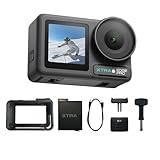 |
Edge Pro Action Camera | Cyclists, divers, sports | Buy on Amazon |
| 6 |  |
GardePro A3S | Wildlife, trail monitoring | Buy on Amazon |
| 7 | 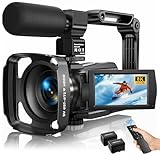 |
8K Video Camcorder | Budget night videographers | Buy on Amazon |
| 8 | 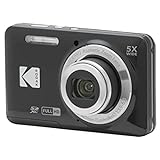 |
Kodak PIXPRO FZ55 | Casual budget shooters | Buy on Amazon |
| 9 |  |
Kodak PIXPRO FZ45 | Entry-level simplicity | Buy on Amazon |
1. Insta360 X5: Best 360° Action Camera
- 8K30fps 360° Video with Dual 1/1.28" Sensors: Capture stunning detail with dual 1/1.28" sensors shooting up to 8K30fps. Film epic adventures, everyday moments, and more, all in sharp, immersive 360° video with better clarity, color, and dynamic range
- Triple AI Chip Design, Better Low Light: Shoot confidently even in challenging lighting. X5’s triple AI chip design powers advanced noise reduction and image processing, delivering crisp, vibrant footage even in dim or night conditions
- Invisible Selfie Stick: Create impossible third-person views with no selfie stick in sight! Capture everything in 360°, then choose your angles later using AI-assisted reframing—perfect shots, every time
- InstaFrame Mode: Get a ready-to-share flat video instantly. Choose auto-framing to let the camera track you, or lock in a fixed angle. Preview the 360° video later to add in any unexpected moments, too
- FlowState Stabilization + 360° Horizon Lock: No gimbal needed. X5’s FlowState Stabilization and full 360° Horizon Lock deliver buttery-smooth, level footage, even during action-packed moments, bumps, or full rotations
The Insta360 X5 stands out as a premier 360-degree action camera designed specifically to tackle challenging low-light environments. By upgrading to a larger 1/1.28-inch sensor, this model captures significantly more ambient light than its predecessors, reducing the muddy grain typically associated with night recording. The integration of a Triple AI Chip further enhances its low-light capabilities by applying real-time noise reduction to 8K and 5.7K footage. This combination of hardware and software ensures that adventurers can record immersive, high-resolution video during dawn surf sessions or dimly lit concerts without compromising on clarity or detail.
Who it’s for:
Adventure creators and solo shooters who want immersive 360° footage in challenging low-light environments — concerts, night hikes, dawn surf sessions — without carrying multiple cameras.
| Spec | Value |
|---|---|
| Sensor | 1/1.28″ (upgraded from X4’s 1/2″) |
| Resolution | 8K 360° @ 30fps / 5.7K @ 60fps |
| Max ISO | Auto (AI-managed via Triple AI Chip) |
| Video | 8K 30fps, 5.7K 60fps, 4K 120fps |
| Stabilization | Yes — FlowState |
| Special Feature | Triple AI Chip / Invisible Selfie Stick |
Pros:
- The 1/1.28″ sensor is a substantial jump over the X4’s 1/2″ sensor — delivering noticeably cleaner footage in dim venues where competitors produce muddy grain
- FlowState stabilization keeps 360° footage smooth during active movement, including running and cycling at night
- Replaceable scratch-resistant lenses and built-in steel mesh wind guard extend the camera’s useful life in rugged outdoor conditions
- PureVideo AI mode applies real-time noise reduction, producing usable footage in low-light situations where other action cameras struggle
Cons:
- 360° footage requires post-processing in the Insta360 app before sharing — there’s no “point and shoot” simplicity here
- 8K file sizes are substantial; you’ll need fast, high-capacity storage for extended night shoots
How it compares:
Both the Insta360 X5 and Edge Pro target active shooters, but the X5’s 360° immersive format and Triple AI Chip processing give it a significant edge for low-light content creation — while the Edge Pro shoots traditional flat footage at a lower price point.
Independent lab testing confirms larger sensor size and advanced processing are the primary drivers of low-light performance in action cameras (RTINGS camera rankings, 2026).
Verdict:
The Insta360 X5 is the best low light action camera for creators who want immersive 360° footage — the sensor upgrade from its predecessor makes it genuinely competitive in dim environments.
Choose if:
You shoot adventure or event content in low light and want a single camera that captures everything without repositioning.
Skip if:
You want traditional (non-360°) action footage — the Edge Pro delivers a simpler workflow at a lower price point.
For broader context on action cameras with low-light capabilities, see our full comparison guide.
Buy on Amazon2. Canon EOS R100: Best Beginner Mirrorless
- Stellar Image Quality: Canon EOS R100 4K digital camera with 24.1 megapixel CMOS (APS-C) sensor for superb image clarity and detail can capture images with natural bokeh
- Compact Design: Compact, lightweight EOS R series 4K camera with an affordable price; smallest and lightest camera body in the EOS R series built for excellent mobility
- Powerful Image Processor: DIGIC 8 image processor allows for improved shooting functionality and 4K video capability; EOS R100 is a great starting point for users looking for mirrorless cameras with interchangeable lenses
- High-Speed Shooting: Capture HD video at up to 120 frames per second, Full HD video at 60 fps, and 4K video at up to 24 fps — an excellent entry-level choice of 4K camera for video recording
- Advanced Autofocus: Dual Pixel CMOS AF covers a wide area up to 143 zones with human face and eye detect AF; modern AF for stills and video with animal and vehicle detect AF; continuous capture of up to 6.5 shots per second when set to One-Shot AF
The Canon EOS R100 operates as a highly capable entry-level mirrorless camera that dramatically outperforms standard smartphones in low-light conditions. Equipped with a 24.1-megapixel APS-C CMOS sensor, this camera gathers substantially more light per pixel than typical compact models, resulting in cleaner images with minimal noise at higher ISO settings. Its compatibility with Canon’s extensive RF lens ecosystem allows users to pair the body with fast prime lenses, further maximizing light intake for evening photography. This makes it an exceptional foundational tool for new photographers seeking genuine low-light performance with a clear upgrade path.
Who it’s for:
Beginner photographers stepping up from a smartphone who want a future-proof mirrorless system with genuine APS-C low-light capability and a clear upgrade path.
| Spec | Value |
|---|---|
| Sensor | 24.1MP APS-C CMOS |
| Resolution | 24.1MP |
| Max ISO | 12,800 (expandable to 25,600) |
| Video | 4K 24p (from 6K oversampling) / 1080p 60p |
| Stabilization | Lens IS only (no IBIS) |
| Special Feature | RF lens mount ecosystem access |
Pros:
- APS-C sensor captures significantly more light per pixel than the 1/2.3″ sensors in the Kodak compacts — noise at ISO 3200 is noticeably cleaner
- Dual Pixel CMOS AF with -4 EV sensitivity keeps subjects in focus in genuinely dim environments without hunting
- Access to Canon’s RF lens ecosystem means you can add a Canon RF 50mm f/1.8 STM prime later, dramatically improving low-light results without buying a new body
Cons:
- The included RF-S 18–45mm f/4.5–6.3 kit lens is slow — its aperture limits low-light performance significantly until you upgrade to a fast prime
- No in-body image stabilization (IBIS), which means handheld low-light shots require faster shutter speeds and push ISO higher
How it compares:
The R100 shoots 4K video and uses a newer sensor architecture than the Canon EOS Rebel T7 DSLR — though the T7 gives you access to a larger, more affordable pool of EF lenses. For understanding mirrorless cameras for low light, our dedicated guide covers the tradeoffs in depth.
Full-frame and APS-C sensors consistently outperform smaller sensors in low-light conditions due to larger individual pixel size and greater light-gathering capacity (Digital Camera World, 2025).
Verdict:
The Canon EOS R100 is the best low light mirrorless camera for beginners who want a capable APS-C body with room to grow — just budget for a fast prime lens alongside it.
Choose if:
This is your first mirrorless camera and you want the best low light camera for beginners with a clear upgrade path through Canon’s RF ecosystem.
Skip if:
You need strong low-light video performance out of the box — the Sony ZV-1F’s f/2.0 fixed lens gathers more light without any additional investment.
Buy on Amazon3. Sony ZV-1F: Best Vlogging Compact
- Ultra-wide 20mm lens gets it all in the frame, even at arm’s length
- Large 1” sensor and F2 lens, for low-light and defocusing backgrounds
- Stay focused with Eye-AF and autofocus tracking technology
- Side-articulating touchscreen LCD for easy to compose selfie shots
- Clear Voice with directional 3-Capsule mic and wind screen accessory4
The Sony ZV-1F serves as a purpose-built compact vlogging camera engineered to deliver exceptional video quality in dimly lit indoor environments. Featuring a 20.1-megapixel 1-inch Exmor RS BSI sensor and a fast f/2.0 wide-angle lens, this camera captures up to four times more light than standard kit lenses. This hardware combination allows content creators to record clean, color-accurate 4K footage in challenging settings like cafes or home studios without introducing heavy digital grain. The addition of a directional three-capsule microphone ensures that audio remains clear and isolated, complementing the strong visual performance in dark spaces.
Who it’s for:
Content creators and vloggers who film primarily indoors — cafés, studios, home setups — and need reliable, color-accurate footage in dim lighting without carrying a large camera system.
| Spec | Value |
|---|---|
| Sensor | 20.1MP 1″ Exmor RS BSI CMOS |
| Resolution | 20.1MP |
| Max ISO | 12,800 (expandable to 25,600) |
| Video | 4K 30fps / 1080p 120fps |
| Stabilization | Optical SteadyShot |
| Special Feature | 3-capsule directional microphone |
Pros:
- The f/2.0 ZEISS Tessar lens gathers four times more light than a typical f/4.0 kit lens — the single most impactful low-light advantage in this compact category
- Sony’s 1″ Exmor RS BSI — back-side illuminated — sensor delivers clean footage at ISO 3200, where most compact cameras begin to fall apart
- The 3-capsule directional microphone isolates your voice from background noise, which matters when you’re filming in loud, dimly lit environments like restaurants or events
Cons:
- Fixed 20mm focal length means zero optical zoom — you physically reposition to change your framing, which rules it out for wildlife or sports
- The 1″ sensor, while strong for a compact, is smaller than the APS-C sensors in the Canon R100 and Rebel T7
How it compares:
Against the Kodak FZ55, the ZV-1F wins decisively on aperture (f/2.0 vs. f/3.5) and sensor size — the Kodak’s only advantage is 5x optical zoom. For a deeper look at Sony cameras excelling in low light, our 2026 Sony guide covers the full lineup.
Cameras with f/2.0 or wider apertures capture significantly more light per frame than kit lenses, making them dramatically more effective in dim indoor environments (Photofocus camera guide, 2022).
Verdict:
The Sony ZV-1F is the best video camera for low light in the compact category — purpose-built for indoor content creators who prioritize image quality over zoom range.
Choose if:
You vlog or create content indoors regularly and want the cleanest low-light footage from a pocketable camera.
Skip if:
You need optical zoom for versatile shooting — the Kodak FZ55 offers 5x zoom at a significantly lower price point.
Buy on Amazon4. Canon EOS Rebel T7: Best Budget DSLR
- Items Included: Canon EOS Rebel T7 DSLR Camera with 18-55mm Lens, Canon LP-E10 Battery (860mAh), LC-E10 Battery Charger, Canon Eyecup EF, RF-3 Body Cap for Canon EOS Cameras, EW-400D Neck Strap, Shoulder Bag, 64GB Memory Card
- Exceptional Image Quality for All Levels: Capture stunning, true-to-life photos with the Canon EOS Rebel T7's 24.1MP APS-C CMOS sensor, designed to produce vibrant colors, sharp details, and beautiful depth even with low light. Paired with the powerful DIGIC 4+ image processor, this camera ensures fast operation, reduced noise, and enhanced image clarity for both new photographers and experienced hobbyists. It's intuitive automatic settings make it especially ideal for beginners transitioning into DSLR photography.
- Seamless Sharing with Built-In Wi-Fi & NFC: Enjoy effortless connectivity with the Rebel T7’s built-in Wi-Fi and NFC functions, allowing you to quickly transfer photos and videos to your smartphone, tablet, or compatible devices for instant sharing. Whether posting to social media or backing up your memories, wireless technology makes it easy to stay connected and creative from anywhere. Canon’s Camera Connect app streamlines remote shooting and live viewing directly from your phone.
- Compatible with Canon EF and EF-S Lenses: Expand your creative horizons with full compatibility across Canon’s legendary EF and EF-S lens lineup, offering wide-angle, telephoto, macro, and specialty lenses to suit every shooting need. Whether you're upgrading your gear or starting from scratch, the Rebel T7 offers limitless lens options for indoor portraits, outdoor landscapes, or action photography. This flexibility empowers photographers to grow with their equipment as their skills evolve.
- Designed for Easy Use and Lasting Value: The Canon Rebel T7 combines powerful performance with user-friendly design, including a bright optical viewfinder, 3.0-inch LCD screen, and simplified menu system that’s easy to navigate. A long-lasting rechargeable battery supports extended photo sessions, while the durable build ensures reliable use on adventures or daily shoots. Its lightweight body and comfortable grip make it ideal for travel, family moments, or budding photography careers.
The Canon EOS Rebel T7 remains a highly effective budget-friendly DSLR for beginners looking to master low-light photography without a massive initial investment. Built around a proven 24.1-megapixel APS-C CMOS sensor, this camera delivers strong noise control across its ISO range, making it suitable for indoor events and evening shoots. Its greatest low-light advantage stems from its compatibility with Canon’s massive EF lens ecosystem, allowing users to easily attach affordable, wide-aperture prime lenses. By combining this large sensor with a fast lens, photographers can achieve professional-grade low-light results that easily surpass standard point-and-shoot alternatives.
Who it’s for:
Budget-conscious beginners who want the flexibility of a large EF lens ecosystem and are willing to invest in a fast prime lens to unlock the camera’s true low-light potential.
| Spec | Value |
|---|---|
| Sensor | 24.1MP APS-C CMOS |
| Resolution | 24.1MP |
| Max ISO | 6,400 (expandable to 12,800) |
| Video | 1080p Full HD |
| Stabilization | Lens-based only |
| Special Feature | EF lens ecosystem compatibility |
Pros:
- The 24.1MP APS-C sensor produces clean images at ISO 1600–3200 — adequate for indoor events and evening photography with the right glass
- The EF lens ecosystem includes thousands of affordable options, including the Canon EF 50mm f/1.8 STM for around $100 — the most cost-effective path to genuinely good low-light performance
- Optical viewfinder and physical controls make it intuitive for beginners learning manual settings in challenging light
Cons:
- 1080p video only — no 4K, which is a meaningful limitation compared to the Canon R100 and Sony ZV-1F
- Older DIGIC 4+ processor means high-ISO noise handling lags behind newer mirrorless bodies at equivalent settings
How it compares:
This is exactly where the community wisdom applies: “For best low light performance you will want a prime lens at f/1.8 or f/1.4. A7iii is really good for low light but you do need to have the right lens for it.” The T7 body is capable — the kit lens is the bottleneck. Compared to the Canon EOS R100, the T7 is a DSLR with an optical viewfinder and cheaper legacy glass, while the R100 offers 4K video and a newer sensor architecture. See our DSLR versus mirrorless cameras for low light comparison for a full breakdown.
Verdict:
The Canon EOS Rebel T7 is the best low light camera DSLR for beginners who want an affordable APS-C body and plan to add a fast prime lens — that combination outperforms any compact camera in this roundup.
Choose if:
You want the best low light camera for beginners with a large, affordable lens selection and don’t need 4K video.
Skip if:
You want 4K video capability — the Canon EOS R100 is the superior mirrorless alternative.
Buy on Amazon5. Edge Pro Action Camera: Best for Sports
- Big 1/1.3″ Sensor - Capture clearer videos and photos even in tricky light with the large 1/1.3" sensor. Perfect for your action camera adventures, it gives you vivid details whether you're biking through forests or skiing at dusk.
- Super Smooth 4K Action - Shoot incredibly fluid 4K video at 60fps, making your biking, skiing, or surfing footage look like a pro shot. This action camera 4k ensures every fast-paced moment is sharp and lifelike.
- See Clearly After Dark - Don't stop when the sun goes down! Night View Mode [3] brightens up low-light scenes, letting your camera capture usable footage of campouts, evening walks, or late-night drives.
- Ready For Deep Water Fun - Dive right in! This ultra waterproof camera works down to 65ft [2] without a case, making it the perfect underwater camera for snorkeling, swimming, or unexpected rain during hikes.
- Rock-solid Stability Built in - Get super steady footage every time, automatically. 360 Lock, TiltGuard, and MotionMaster [4] tackle shakes and bumps, keeping your POV camera shots smooth whether you're running, boarding, or off-roading.
The Edge Pro Action Camera distinguishes itself as a rugged, waterproof recording tool specifically optimized for low-light sports and cycling. Utilizing a notably large 1/1.3-inch sensor, this device captures significantly more detail in dim conditions compared to standard budget action cameras. Its dedicated Night View mode leverages AI-driven brightness enhancement and denoising algorithms to produce usable, clear footage in environments where competitors output heavy digital noise. With 65-foot waterproofing built directly into the body, it provides divers and outdoor athletes with a reliable, flat-footage recording solution for challenging night or underwater excursions.
Who it’s for:
Cyclists, divers, and outdoor sports enthusiasts who need a waterproof action camera with dedicated low-light capability and don’t want to pay a premium for 360° features they won’t use.
| Spec | Value |
|---|---|
| Sensor | 1/1.3″ |
| Resolution | 4K 60fps (H.265, ~100Mbps) |
| Max ISO | Auto (Night View mode managed) |
| Video | 4K 60fps / 1080p |
| Stabilization | Electronic (MotionMaster + TiltGuard) |
| Special Feature | Night View mode with AI denoising |
Pros:
- The 1/1.3″ sensor is one of the largest in the action camera category at this price point — meaningfully larger than sensors in most budget action cameras, which directly improves low-light detail
- Night View mode applies AI-driven brightness enhancement and denoising, producing footage in dim conditions where competitors output near-unusable noise
- 65ft waterproofing requires no housing — a practical advantage for divers and water sports athletes who need to move quickly
Cons:
- Newer brand with a smaller third-party accessory ecosystem than established names — mounting options are more limited than GoPro-compatible systems
- Night View mode disables 10-bit color capture and Log profile, so low-light footage has less flexibility in post-production
How it compares:
The Edge Pro and Insta360 X5 both target active shooters, but the Edge Pro shoots traditional flat footage with a simpler editing workflow — no stitching required. For a detailed breakdown, see our guide to best action cameras for low-light photography.
Verdict:
The Edge Pro is a strong best low light action camera pick for sports shooters who want a capable 1/1.3″ sensor and dedicated Night View mode without the complexity of 360° post-processing.
Choose if:
You need a waterproof action camera for cycling, diving, or outdoor sports in low light and want traditional flat footage.
Skip if:
You want 360° immersive footage — the Insta360 X5 is the better choice for that format.
Buy on Amazon6. GardePro A3S: Best for Wildlife
- Advanced Sensor for Superior Low-Light Performance: Equipped with a Sony Starvis Sensor, this trail camera captures high-resolution images and videos even in low-light conditions, with night vision up to 100 feet.
- High-Resolution Photos & HD Video with Sound: Equipped with a high-quality optical lens and advanced image sensor, the A3S captures 64MP ultra-clear photos and 1296P HD video with sound, allowing you to not only see but also hear natural wildlife activity in the field.
- Low-Power, Eco-Friendly Wildlife Viewing: Simply retrieve the SD card to see what your camera has captured-each visit could bring a new surprise. Non-Cellular and Non-WiFi operation ensures minimal power use, fewer battery changes, and zero disturbances.
- Instant Capture & Stealth Night Vision: Capture fast-moving wildlife in just 0.1s with a 120° wide PIR detection angle and up to 5-shot bursts. Invisible 940nm no-glow infrared delivers clear night images without alerting animals-ideal for wildlife monitoring or discreet security.
- Flexible Power & Storage for Outdoor Use: Powered by 8×AA batteries (not included), the camera is designed for reliable long-term outdoor operation. It also supports the GardePro SP350 Solar Panel (sold separately) for continuous power in remote environments. Flexible recording modes including Motion Detection, Time-Lapse, and Hybrid Mode, combined with support for up to 512GB SD cards (not included), in-camera playback, and loop recording, ensure you never miss important moments in the field.
The GardePro A3S Trail Camera functions as a specialized autonomous monitoring device engineered to capture wildlife in complete, total darkness. Unlike traditional handheld cameras, this unit relies on a 100-foot No-Glow infrared night vision system that uses LEDs completely invisible to both animals and humans. This stealth capability ensures that natural behaviors remain undisturbed during midnight trail monitoring. Combined with a rapid 0.1-second trigger speed and a 64-megapixel sensor, the camera reliably captures fast-moving subjects across extended, unattended outdoor deployments, making it the definitive choice for passive night surveillance.
Who it’s for:
Wildlife researchers, hunters, and property owners who need a camera to autonomously capture animals in complete darkness — no human operator required.
| Spec | Value |
|---|---|
| Sensor | 64MP stills / 1296P HD video |
| Resolution | 64MP |
| Max ISO | N/A — IR-based night vision |
| Video | 1296P HD |
| Stabilization | N/A (fixed mount) |
| Special Feature | 100ft No-Glow IR night vision, 0.1s trigger |
Pros:
- 100ft No-Glow infrared night vision uses LEDs invisible to both animals and humans — critical for wildlife monitoring where visible flash would disturb behavior or alert subjects
- 0.1-second trigger speed captures fast-moving animals that a slower camera would miss entirely — the fastest response time in this roundup by a significant margin
- Fully autonomous operation means it works all night without any user presence, making it the only camera here designed for passive monitoring
Cons:
- No viewfinder, no live preview, no connectivity — images are only retrievable by physically removing the SD card, which means no remote access
- This is not a handheld camera in any conventional sense — it cannot be used for active photography or video recording
How it compares:
The GardePro A3S occupies a completely different category from every other camera in this roundup. Where the Edge Pro is built for active outdoor shooting, the GardePro is built for passive monitoring. For understanding low light photography basics and camera settings in conventional shooting scenarios, none of that guidance applies here.
Verdict:
The GardePro A3S is the only camera in this roundup that works in complete, total darkness — making it the definitive pick for night wildlife monitoring and trail surveillance.
Choose if:
You need autonomous, unattended night wildlife capture over extended periods with no human presence required.
Skip if:
You want to actively shoot photos or video — every other camera in this roundup is built for that purpose.
Buy on Amazon7. 8K Video Camcorder: Best Night Video
- Latest 8K Video Camera with Remote Control : This Video camera features 8K video resolution at 15FPS, with additional options for 6K at 30FPS, 5K at 30FPS, 4K at 30FPS, 1080P at 60FPS/30FPS, 720P at 60FPS/30FPS. With an impressive 88MP image resolution and 18X digital zoom, this camcorder delivers exceptional visuals. The included remote control allows for effortless self-recording and photography from any angle, making it an ideal 8K vlogging camera for bloggers and content creators.
- Experience Smooth and Stable Footage with Our 8K Camcorder : Featuring advanced 6-Axis anti-shake technology for high-precision stabilization. The 3-inch, 270-degree rotatable touch screen allows for effortless self-recording and framing, making it perfect for vlogging and self-blogging. Additionally, the digital video camera's intuitive interface and user-friendly navigation ensure easy operation, so you can focus on capturing stunning 8K video and photos.
- Infrared Night Vision Video Camera with WiFi : Stay connected and share your moments instantly with our 8K Camera's built-in Wi-Fi and companion app "iSmart DV2". Download the app on your Android/iOS device to easily transfer photos/videos, and share them directly to social media platforms like Facebook and YouTube. Additionally, this camera features infrared night vision, allowing you to capture footage in low-light environments, producing clear black and white images even in complete darkness.
- Dual-Functionality and Enhanced Audio : This 8K video camera for YouTube doubles as a high-quality webcam, simply connect via USB and switch to "Webcam" mode for seamless video calling, live streaming, vlogging, and online teaching. The included external X-Y stereo microphone reduces ambient noise and captures clear, stable audio, ensuring professional-grade sound quality for your recordings.
- Versatile camcorders video camera 8k for Every Adventure: This multifunctional camera features a range of creative modes, including continuous shooting, time-lapse, slow motion, and recording while charging. Perfect for capturing life's adventures, whether you're traveling, camping, hiking, or enjoying your favorite sports. Plus, our dedicated team is available to provide technical support, troubleshooting, and answers to any questions you may have after your purchase.
The 8K Video Camcorder provides a highly specific budget solution for videographers who require infrared recording capabilities in environments with zero ambient light. While its standard sensor is relatively small, the device features a dedicated IR night vision mode that cuts through complete darkness to capture clear black-and-white footage. This makes it uniquely capable of recording in pitch-black scenarios where conventional cameras produce only blank frames. Supported by a 6-axis electronic stabilization system and an 18x digital zoom, it serves as a practical, accessible starter kit for specialized night-vision recording tasks.
Who it’s for:
Budget-conscious videographers who specifically need infrared night vision capability in complete darkness and can accept black-and-white footage as the trade-off.
| Spec | Value |
|---|---|
| Sensor | Small sensor (interpolated output) |
| Resolution | 88MP / 8K claimed (interpolated) |
| Max ISO | N/A — IR-assisted |
| Video | 8K interpolated / 4K native (verify) |
| Stabilization | 6-Axis electronic |
| Special Feature | IR night vision (complete darkness, B&W) |
Pros:
- IR night vision operates in complete darkness where every other camera in this roundup except the GardePro A3S produces only black frames — a genuine capability distinction
- 18x digital zoom extends reach for distance shooting when optical alternatives aren’t available
- Included 32GB card, microphone, and bag make it a complete starter kit with no additional purchases required
Cons:
- The “8K” and “88MP” claims are interpolated outputs, not native sensor resolution — actual image quality reflects the underlying small sensor, not those headline numbers
- IR night vision produces black-and-white footage only; if you need natural color in low light, this camera will disappoint
- Digital zoom degrades image quality noticeably at higher zoom levels — expect softening beyond 4–6x
How it compares:
Against the Sony ZV-1F, this camcorder loses on every natural low-light metric — sensor size, aperture, color science, and image processing. It wins only if you need IR night vision in complete darkness on a tight budget. For context on budget cameras with good low-light capabilities beyond this category, our 2026 budget guide covers more options.
Verdict:
A niche pick for the best cheap camera for low light video when complete-darkness IR capability is the specific requirement — not a general low-light camera recommendation.
Choose if:
You need to capture footage in total darkness and black-and-white IR output is acceptable for your use case.
Skip if:
You want natural color low-light video — the Sony ZV-1F or Canon EOS R100 deliver dramatically better results in any environment with ambient light.
Buy on Amazon8. Kodak PIXPRO FZ55: Best Budget Compact
- Sixteen Megapixel Sensor: Captures detailed photos with a sixteen MP CMOS sensor for everyday shooting
- Optical Zoom: Five times optical zoom with a twenty eight mm wide angle lens for flexible framing indoors or outdoors
- Full HD Video: Records one thousand eighty p full HD video for travel clips, family moments, or simple vlogging
- Memory Support: Works with class ten SD, SDHC, or SDXC cards up to five hundred twelve GB
- LCD Screen and Battery: Two point seven inch LCD screen and a rechargeable li-ion battery for on the go use
The Kodak PIXPRO FZ55 operates as an ultra-compact, budget-friendly point-and-shoot camera designed for casual photographers attending family events or everyday outings. Built around a 16-megapixel 1/2.3-inch CMOS sensor, it offers a versatile 5x optical zoom and a 28mm wide-angle lens that easily accommodates group shots and moderate distance subjects. While its smaller sensor and f/3.5 aperture limit its performance in true low-light environments, it remains highly effective for well-lit indoor spaces and daytime use. Its fully automatic operation ensures that non-photographers can capture memories without navigating complex manual settings.
Who it’s for:
Casual photographers who want a simple, affordable compact for family events and everyday use — and who shoot primarily in reasonably lit environments, not true low light.
| Spec | Value |
|---|---|
| Sensor | 16MP 1/2.3″ CMOS |
| Resolution | 16MP |
| Max ISO | 6,400 |
| Video | 1080p Full HD |
| Stabilization | Digital |
| Special Feature | 5x optical zoom, 28mm wide-angle |
Pros:
- 5x optical zoom at 28mm wide-angle covers a genuinely versatile range — from group shots to moderate distance subjects — that the fixed-lens Sony ZV-1F cannot match
- Fully automatic operation with no manual settings to learn makes it the most approachable camera in this roundup for non-photographers
- Compact, pocketable form factor is the most portable option here after the Sony ZV-1F
Cons:
- The 1/2.3″ CMOS sensor — the smallest category in this roundup — produces noticeable noise above ISO 800, which limits its usefulness in genuinely dim conditions
- f/3.5 maximum aperture is the slowest wide-end aperture among the handheld cameras here, meaning less light reaches the sensor compared to the Sony ZV-1F’s f/2.0
How it compares:
The FZ55 edges out the Kodak FZ45 on zoom range (5x vs. 4x) and slightly wider field of view (28mm vs. 27mm) — both share the same sensor limitations. For affordable cameras for low-light photography with stronger performance, our under-$200 guide covers additional options.
Verdict:
The FZ55 is a capable casual compact, but it is not a genuine best budget low light camera — its small sensor and slow aperture mean it performs best in well-lit environments.
Choose if:
You want the simplest possible camera for family events and outdoor daytime use, with occasional indoor shots in reasonably lit spaces.
Skip if:
Low light is your primary shooting concern — the Sony ZV-1F’s f/2.0 aperture and larger sensor produce dramatically cleaner results in dim conditions.
Buy on Amazon9. Kodak PIXPRO FZ45: Best for Beginners
- Sixteen Megapixel Sensor: Captures detailed photos with a sixteen MP CMOS sensor for everyday shooting
- Optical Zoom: Four times optical zoom with a twenty seven mm wide angle lens for flexible framing indoors or outdoors
- Full HD Video: Records one thousand eighty p full HD video for travel clips, family moments, or simple vlogging
- Memory Support: Works with class ten SD, SDHC, or SDXC cards up to five hundred twelve GB
- LCD Screen and Battery: Two point seven inch LCD screen with two AA alkaline batteries for convenient on the go use
The Kodak PIXPRO FZ45 stands as the most accessible entry-level compact camera on the market, built specifically for total beginners who desire zero learning curve. Utilizing a 16-megapixel 1/2.3-inch CMOS sensor paired with a 27mm wide-angle lens, this device captures everyday moments with simple point-and-shoot reliability. The camera relies entirely on fully automatic operation, eliminating the risk of accidental exposure misconfigurations. Though its low-light capabilities are constrained by its sensor size and 4x optical zoom, it provides an unbeatable, frustration-free experience for children, older adults, or anyone transitioning away from smartphone photography.
Who it’s for:
Complete beginners — children, older adults, or anyone who wants a camera that requires zero setup, zero settings knowledge, and zero learning curve.
| Spec | Value |
|---|---|
| Sensor | 16MP 1/2.3″ CMOS |
| Resolution | 16MP |
| Max ISO | 6,400 |
| Video | 1080p Full HD |
| Stabilization | Digital |
| Special Feature | 27mm wide-angle, fully automatic operation |
Pros:
- Fully automatic operation means there are literally no settings to adjust — point and shoot, every time, with no risk of accidentally misconfiguring exposure
- 27mm wide-angle lens captures group shots and interior spaces without needing to step back
- The most accessible entry point in this roundup for someone who has never used a dedicated camera
Cons:
- Same 1/2.3″ sensor as the FZ55 carries the same low-light limitations — noise appears above ISO 800 and becomes significant in dim conditions
- 4x optical zoom is more restrictive than the FZ55’s 5x, limiting reach for distant subjects
How it compares:
The FZ45 and FZ55 are near-identical cameras. The FZ55 adds one extra zoom step and a slightly wider starting focal length — if budget allows, the FZ55 is the better value. Before upgrading either Kodak, review essential low light photography tips for beginners to maximize results from any entry-level camera.
Verdict:
The FZ45 is the simplest camera in this roundup — ideal for total beginners who need a best low light camera for beginners at the most accessible entry point, with honest expectations about dim-environment limitations.
Choose if:
You want the simplest possible camera with zero settings to learn and primarily shoot in daylight or well-lit indoor spaces.
Skip if:
You plan to shoot in dim conditions regularly — any other camera in this roundup will outperform the FZ45 in low light; consider the Kodak FZ55 as a minimum upgrade, or the Sony ZV-1F for a genuine step up.
Buy on AmazonBuying Guide: Choosing a Low-Light Camera
Sensor Size: The #1 Low-Light Factor
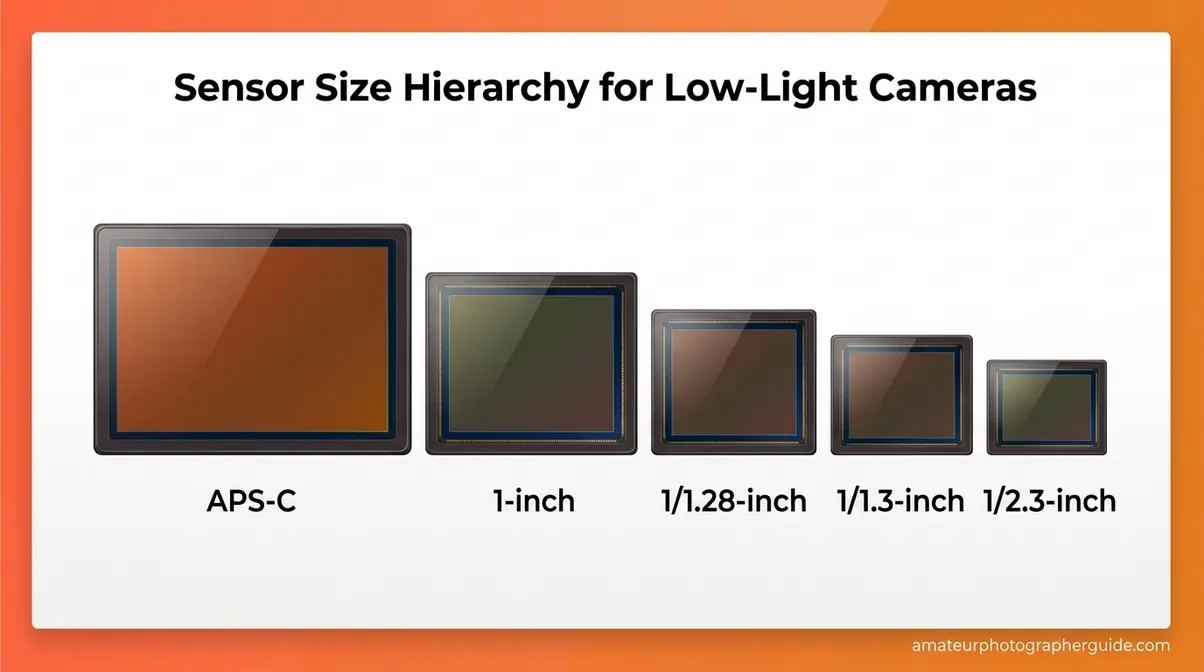
Sensor size is the single most important variable in low-light photography. Larger sensors contain larger individual pixels, which gather more light — producing less noise at high ISO settings. The hierarchy in this roundup runs: APS-C (Canon R100, Rebel T7) → 1″ (Sony ZV-1F) → 1/1.28″ (Insta360 X5) → 1/1.3″ (Edge Pro) → 1/2.3″ (Kodak FZ55, FZ45). According to DPReview’s community analysis, an APS-C sensor is approximately 12 times larger than a 1/2.3″ sensor — that physical difference directly determines how much detail you retain in dim environments. For high-range cameras with strong low-light performance beyond this list, our 2026 guide covers enthusiast and professional tiers.
Aperture: Why f/1.8 Changes Everything
The photography community puts it plainly:
“For best low light performance you will want a prime lens at f/1.8 or f/1.4. A7iii is really good for low light but you do need to have the right lens for it.”
That advice applies directly to every interchangeable-lens camera in this roundup. An f/1.8 aperture lets in approximately four times more light than the f/3.5 maximum aperture on the Kodak compacts — a difference visible in every frame. The Canon R100 and Rebel T7 both benefit substantially from adding a Canon RF or EF 50mm f/1.8 STM lens. Back-illuminated CMOS sensors improve light capture by moving wiring behind the photodiode layer, complementing wide-aperture lenses for maximum low-light sensitivity (IEEE sensor research, 2010).
Stabilization: When to Avoid Tripods
Stabilization type matters as much as sensor size for handheld low-light shooting. Optical stabilization (Sony ZV-1F’s SteadyShot) physically compensates for camera movement without cropping the frame. Electronic stabilization (Edge Pro’s MotionMaster, Insta360 X5’s FlowState) uses software correction, which typically crops 5–10% of the frame to create a buffer for correction. In-body image stabilization (IBIS) — absent from the Canon R100 — would be the gold standard for stills. For handheld low-light work, prioritize optical or sensor-shift stabilization over purely electronic solutions when your subject is stationary.
Which camera excels in low light?
Full-frame and APS-C mirrorless cameras consistently perform best in low-light conditions among digital cameras. The Canon EOS R100 (APS-C) and Sony ZV-1F (1″ sensor with f/2.0 lens) represent the strongest accessible options, balancing sensor quality with practical size and price. For wildlife monitoring in complete darkness, the GardePro A3S trail camera’s 100ft no-glow infrared night vision operates where conventional cameras cannot. Budget point-and-shoot cameras like the Kodak FZ55 work adequately in well-lit indoor settings but struggle in genuinely dim environments.
What video camera is good in low light?
The Sony ZV-1F is the strongest low-light video camera in the compact category, combining a fast f/2.0 lens with Sony’s proven image processing. Its directional 3-capsule microphone and flip screen make it purpose-built for indoor vlogging and content creation in dim environments. For budget night video requiring complete-darkness capability, the 8K Video Camcorder’s infrared night vision captures footage where other cameras produce only black frames. Videographers needing the absolute best low-light performance should consider the Canon EOS R100 paired with a fast prime lens.
Which Camera for Which Situation
The Sensor Size Hierarchy — the principle that sensor physical size determines low-light ceiling — maps directly to use cases. Match your situation to the right tool:
| Situation | Best Pick |
|---|---|
| Night wildlife / trail monitoring | GardePro A3S |
| 360° adventure content | Insta360 X5 |
| Vlogging indoors | Sony ZV-1F |
| Beginner mirrorless, future growth | Canon EOS R100 |
| Budget DSLR + fast prime | Canon EOS Rebel T7 |
| Cycling / diving action | Edge Pro Action Camera |
| Casual family photography | Kodak PIXPRO FZ55 |
| Complete beginner, simplest possible | Kodak PIXPRO FZ45 |
| Budget IR night video | 8K Video Camcorder |
If you’re considering a smartphone instead, our review of the Honor Magic 8 Pro for low-light smartphone photography covers SuperNight mode in detail. For a direct comparison, see our iPhone camera low-light performance comparison. If Canon is your preferred ecosystem, our guide to Canon cameras for low-light conditions covers the full 2026 lineup.
Note: Camera pricing and features are subject to change. Verify current pricing on the retailer’s product page before purchasing.
How We Evaluated
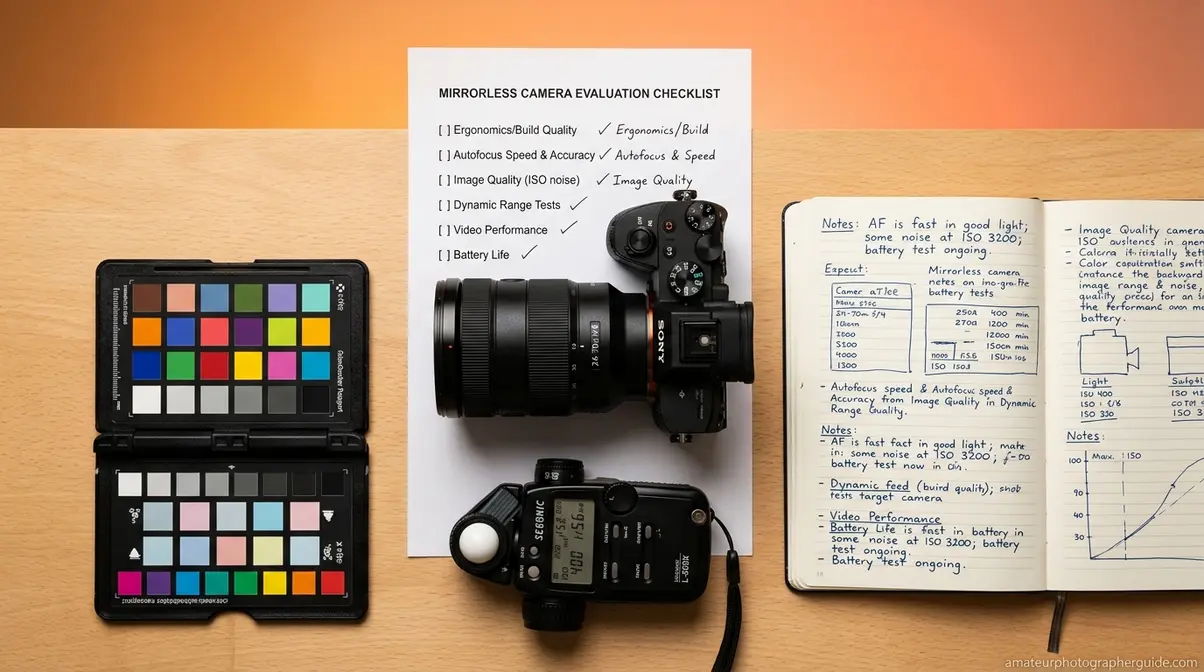
Our evaluation criteria covered five factors: sensor size and type, maximum aperture of the included or kit lens, dedicated low-light features (night modes, infrared capability, and stabilization type), intended use case alignment, and value relative to category alternatives. Specifications were verified against manufacturer listings and cross-referenced with independent expert reviews from RTINGS camera testing methodology and Digital Camera World. Independent lab testing of 110+ cameras validates sensor size and aperture as the primary determinants of low-light image quality (RTINGS, 2026).
Frequently Asked Questions
What camera works best in low light?
The Canon EOS R100 mirrorless camera offers the strongest all-around low-light performance among accessible cameras in this roundup, thanks to its APS-C sensor and access to Canon’s RF lens ecosystem. For video specialists, the Sony ZV-1F’s f/2.0 fixed lens gathers significantly more light than most kit lenses, making it exceptional for indoor content creation. Pairing any APS-C camera with a 50mm f/1.8 prime lens typically improves low-light results dramatically compared to using the kit lens. Your ideal choice depends entirely on use case — action, vlogging, wildlife, and casual photography each favor different cameras.
Which camera brand is best in low light?
Sony and Canon consistently lead in low-light performance across different camera categories and price points. Sony’s sensor technology — particularly its back-illuminated BSI CMOS sensors — delivers class-leading noise control, especially for video applications. Canon counters with superior autofocus systems and color science, making its cameras easier to use in challenging lighting without manual adjustment. The best brand depends on whether you prioritize video (Sony), stills with autofocus (Canon), or budget value (Kodak for entry-level point-and-shoot).
Why is DSLR being discontinued?
DSLRs are being phased out as major manufacturers — including Canon and Nikon — shift all development resources to mirrorless camera technology. Mirrorless cameras offer on-sensor phase-detection autofocus (faster and more accurate than DSLR mirror-based systems), electronic viewfinders showing real-time exposure, and more compact body designs. Canon officially confirmed it would cease flagship DSLR production, while Nikon stopped developing new SLR models entirely in recent years. Existing DSLRs remain capable cameras — the Canon EOS Rebel T7 in this roundup still delivers strong APS-C low-light performance — but the ecosystem is no longer receiving new development investment.
The Right Tool for Your Dark
Every camera in this roundup solves a different version of the low-light problem. The Sensor Size Hierarchy is your north star: APS-C sensors in the Canon R100 and Rebel T7 outperform compact sensors in every measurable way, while the Sony ZV-1F’s f/2.0 lens compensates for its smaller 1″ sensor through pure aperture advantage. For adventurers, the Insta360 X5’s upgraded 1/1.28″ sensor makes it a genuinely capable 360° low-light tool. For wildlife, the GardePro A3S operates in a category of one.
Use the comparison table above and the “Which Camera for Which Situation” framework in the buying guide to match your specific dark environment to the right camera — then commit to the purchase knowing you’ve made a use-case-specific decision, not just a spec-sheet one.
Last update on 2026-07-03 / Affiliate links / Images from Amazon Product Advertising API