Table of Contents
- Table of Contents
- Quick Summary
- Step 1: Select Essential Gear and Camera Settings
- Step 2: Position Yourself for Optimal Shooting Angles
- Step 3: Adjust Focus and Shutter Speed for Motion
- Step 4: Anticipate Action and Time Your Shots
- Step 5: Review Images and Fine-Tune Your Technique
- Master Action Photography by Tackling Your Biggest Challenges Now
- Frequently Asked Questions
- Recommended
This blog post may contain affiliate links. As an Amazon Associate I earn from qualifying purchases.
Did you know that a split second can make the difference between a blurry miss and a jaw-dropping action photo? Whether you are capturing a soccer game or a fast-moving wildlife scene, having the right equipment and camera settings matters more than most people realize. With action photography, success depends on sharp timing, technical know-how, and the ability to react quickly. This guide breaks down the techniques and gear you need to consistently get stunning, high-energy shots.
Table of Contents
- Step 1: Select Essential Gear And Camera Settings
- Step 2: Position Yourself For Optimal Shooting Angles
- Step 3: Adjust Focus And Shutter Speed For Motion
- Step 4: Anticipate Action And Time Your Shots
- Step 5: Review Images And Fine-Tune Your Technique
Quick Summary
| Key Point | Explanation |
|---|---|
| 1. Use fast autofocus and burst settings | Choose a camera with rapid autofocus and a burst shooting feature to capture quick action effectively. |
| 2. Prioritize shutter speed and ISO | Set your shutter speed between 1/500 and 1/2000 seconds for sharp images, while keeping ISO low to reduce noise. |
| 3. Position strategically for dynamic angles | Experiment with different angles and heights to create more engaging, powerful action shots. |
| 4. Anticipate action for timely captures | Study your subject’s movements to preemptively position yourself and capture split-second moments. |
| 5. Review images for continuous improvement | Critically analyze your images after shooting to identify technical successes and areas for growth. |
Step 1: Select Essential Gear and Camera Settings
Capturing incredible action shots starts with having the right photography gear and understanding your camera settings. Your goal is to create sharp images that freeze dynamic motion while maintaining excellent image quality. This means selecting equipment that supports fast shooting and configuring your camera to handle quick movement.
For action photography, you will want a camera with fast autofocus and burst shooting capabilities. A DSLR or mirrorless camera with a good sensor and quick response time works best. Consider a camera body that supports high frame rates (at least 7 frames per second) and has good low light performance. Pair this with a telephoto lens with image stabilization for sports or wildlife shots or a wide angle lens for capturing broader action scenes. Look for lenses with wide maximum apertures like f/2.8 or f/4 that allow faster shutter speeds. 7 photography gear essentials every beginner should know can help you understand more about selecting the right equipment.
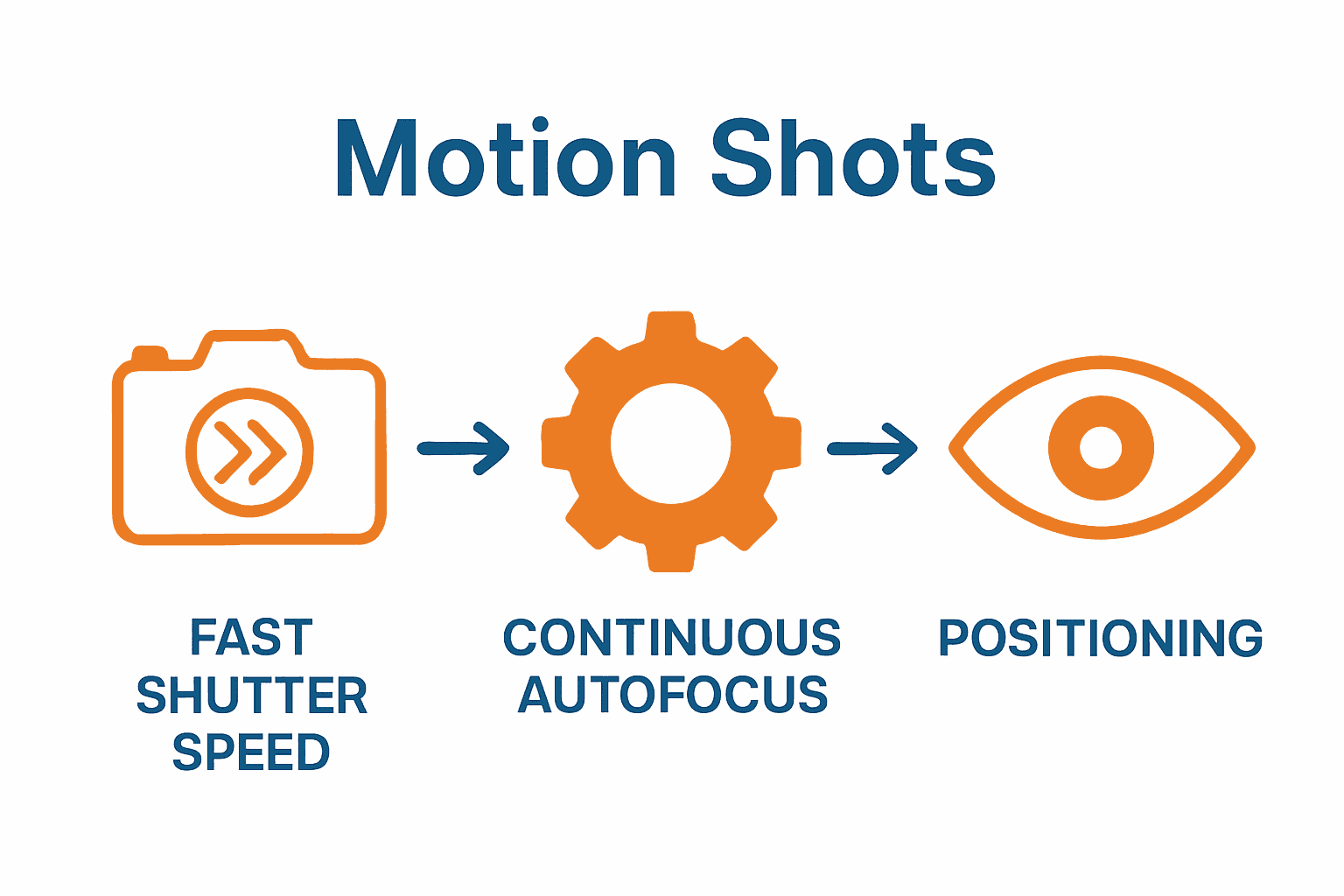
When setting your camera, prioritize shutter speed. As a general rule, your shutter speed should be at least as fast as your lens focal length to prevent motion blur. For fast moving subjects like athletes or racing cars, aim for shutter speeds between 1/500 and 1/2000 of a second. Keep your ISO as low as possible to reduce noise while maintaining image quality. Use aperture to control depth of field and ensure your subject remains in sharp focus. Continuous autofocus mode and burst shooting will help you capture multiple frames of fast moving action. Pro tip: practice your settings before the actual shoot to understand how your specific camera responds to quick movement.
In your next step, you will learn how to position yourself and anticipate motion to create compelling action photographs.
Step 2: Position Yourself for Optimal Shooting Angles
Taking stunning action photographs requires more than technical skills it demands strategic positioning and creative perspective. Your goal is to capture dynamic moments from angles that transform ordinary scenes into extraordinary visual stories.
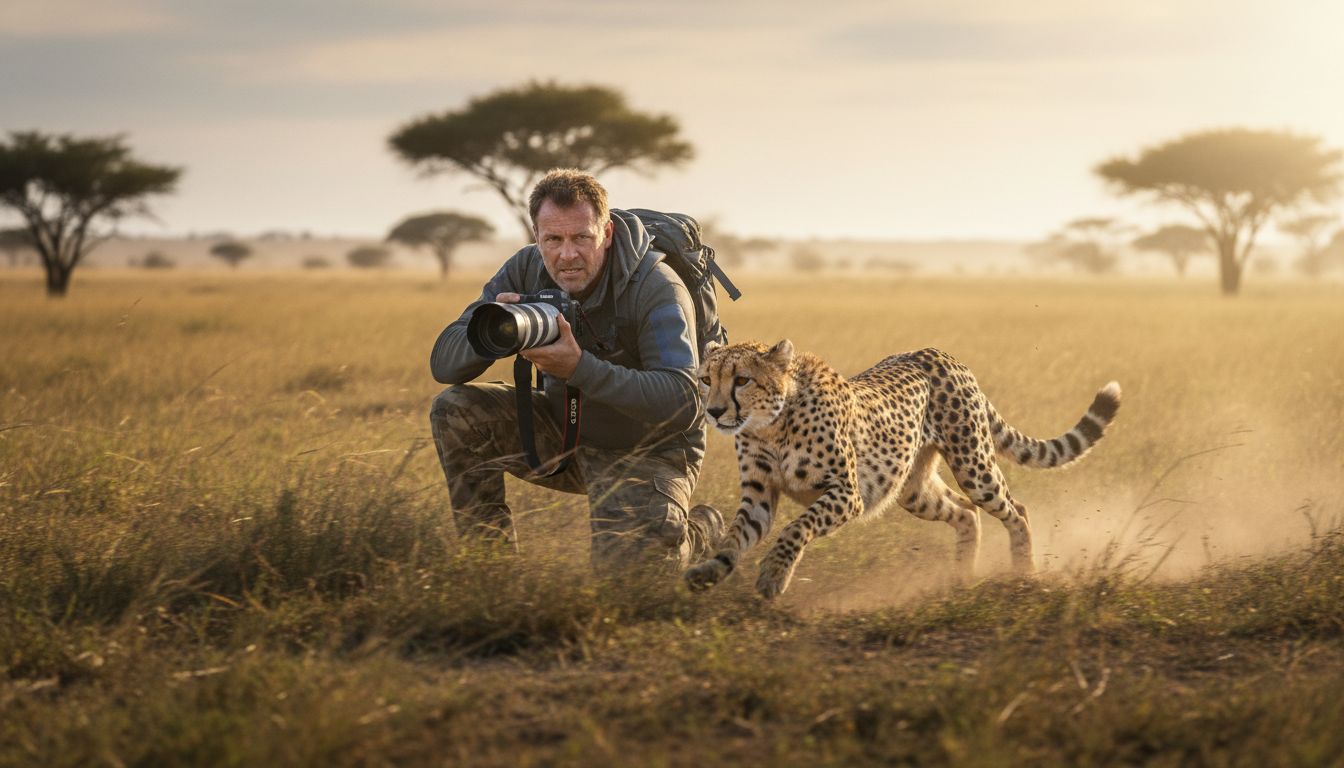
Experiment with different shooting positions to add visual interest and drama to your action shots. Get low to the ground for an upward perspective that makes subjects appear powerful and heroic. For sports or wildlife photography, crouch or even lie down to capture subjects at eye level or from below. Climbing to higher ground can provide sweeping views that reveal the full context of the action. When photographing moving subjects like athletes or performers, anticipate their movement and position yourself where you can track their motion smoothly. Understanding perspective in photography will help you develop a more nuanced approach to capturing compelling images.
Consider the background and surrounding environment when choosing your shooting position. Move around your scene to find clean backgrounds that do not distract from your main subject. Avoid cluttered or busy backgrounds that can make action shots feel chaotic. Look for natural framing opportunities using trees, archways, or architectural elements that can add depth and context to your image. A great action photograph tells a story not just through motion but through thoughtful composition and strategic positioning.
In the next step, you will learn advanced techniques for tracking and capturing fast moving subjects with precision and creativity.
Step 3: Adjust Focus and Shutter Speed for Motion
Mastering focus and shutter speed is the key to transforming blurry motion shots into crisp dynamic images that capture the essence of movement. Your primary goal is to control how motion appears in your photographs selecting whether you want to freeze action completely or create intentional motion blur.
For freezing fast moving subjects, use high shutter speeds between 1/500 and 1/2000 of a second. This range will effectively stop motion for most sports and action scenes. Activate your camera’s continuous autofocus mode (AI Servo or AF-C) to track moving subjects smoothly. Tips for taking photos of moving objects can provide additional insights into capturing dynamic scenes. Consider using back button focus which separates focusing from the shutter release and allows more precise tracking of moving subjects. This technique helps maintain sharp focus even when your subject is rapidly changing position.
Experiment with different shutter speeds to create varied visual effects. At slower speeds around 1/100 of a second, you can introduce intentional motion blur that suggests movement while keeping your primary subject relatively sharp. Try panning techniques where you move your camera in sync with the moving subject this can create a dramatic effect with a sharp subject against a blurred background. Always practice these techniques before important shoots to understand how your specific camera responds to different motion capture strategies.
In the next step, you will learn advanced composition techniques to enhance your action photography and create truly compelling visual narratives.
Step 4: Anticipate Action and Time Your Shots
Capturing the perfect action photograph requires more than technical skill it demands an almost intuitive understanding of movement and timing. Your goal is to predict and capture those split second moments that tell a powerful visual story before they disappear.
Study your subject and environment to develop a strategic approach to timing. In sports photography for example, learn the rhythm and patterns of the game. When shooting a baseball game press the shutter just before the critical moment like a batter swinging or a runner sliding into base. How planning ahead is the key to a great photo shoot can help you understand the importance of preparation. Pre focus on specific spots where action is most likely to occur this technique reduces reaction time and increases your chances of capturing sharp images. For racing events or predictable motion scenes prefocus on a specific point on the track or field and take your shot when the subject reaches that precise location.
Mental preparation is just as important as technical skill. Watch your subjects movements carefully and develop a sense of their rhythm and potential trajectories. Practice anticipating actions before they happen this means understanding body language timing and the subtle cues that precede significant movements. Some photographers develop almost instinctive timing through repeated exposure to specific types of action. Always be ready shoot in continuous mode and be prepared to take multiple shots to increase your chances of capturing that perfect moment.
In the next step you will learn how to enhance your action photographs through post processing and creative editing techniques.
Step 5: Review Images and Fine-Tune Your Technique
Action photography is a continuous learning process where each shot provides valuable insights into your developing skills. Your ultimate goal is to transform every image review session into an opportunity for meaningful improvement and creative growth.
Immediate review is crucial for understanding how your technical choices impact the final image. Examine each photograph critically paying close attention to lighting composition and the interaction between your camera settings and the subject. Look for subtle details like how light creates rim effects or separates your subject from the background. How to master post processing photography: a beginner’s blueprint that actually works can provide additional strategies for analyzing your images. Experiment with different exposure settings and compare their outcomes to understand how small adjustments can dramatically change your image quality.
Develop a systematic approach to reviewing your action shots. Create a mental checklist that includes evaluating sharpness composition exposure and emotional impact. Ask yourself key questions like Are the critical moments captured? Is the subject in sharp focus? Does the image tell a compelling story? Consider maintaining a photography journal where you document your observations technical settings and creative insights. This practice helps you track your progress and identifies patterns in your shooting style. Some photographers find it helpful to review their images immediately after a shoot while the context and technical decisions are still fresh in their memory.
In the final step you will learn how to elevate your action photography through advanced creative techniques and continuous practice.
Master Action Photography by Tackling Your Biggest Challenges Now
Action photography is exciting but it also comes with clear challenges like mastering fast autofocus, choosing the perfect shutter speed, and anticipating split-second moments. If you have ever struggled with blurry shots or missed the critical moment, you are not alone. This guide breaks down essential techniques and helps you practice skills like continuous autofocus, panning, and timing so you can create sharp, dynamic images that tell a story.
Ready to take your motion shots to the next level? Visit Amateur Photographer Guide for in-depth tutorials on camera settings and gear to fit your style. Explore practical tips on tips for taking photos of moving objects and learn how planning ahead is the key to a great photo shoot can dramatically improve your results. Start practicing with expert insights and transform your action shots today.
Frequently Asked Questions
How can I select the right camera settings for action photography?
To select the right camera settings for action photography, prioritize a fast shutter speed, ideally between 1/500 and 1/2000 of a second, to freeze motion. Set your camera to continuous autofocus mode to track your subject effectively.
What type of lens is best for capturing action shots?
A telephoto lens with image stabilization is ideal for sports or wildlife photography, while a wide-angle lens is perfect for dynamic scenes. Look for lenses with wide apertures such as f/2.8 or f/4 to allow for faster shutter speeds and sharper images.
How can I improve my action photography positioning?
To improve your positioning, experiment with different angles by getting low to the ground or climbing to higher vantage points. Anticipate your subject’s movement to position yourself where the action is likely to unfold, enhancing the drama in your shots.
What techniques can I use to capture motion blur in action photography?
To create intentional motion blur while keeping your subject sharp, try using slower shutter speeds around 1/100 of a second and employing panning techniques. This requires moving your camera in sync with your subject, allowing it to blur the background while capturing the action clearly.
How do I review and learn from my action shots?
Review your action shots immediately after shooting to evaluate key elements like sharpness and composition. Create a checklist for self-assessment and maintain a photography journal to document your observations and technical choices for ongoing improvement.
What should I consider when anticipating action in sports photography?
Study the patterns and rhythms of the game to predict key moments, like a batter swinging in baseball. Prefocus on spots where action is likely to occur, which allows you to capture sharp images just as those moments happen.