Table of Contents
- Key Takeaways
- Defining the Golden Ratio in Art and Nature
- How Golden Ratio Influences Visual Composition
- Practical Ways Photographers Use Golden Ratio
- Comparing Golden Ratio and Rule of Thirds
- Common Pitfalls When Using Golden Ratio
- Master the Art of Composition with the Golden Ratio
- Frequently Asked Questions
- Recommended
This blog post may contain affiliate links. As an Amazon Associate I earn from qualifying purchases.
Most American photographers have noticed a hidden sense of balance in both art and nature, even before knowing why it feels right. The Golden Ratio—seen throughout sunflower seeds, Renaissance paintings, and even hurricane spirals—appears in over 80 percent of studies as the preferred visual structure. Understanding this timeless mathematical proportion offers insight into why certain images captivate, revealing a pattern that connects natural wonders with unforgettable artistic creations.
Key Takeaways
| Point | Details |
|---|---|
| Understanding the Golden Ratio | The Golden Ratio, approximately 1.618, serves as a foundational aesthetic principle across art and nature, reflecting harmonious proportions. |
| Compositional Techniques | Photographers can leverage techniques like the Phi Grid and Golden Spiral to create balanced images that appeal to viewers’ innate preferences. |
| Balance Between Intuition and Technique | Successful photography requires a blend of creative intuition and technical knowledge, using the Golden Ratio as a flexible guideline rather than a strict rule. |
| Common Missteps | Avoid rigidly applying the Golden Ratio to all images; instead, adapt your compositional approach based on subject matter and emotional intent. |


Defining the Golden Ratio in Art and Nature
The Golden Ratio represents a mathematical marvel that transcends disciplines, revealing an extraordinary pattern woven into the fabric of our natural and artistic world. Mathematically represented as approximately 1.618, this proportion appears repeatedly in unexpected places – from spiraling nautilus shells to Renaissance masterpieces, suggesting an underlying aesthetic harmony that connects seemingly disparate elements.
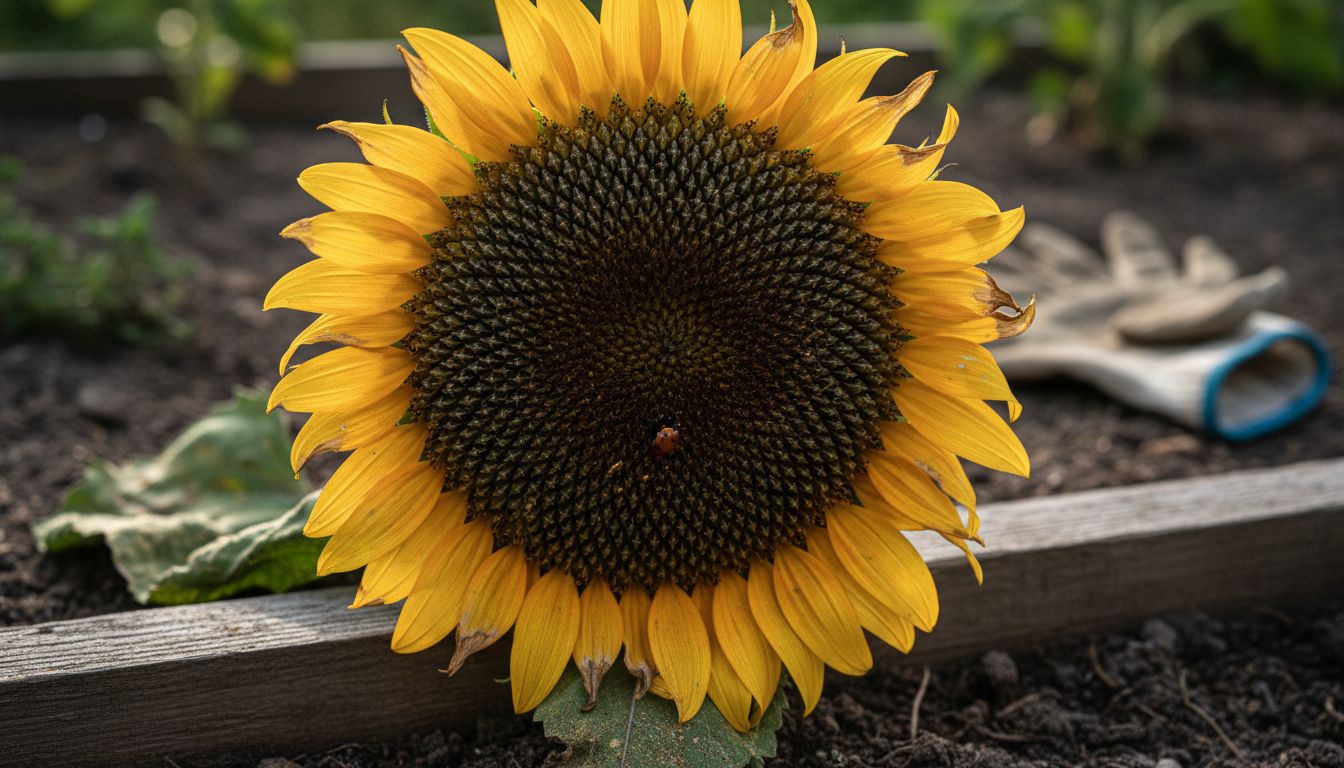
In nature, the Golden Ratio emerges as an almost miraculous design principle. Sunflower seed arrangements, pinecone scales, and hurricane spiral formations demonstrate this precise mathematical relationship, where each element follows a predictable yet elegantly complex pattern. Researchers have discovered that this proportion isn’t random but represents an optimal structural configuration that maximizes efficiency and visual appeal.
Artists and architects have long recognized and deliberately employed the Golden Ratio as a foundational aesthetic principle. Historical evidence suggests that classical Greek sculptors, Leonardo da Vinci, and modern graphic designers have intentionally integrated this proportion into their compositions to create visually pleasing and balanced works. Aesthetic judgment studies have consistently shown that humans subconsciously prefer images and designs that incorporate this specific mathematical relationship, indicating a potentially deep-rooted psychological response to proportional harmony.
While not a universal rule, the Golden Ratio provides photographers and visual artists with a powerful compositional tool. By understanding this mathematical principle, creatives can craft images that naturally draw the viewer’s eye, create balanced perspectives, and evoke a sense of inherent beauty. The ratio isn’t about rigid adherence but about recognizing an elegant mathematical pattern that can transform ordinary visual experiences into extraordinary compositions.
How Golden Ratio Influences Visual Composition
Visual composition represents more than just arranging elements within a frame – it’s about creating a harmonious visual experience that naturally guides the viewer’s eye. The Golden Ratio serves as a sophisticated mathematical blueprint that photographers can strategically use to craft compelling, balanced images that instinctively feel pleasing to the human eye.
Researchers have discovered fascinating insights into how the Golden Ratio transforms photographic composition. By dividing images using the Phi Grid or Golden Spiral, photographers can create natural visual pathways that draw attention precisely where intended. Studies utilizing Implicit Association Tests demonstrate that humans subconsciously respond more positively to images structured around this mathematical proportion, suggesting an almost primal aesthetic preference embedded in our visual perception.
Practically applying the Golden Ratio involves understanding two primary composition techniques. First, the Phi Grid subdivides the frame into nine sections using proportions based on 1.618, creating a more nuanced alternative to the traditional rule of thirds composition guide. Second, the Golden Spiral technique mirrors natural growth patterns found in nautilus shells and flower petals, providing a dynamic framework for positioning key visual elements. These methods aren’t rigid rules but flexible guidelines that help photographers create visually engaging images with inherent balance and movement.
While the Golden Ratio offers powerful compositional insights, successful photography ultimately requires creative intuition. Understanding this mathematical principle provides photographers with a sophisticated tool for analyzing and improving their visual storytelling, transforming ordinary scenes into extraordinary visual narratives that resonate on both intellectual and emotional levels.
Practical Ways Photographers Use Golden Ratio
Photographers leverage the Golden Ratio as a sophisticated compositional tool that goes far beyond simple mathematical principles. This powerful technique transforms ordinary images into visually compelling narratives by strategically positioning elements to create natural, harmonious visual flow. Compositional alignment becomes an art form when photographers intentionally use this mathematical proportion to guide viewer perception and emotional engagement.
One primary method involves using the Golden Spiral, which mimics natural growth patterns found in nautilus shells and hurricane formations. By overlaying this spiral grid on an image, photographers can position key subjects along its curved lines, creating a dynamic visual journey that subtly draws the viewer’s eye through the frame. Understanding composition fundamentals becomes crucial when implementing these advanced techniques, as the Golden Ratio requires both technical precision and creative intuition.
Practical application of the Golden Ratio spans multiple photographic genres. In landscape photography, photographers might place the horizon line or primary landscape features at specific intersections of the Phi Grid. Portrait photographers can position facial features or body elements along golden ratio lines to create more naturally balanced and aesthetically pleasing images. Wildlife and macro photographers especially benefit from this technique, using the spiral to create compositions that feel both intentional and organically balanced.
While the Golden Ratio provides a powerful framework, successful photography remains an art of creative interpretation. Photographers should view this mathematical principle as a flexible guide rather than a rigid rule. The most compelling images emerge when technical knowledge blends seamlessly with personal artistic vision, transforming mathematical proportions into emotionally resonant visual stories that captivate and inspire viewers.
Comparing Golden Ratio and Rule of Thirds
While both the Golden Ratio and Rule of Thirds serve as foundational compositional techniques in photography, they represent distinctly different approaches to visual storytelling. The Rule of Thirds provides a simplified grid dividing the frame into nine equal sections, whereas the Golden Ratio offers a more mathematically sophisticated and nuanced approach to image composition that follows the proportion of 1.618.
The fundamental difference lies in their structural complexity. The rule of thirds guide presents photographers with a straightforward, easily applicable grid where key elements are positioned at intersection points. In contrast, the Golden Ratio introduces a more dynamic spiral framework that mimics natural growth patterns, creating a more fluid and organically balanced visual narrative. This mathematical proportion allows for more subtle and sophisticated positioning of subjects, potentially leading to more visually compelling compositions.
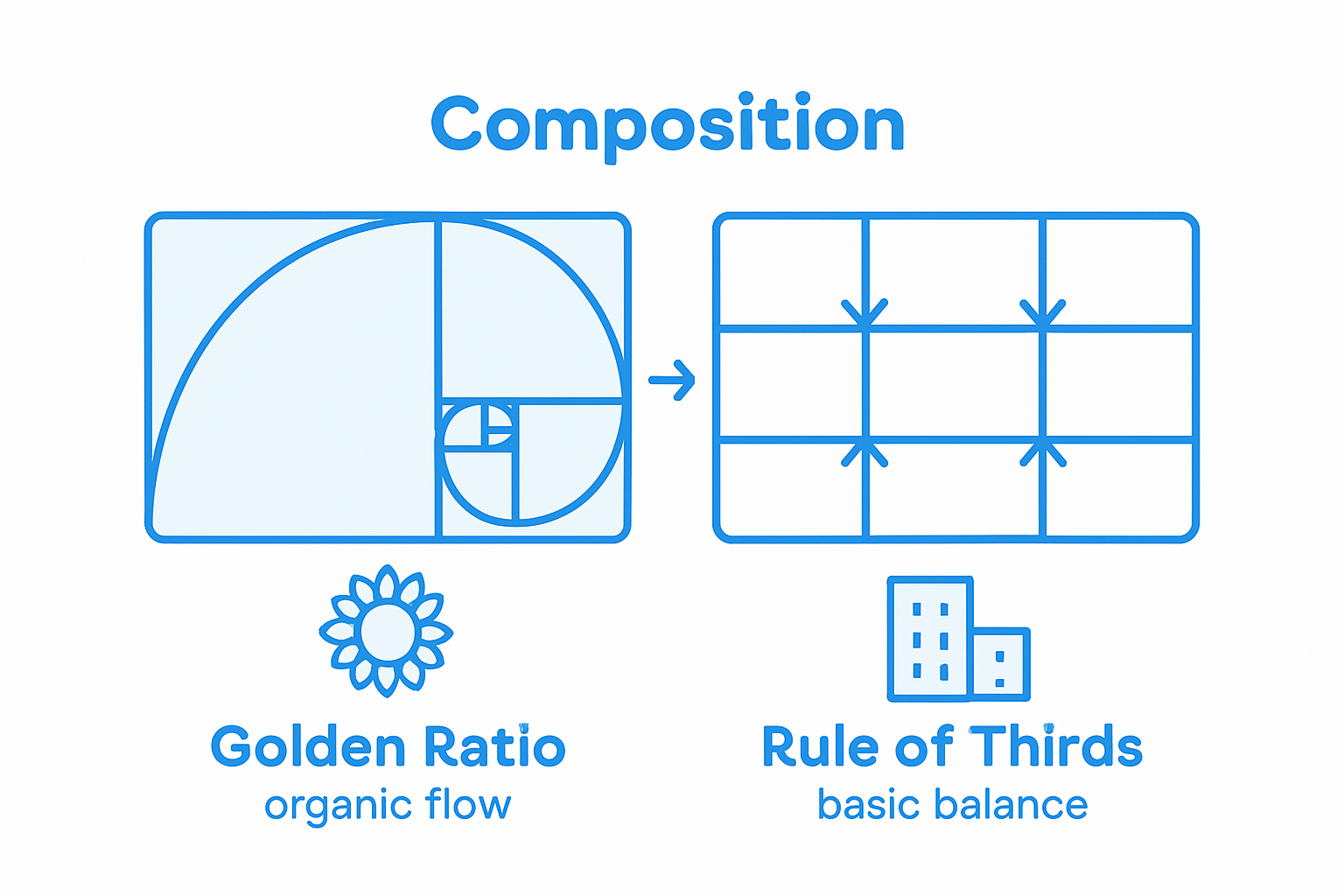
Practically speaking, the Rule of Thirds remains more accessible for beginners, offering a clear and immediate method for creating balanced images. The Golden Ratio, however, provides advanced photographers with a more intricate tool for visual storytelling. Landscape photographers might find the Rule of Thirds perfect for placing horizons, while portrait photographers could leverage the Golden Spiral to create more complex, naturally flowing compositions that guide the viewer’s eye with greater sophistication.
Ultimately, these techniques are not competing principles but complementary tools in a photographer’s creative arsenal. The most skilled photographers understand that composition is an art form that transcends rigid mathematical rules. While the Golden Ratio and Rule of Thirds offer valuable guidelines, true photographic mastery comes from understanding these principles and then confidently breaking them to create unique, emotionally resonant images that speak directly to the viewer’s aesthetic sensibilities.
Common Pitfalls When Using Golden Ratio
Photographers often misunderstand the Golden Ratio as a rigid, universal solution for compelling compositions, when in reality it represents a flexible guideline that requires nuanced understanding. The most significant pitfall emerges from treating this mathematical proportion as an absolute rule rather than a creative suggestion, potentially constraining artistic expression instead of enhancing it.
One critical error photographers frequently make involves overly mechanical application of the Golden Ratio. Many practitioners become so focused on precisely aligning elements that they sacrifice the emotional essence and spontaneity of their images. Understanding composition fundamentals becomes crucial in recognizing that technical precision should never overshadow the image’s storytelling potential. Research suggests that while the Golden Ratio can provide a helpful framework, its application is not universally preferred or guaranteed to improve visual appeal.
Another common mistake is attempting to force the Golden Ratio onto every single photograph. Different photographic genres and subjects demand unique compositional approaches. Wildlife photography might benefit from the spiral technique, while documentary-style images could require more organic, less mathematically structured framing. Photographers risk creating artificially staged images when they prioritize mathematical proportions over authentic visual storytelling, potentially losing the raw emotion and spontaneity that make photographs truly captivating.
Successful implementation of the Golden Ratio requires a balanced approach that combines technical knowledge with creative intuition. Photographers should view this mathematical principle as a subtle guide, not a restrictive template. The most compelling images emerge when technical understanding blends seamlessly with personal artistic vision, allowing photographers to use the Golden Ratio as a sophisticated tool for visual communication rather than a constraining set of rules.
Master the Art of Composition with the Golden Ratio

Struggling to create photographs that truly captivate your viewers The challenge lies in understanding how to use composition techniques like the Golden Ratio to balance and guide the eye naturally. Whether you feel stuck relying only on the Rule of Thirds or want to add more sophisticated tools to your creative toolkit mastering these concepts can transform your photography from ordinary to extraordinary. This article highlights the importance of concepts such as the Phi Grid and Golden Spiral to elevate your visual storytelling by blending technical precision with creative intuition.
Ready to take your photography skills to the next level Dive into comprehensive guides that simplify composition and camera techniques so you can confidently craft stunning images. Explore practical tips on composition fundamentals and learn how to apply the Golden Ratio with ease by visiting Amateur Photographer Guide. Discover detailed articles like Understanding Composition Fundamentals and unleash your creative potential now. Don’t wait to start captivating your audience with every shot.
Frequently Asked Questions
What is the Golden Ratio in photography?
The Golden Ratio is a mathematical proportion, approximately 1.618, that is often used in photography to create aesthetically pleasing compositions. It appears in various natural and artistic contexts, helping to guide the arrangement of elements within an image for a balanced visual experience.
How can I apply the Golden Ratio in my photography?
You can apply the Golden Ratio using techniques like the Phi Grid, which divides your image into nine sections based on the Golden Ratio, or the Golden Spiral, which helps position key elements along a dynamic spiral that mirrors natural patterns. This creates a more engaging composition that naturally guides the viewer’s eye.
Are the Golden Ratio and Rule of Thirds the same?
No, the Golden Ratio and Rule of Thirds are different compositional techniques. The Rule of Thirds divides the frame into nine equal sections, while the Golden Ratio provides a more sophisticated and fluid framework for arranging elements that reflects natural growth patterns, offering more complexity in composition.
What are common mistakes to avoid when using the Golden Ratio?
Common mistakes include treating the Golden Ratio as a strict rule rather than a flexible guideline, leading to mechanical compositions that lack emotion. Additionally, forcing the Golden Ratio into every photograph can result in staged and less authentic images. It’s essential to balance technical application with creative intuition.
Recommended
- The Rule Of Thirds Explained: A Photographer’s Ultimate Guide – Amateur Photographer Guide
- What Is Composition in Photography? Complete Overview – Amateur Photographer Guide
- Rule of Thirds Explained: Composition for Photographers – Amateur Photographer Guide
- The Basics Ideas Of Photography – Amateur Photographer Guide
- Captivating Imagery Through Photography By Drone: Elevate Your Skills – Wispa Luxury
- 7 przykładów fotografia wizerunkowa – praktyczne inspiracje – Coolheads – Fotografia biznesowa
Last update on 2026-07-07 / Affiliate links / Images from Amazon Product Advertising API