
Table of Contents
This blog post may contain affiliate links. As an Amazon Associate I earn from qualifying purchases.
More than 60 percent of american photographers say their images feel too cluttered or busy. This common frustration drives many to explore minimalist photography, a style that celebrates simplicity and intentional design. In a world full of visual noise, learning to strip photos to their purest elements can help you express more with less. Discover how a minimalist approach can elevate your skills and reveal the unseen power behind every thoughtful frame.
Key Takeaways
| Point | Details |
|---|---|
| Embrace Simplicity | Minimalist photography focuses on essential elements, utilizing the “less is more” philosophy to create powerful images. |
| Master Composition Techniques | Key techniques include negative space, geometric shapes, and subject isolation, which enhance the visual narrative. |
| Select Subjects Carefully | The beauty of minimalist photography arises from what is excluded, making subject selection crucial for impactful imagery. |
| Avoid Common Pitfalls | Beginner mistakes, such as overcomplicated compositions and poor color management, can hinder minimalist expression and should be actively avoided. |
Defining Minimalism in Photography
Minimalist photography strips visual storytelling down to its most essential elements, transforming complex scenes into powerful, distilled compositions. By deliberately reducing visual noise and focusing on fundamental geometric shapes, colors, and spatial relationships, photographers create images that speak volumes through intentional simplicity.
At its core, minimalist photography represents a deliberate artistic approach that embraces the principle “less is more”. Photographers working in this style carefully eliminate extraneous details, leaving only the most critical visual components. The goal is not absence, but strategic reduction – creating images where every remaining element carries significant visual weight and emotional resonance. As the renowned design principle suggests, “Simplicity is the ultimate sophistication.”
The key characteristics of minimalist photography include:

- Extensive use of negative space
- Strong geometric shapes and clean lines
- Limited color palettes
- Precise, intentional composition
- Emphasis on visual balance and isolation
Understanding minimalism requires recognizing that removing visual elements is an active, thoughtful process. Photographers must make deliberate choices about what to exclude, transforming seemingly simple images into complex visual narratives. By exploring this style, you can learn to see the world through a more focused, intentional lens. For more insights into photographic composition techniques, check out our guide on composition in photography.
Minimalist photography challenges viewers to look deeper, inviting them to find meaning in what might initially appear sparse or understated. It demands exceptional skill to create compelling images that communicate powerfully through restraint, turning photographic limitations into extraordinary creative opportunities.
Core Elements and Visual Techniques
Minimalist photography is an intentional art form that relies on specific visual strategies to create compelling, distilled imagery. The core elements of this photographic approach transform seemingly simple scenes into powerful visual statements through carefully planned compositional techniques.
The fundamental visual techniques in minimalist photography center around strategic reduction and precise spatial management. Photographers utilize several key strategies to achieve impactful minimalist compositions:
- Negative Space: Creating visual breathing room by deliberately leaving large areas of the frame empty
- Geometric Framing: Using strong, clean lines and shapes to structure the image
- Color Simplification: Limiting color palettes to create visual harmony
- Subject Isolation: Positioning a single subject against a clean, uncluttered background
- Symmetry and Balance: Creating perfectly balanced compositions with mathematical precision
Understanding perspective plays a crucial role in minimalist photography. By carefully controlling how viewers perceive spatial relationships, photographers can guide visual attention and create emotional resonance through strategic positioning. When mastering these techniques, photographers learn to transform ordinary scenes into extraordinary visual narratives. For deeper insights into photographic perspective, check out our guide on perspective in photography.
Advanced minimalist photographers recognize that true mastery involves more than just removing elements. It requires an intuitive understanding of visual weight, emotional impact, and the subtle art of suggestion. Each image becomes a carefully constructed experience, inviting viewers to engage deeply with seemingly simple compositions that communicate complex ideas through remarkable visual restraint.
Popular Styles and Subject Choices
Minimalist photography embraces diverse subject matter, transforming ordinary scenes into extraordinary visual experiences through strategic composition and thoughtful perspective. While the style might seem restrictive, photographers actually enjoy remarkable creative freedom in selecting and presenting subjects that highlight simplicity and visual impact.
Some of the most compelling minimalist photography styles include:
- Architectural Minimalism: Focusing on clean lines, geometric shapes, and structural symmetry
- Natural Landscape Minimalism: Capturing expansive spaces with singular focal points
- Urban Minimalism: Highlighting geometric patterns in city environments
- Abstract Minimalism: Reducing complex scenes to fundamental visual elements
- Object Isolation: Presenting single objects against stark, uncluttered backgrounds
Nature provides particularly rich opportunities for minimalist photographers. Subjects like lone trees against white skies, geometric rock formations, or simple shoreline scenes can communicate profound visual stories through intentional simplification. By carefully controlling composition, photographers transform mundane landscapes into powerful visual statements that invite viewers to see familiar environments from entirely new perspectives. To explore more creative photographic approaches, check out our tutorial on abstract photography.
Successful minimalist photographers understand that subject selection is an art form in itself. The most compelling images emerge not from what is included, but from what is deliberately excluded. Each photograph becomes a carefully curated visual experience, inviting viewers to engage with simplicity, find beauty in restraint, and appreciate the profound storytelling potential of seemingly sparse compositions.
Creative Benefits and Practical Uses
Minimalist photography offers photographers a powerful toolkit for creative expression that extends far beyond aesthetic appeal. By stripping away visual complexity, this approach enables artists to communicate profound ideas with remarkable clarity and emotional depth, transforming seemingly simple images into sophisticated visual narratives.
The creative benefits of minimalist photography are multifaceted and transformative:
- Enhanced Visual Communication: Distilling images to their essence helps photographers communicate more directly
- Improved Compositional Skills: Practicing minimalism develops keen abilities to analyze and arrange visual elements
- Emotional Storytelling: Creating powerful narratives through strategic reduction and suggestion
- Mental Clarity: Developing a more focused and intentional approach to visual creativity
- Technical Precision: Requiring exceptional skill to create compelling images with limited visual components
Practical applications of minimalist photography span multiple professional domains. Fine art photographers leverage this style to create gallery-worthy pieces that explore philosophical and aesthetic concepts, while commercial photographers use minimalist techniques to design clean, impactful visual communications. For those interested in expanding their photographic toolkit, understanding foundational composition principles is crucial. To dive deeper into compositional techniques, explore our guide on photography composition.
Ultimately, minimalist photography is more than a style. It represents a philosophical approach to visual storytelling that challenges photographers to see beyond surface complexity, finding profound beauty in simplicity. By mastering this art form, photographers learn to communicate more effectively, think more critically about visual design, and create images that resonate deeply with viewers through intentional, thoughtful composition.
Common Mistakes and How to Avoid Them
Minimalist photography demands precision and intentionality, making it particularly susceptible to common pitfalls that can undermine the entire visual narrative. Beginners often struggle with understanding the delicate balance between reduction and meaningful composition, which can lead to images that feel empty rather than elegantly simplified.
The most frequent minimalist photography mistakes include:
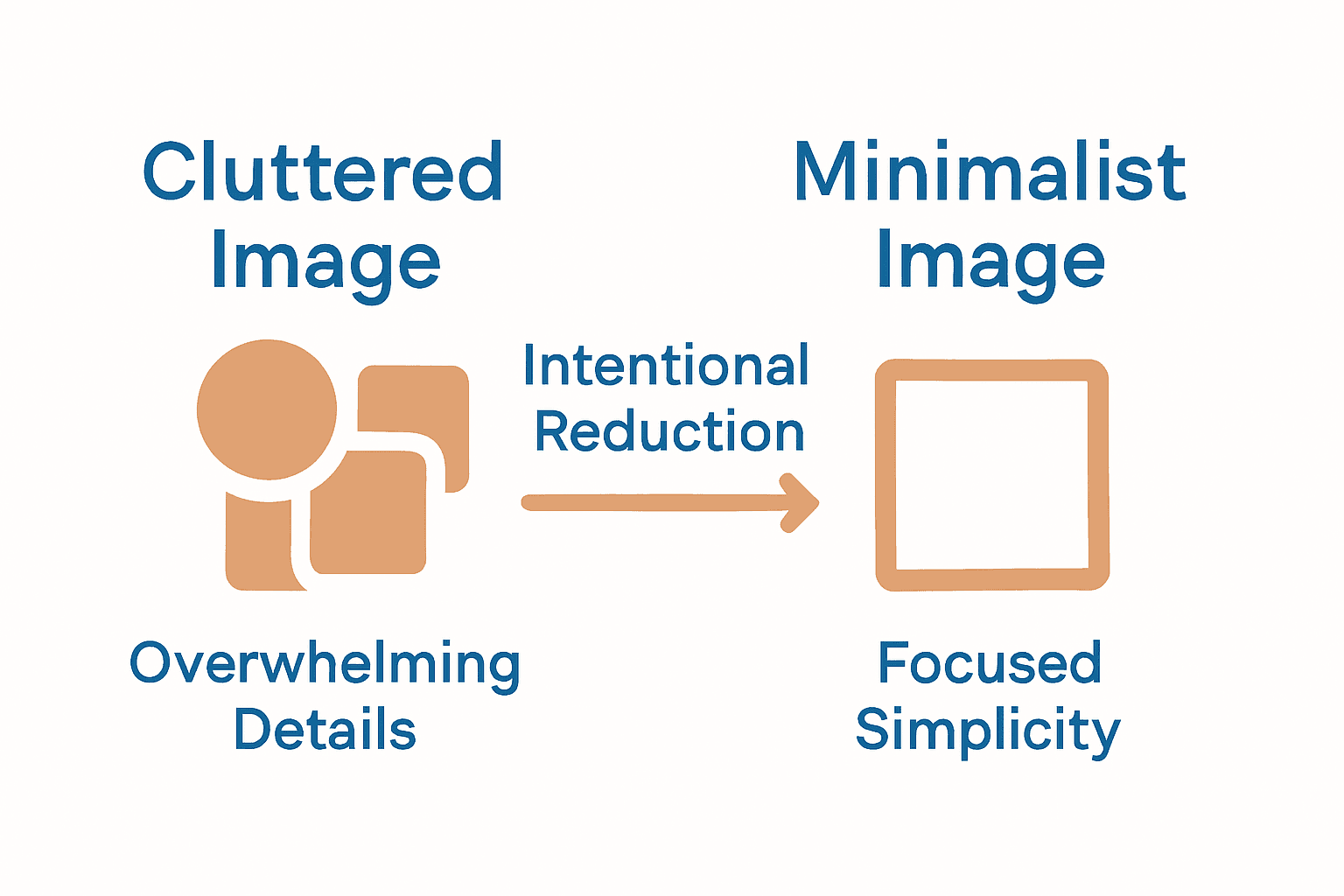
- Overcomplicated Compositions: Adding too many elements that dilute the central message
- Lack of Visual Hierarchy: Failing to create a clear focal point within the minimalist frame
- Ignoring Negative Space: Treating empty areas as afterthoughts instead of intentional design elements
- Poor Color Management: Using color palettes that clash or compete rather than complement
- Technical Inconsistency: Inconsistent lighting or exposure that breaks the minimalist aesthetic
Navigating these challenges requires deliberate practice and a strategic approach to image creation. Photographers must train themselves to see beyond conventional visual clutter, developing an intuitive sense of what to include and what to deliberately exclude. Practicing minimalist composition is much like learning a new language where every element carries significant meaning. For comprehensive insights into avoiding common photographic errors, explore our guide on photography mistakes.
Successful minimalist photographers understand that mistakes are not failures but opportunities for growth. By embracing a mindset of continuous learning and experimental curiosity, photographers can transform initial technical challenges into refined, powerful visual storytelling techniques that communicate profound ideas through remarkable simplicity.
Unlock the Power of Minimalism in Your Photography Journey
Struggling to master the art of minimalist photography can leave your images feeling empty or overcomplicated. This guide highlights the challenge of creating striking compositions through intentional reduction, strategic use of negative space, and subject isolation. If you want to develop your ability to see beyond clutter and craft emotionally resonant photos with visual balance and precision this is the moment to elevate your skills. Understanding fundamental composition concepts and avoiding common mistakes are key steps.

Discover step-by-step tutorials and expert tips that will help you transform your photographic approach immediately. Start refining your technique and making bold creative choices by exploring our practical resources at the Amateur Photographer Guide. Unlock deeper insights on mastering composition in photography with our composition guide and learn how to maintain perspective with our perspective guide. Take your minimalist photography from confusion to clarity today and create compelling images that speak volumes with simplicity.
Frequently Asked Questions
What is minimalist photography?
Minimalist photography is an art form that focuses on simplicity by stripping visual storytelling down to essential elements, transforming complex scenes into powerful, distilled compositions.
What are the key characteristics of minimalist photography?
Key characteristics include extensive use of negative space, strong geometric shapes and clean lines, limited color palettes, precise composition, and an emphasis on visual balance and isolation.
How can I avoid common mistakes in minimalist photography?
To avoid common mistakes, focus on creating clear focal points, utilize negative space intentionally, manage your color palette wisely, and maintain technical consistency in your images.
What are some effective techniques for capturing minimalist photographs?
Some effective techniques include using negative space, isolating your subject, employing geometric framing, simplifying color palettes, and aiming for balance in your compositions.
Recommended
- 7 Essential Photography Beginner Tips for New Photographers – Amateur Photographer Guide
- 7 Essential Steps for Your Photography Basics Checklist – Amateur Photographer Guide
- The Basics Ideas Of Photography – Amateur Photographer Guide
- What Is Composition in Photography? Complete Overview – Amateur Photographer Guide