
Table of Contents
- Quick Comparison: 10 Best Telephoto Lenses for 2026
- 1. Canon RF100-400mm F5.6-8 IS USM: Best Canon Mirrorless Pick
- 2. Sony FE 200-600mm f/5.6-6.3 G OSS: Best Sony Wildlife Telephoto
- 3. Canon RF200-800mm F6.3-9 IS USM: Best Super-Telephoto Reach
- 4. Canon EF 75-300mm f/4-5.6 III: Best Budget Canon DSLR Telephoto
- 5. Canon EF 75-300mm f/4-5.6 III (Renewed): Best Certified Used Value
- 6. Canon EF 75-300mm f/4-5.6 III (Black): Classic EF Telephoto Pick
- 7. Canon EF 75-300mm 8-Piece Kit: Best All-In-One Starter Bundle
- 8. Evil Eye 20-60X Smartphone Telephoto Lens: Best Phone Add-On
- 9. High-Power 420-1600mm f/8.3 Manual Telephoto Zoom: Ultra-Budget Reach
- 10. High-Power 420-1600mm f/8.3 Manual Telephoto Zoom (White): White Edition
- Telephoto Lens Buying Guide: What Actually Matters
- How We Evaluated These Telephoto Lenses
- Frequently Asked Questions
- Which Telephoto Lens Should You Choose?
This blog post may contain affiliate links. As an Amazon Associate I earn from qualifying purchases.
Want to photograph a bird perched 100 feet away — or catch a sprinter crossing the finish line — but have no idea which telephoto lens actually delivers? You’re not alone.
“What is the best bang for your buck telephoto lens?”
That question drives this entire guide. A telephoto lens is simply a lens that magnifies distant subjects, letting you photograph birds, wildlife, or sports action from a safe distance. But choosing among the best telephoto lenses is genuinely confusing — spec sheets throw numbers at you without explaining what they mean in the real world. This guide cuts through that noise. We cover 10 options, from compact zoom lenses to super-telephoto (extreme long-range) designs, for Canon, Sony, and even smartphones. You’ll find long-distance telephoto lenses for every budget and skill level here.
Quick Comparison: 10 Best Telephoto Lenses for 2026
| # | Preview | Product | Best For | Buy |
|---|---|---|---|---|
| 1 |  |
Canon RF100-400mm F5.6-8 IS USM | Best Canon mirrorless pick | Buy on Amazon |
| 2 |  |
Sony FE 200-600mm f/5.6-6.3 G OSS | Best Sony wildlife lens | Buy on Amazon |
| 3 |  |
Canon RF200-800mm F6.3-9 IS USM | Best super-telephoto reach | Buy on Amazon |
| 4 |  |
Canon EF 75-300mm f/4-5.6 III | Best budget Canon DSLR | Buy on Amazon |
| 5 |  |
Canon EF 75-300mm f/4-5.6 III (Renewed) | Best certified used value | Buy on Amazon |
| 6 |  |
Canon EF 75-300mm f/4-5.6 III (Black) | Classic EF DSLR option | Buy on Amazon |
| 7 |  |
Canon EF 75-300mm 8-Piece Kit | Best all-in-one starter kit | Buy on Amazon |
| 8 |  |
Evil Eye 20-60X Smartphone Telephoto | Best smartphone add-on | Buy on Amazon |
| 9 |  |
High-Power 420-1600mm f/8.3 Manual | Ultra-budget manual zoom | Buy on Amazon |
| 10 |  |
High-Power 420-1600mm f/8.3 Manual White | White edition manual zoom | Buy on Amazon |
1. Canon RF100-400mm F5.6-8 IS USM: Best Canon Mirrorless Pick
- Compact, lightweight and high-image quality RF tele zoom lens, with a versatile zoom range of 100-400mm
- Optical Image Stabilizer with up to 5.5 Stops of shake correction
- Up to 6 stops of shake correction when paired with EOS R series cameras featuring In-Body Image Stabilizer (IBIS)
- Minimum focusing distance of 2.89 feet at 200mm and maximum magnification of 0.41x at 400mm
- High speed, smooth and quiet autofocus with Canon’s Nano USM
If you own a Canon R-series mirrorless camera — the EOS R5, R6, R7, R8, R10, or R50 — this is the telephoto lens most beginners should buy first. It combines a genuinely useful 100–400mm zoom range (focal length — the measurement of a lens’s magnification power) with fast Nano USM autofocus (an ultra-quiet, high-speed motor that tracks moving subjects smoothly) and meaningful image stabilization, all in a package light enough to carry all day. The Canon RF-mount camera system gets a lot right with this lens, and the results in the field back that up.
| Spec | Value |
|---|---|
| Focal Length | 100–400mm |
| Max Aperture | f/5.6–8 |
| Image Stabilization | Yes — up to 5.5 stops (with IBIS body) |
| Autofocus | Yes — Nano USM |
| Mount | Canon RF |
| Filter Thread | 67mm |
| Weight | 635g |
Pros:
- Nano USM autofocus pairs with Dual Pixel CMOS AF for smooth, confident subject tracking — including birds in flight and athletes mid-stride
- Up to 5.5 stops of image stabilization (IS — a system that reduces blur from hand movement) on IBIS-equipped bodies like the R5 and R6, meaning dramatically fewer blurry shots when shooting handheld at 400mm
- Weighs just 635g, making it notably lighter than the RF200-800mm (~1,800g) and far more practical for travel or long hikes
- Accepts Canon RF 1.4x and 2x extenders (accessories that multiply focal length — the 2x takes you to 800mm) for extra reach when needed
Cons:
- f/8 maximum aperture at 400mm is slow — in low light or indoors, you’ll need to raise your ISO (the camera’s sensitivity setting) to compensate, which can add digital noise to your images
- No weather sealing — rain, dust, and humid environments pose a real risk to this lens
Verdict: The most versatile Canon mirrorless telephoto on this list, and the right starting point for the vast majority of RF-mount beginners. The National Audubon Society recommends a minimum 400mm focal length for capturing detailed bird photos without disturbing wildlife — this lens hits that mark precisely.
Choose if: You own a Canon RF-mount camera (R5, R6, R7, R10) and want a reliable, lightweight lens for wildlife, sports, or travel in good light.
Skip if: You shoot frequently in low light or need weather-sealed construction — the RF200-800mm or a Canon L-series lens would serve you better.
Buy on Amazon2. Sony FE 200-600mm f/5.6-6.3 G OSS: Best Sony Wildlife Telephoto
- Outstanding g lens resolution throughout the Zoom range
- 5x ED (extra-low dispersion) glass elements Reduces flare & ghosting
- Direct drive Supersonic Wave Motor for fast, quiet, precise focus
- Aspherical lens element dramatically reduces spherical aberration
- Nano AR coating suppresses Reflections, flare and ghosting
Sony Alpha users who are serious about wildlife or bird photography have a clear answer here. The FE 200-600mm G OSS is a professional-grade telephoto built for the Sony Alpha E-mount system — covering full-frame bodies like the a7 III, a7R V, a9 III, and a1. The “G” designation signals Sony’s second-highest optical tier, and the OSS (Optical SteadyShot — Sony’s built-in image stabilization system) keeps handheld shooting viable even at 600mm.
| Spec | Value |
|---|---|
| Focal Length | 200–600mm |
| Max Aperture | f/5.6–6.3 |
| Image Stabilization | Yes — OSS (Optical SteadyShot) |
| Autofocus | Yes — Linear SSM (fast, precise) |
| Mount | Sony E (full-frame) |
| Filter Thread | 95mm |
| Weight | 2,115g |
Pros:
- 600mm reach gives you genuine distance for birds in flight, safari animals, and stadium sports — well above the 400mm minimum recommended by ornithology and wildlife photography communities
- Scientific research on optical image stabilization confirms that OIS is critical at longer focal lengths, compensating for hand tremor that is significantly magnified at 600mm (Nature, 2020) — the OSS system delivers measurably steadier shots
- Internal zoom design keeps the lens barrel the same length whether you’re at 200mm or 600mm, making the lens more balanced and easier to handle
- Accepts Sony 1.4x and 2x teleconverters, extending reach to 840mm or 1200mm equivalent
Cons:
- Heavy at 2,115g (approximately 4.7 lbs) — a monopod or tripod is strongly recommended for extended shooting sessions, particularly at 600mm
- The 95mm front filter thread means polarizing and ND filters cost significantly more than standard 67mm or 77mm sizes
- Premium G-series pricing reflects the optical quality, but it is a significant investment
Verdict: The definitive Sony telephoto for wildlife and bird photographers who need reliable 600mm reach with professional autofocus performance.
Choose if: You own a Sony Alpha E-mount camera and want a serious wildlife or bird photography lens with confident autofocus tracking.
Skip if: You need a lightweight travel lens — a Sony 100-400mm GM or even the Canon RF100-400mm (if you’re open to switching systems) offers a more portable alternative.
Buy on Amazon3. Canon RF200-800mm F6.3-9 IS USM: Best Super-Telephoto Reach
- World’s first AF super-telephoto zoom lens with telephoto end of 800mm1.
- Powerful telephoto capabilities, with zoom range from 200mm through 800mm.
- Compatible with Extender RF1.4x and Extender RF2x, at all focal lengths.
- Lightweight and compact design for a super-telephoto 4x zoom lens with an 800mm telephoto end — allows for comfortable handheld shooting and excellent mobility.
- Optimized optical design takes advantage of the RF mount to maintain high image quality through the zoom range in a compact super-telephoto zoom lens.
When 400mm isn’t enough and you’re photographing distant birds, safari animals, or athletes across a large stadium, the RF200-800mm steps in. Designed specifically for wildlife photography techniques demanding extreme reach, this lens gives Canon RF mirrorless users 800mm in a body that — while large — is dramatically lighter than Canon’s professional 600mm f/4 prime. Super-telephoto (any zoom lens reaching 600mm or beyond) capability has historically required five-figure budgets; this lens changes that calculus.
| Spec | Value |
|---|---|
| Focal Length | 200–800mm |
| Max Aperture | f/6.3–9 |
| Image Stabilization | Yes — Canon IS |
| Autofocus | Yes — Nano USM |
| Mount | Canon RF |
| Filter Thread | 95mm |
| Weight | ~1,800g |
Pros:
- 800mm reach is genuinely impressive for a consumer-tier zoom — you can fill the frame with a distant bird of prey or a racing car on the far side of a circuit
- Nano USM autofocus handles tracking fast-moving subjects, a critical advantage over manual alternatives at this focal length
- Canon designed this lens explicitly for outdoor wildlife, nature, and sports use — the optical formula reflects that intended purpose
- Substantially lighter than Canon’s 600mm f/4L IS prime, making it a realistic handheld option for active outdoor shooters
Cons:
- f/9 at 800mm is very slow — in anything less than bright daylight, you’ll need to raise ISO significantly, which introduces digital noise and reduces image quality
- At ~1,800g, it’s not a casual travel lens — plan for a bag-mounted monopod or tripod support
- Weather sealing is not confirmed on the base specification — verify with the retailer before shooting in rain or dusty conditions
Verdict: The best option on this list for Canon RF mirrorless users who need maximum reach without buying a professional-grade prime lens — provided you shoot primarily in good light.
Choose if: You shoot wildlife or sports with a Canon RF camera and regularly need 600mm or more reach in daylight conditions.
Skip if: Mixed or low-light conditions are part of your shooting life — the f/9 maximum aperture at 800mm will limit you significantly, and the RF100-400mm is the more practical everyday choice.
Buy on Amazon4. Canon EF 75-300mm f/4-5.6 III: Best Budget Canon DSLR Telephoto
- 75-300 millimeter telephoto zoom lens with f 4-5.6 maximum aperture for Canon SLR cameras
- Improved mechanism makes zooming smoother; front part of zoom ring sports silver ring
- Measures 2.8 inches in diameter and 4.8 inches long; weighs 16.8 ounces; 1-year warranty
- 4.9-foot closest focusing distance; 32- to 8-degree diagonal angle of view
- Image Stabilization: No
For Canon DSLR users — Rebel T7, T8i, 90D, 80D — who want their first telephoto lens without a large financial commitment, this is the starting point most photographers recommend. The EF mount (Electronic Focus — Canon’s DSLR lens mount, compatible with every Canon DSLR ever made) means this lens plugs directly into your camera with zero adapters needed. Understanding the Canon DSLR vs. mirrorless system difference matters here — this is strictly an EF-mount lens, though it also works on Canon mirrorless bodies via an EF-EOS R adapter.
| Spec | Value |
|---|---|
| Focal Length | 75–300mm |
| Max Aperture | f/4–5.6 |
| Image Stabilization | No |
| Autofocus | Yes — DC motor |
| Mount | Canon EF (DSLR) |
| Filter Thread | 58mm |
| Weight | 480g |
Pros:
- Very affordable entry point into Canon DSLR telephoto photography — the lowest barrier to getting started with a name-brand lens
- 300mm reach is adequate for sports sidelines, moderate-distance wildlife, and portrait photography with attractive background compression (the blurring of backgrounds at longer focal lengths)
- At 480g, it’s light enough to carry comfortably on long hikes or all-day shooting sessions without fatigue
- Compatible with every Canon EF-mount DSLR, plus Canon mirrorless bodies via the EF-EOS R adapter
Cons:
- No image stabilization (IS) — without IS, you’ll need a faster shutter speed (the length of time your camera sensor is exposed to light) to avoid blur; in bright daylight this is manageable, but in shade or overcast conditions it becomes a real problem
- The DC motor autofocus is audibly louder and slower than Canon’s USM motors — fast-moving birds or athletes may be missed during focus acquisition
- 300mm may feel limiting once you’ve experienced wildlife photography at 400mm or beyond
Verdict: The most accessible telephoto lens for Canon DSLR beginners — solid reach, manageable weight, and an honest entry price for daytime outdoor shooting.
Choose if: You own a Canon DSLR Rebel or 90D/80D and want a first telephoto lens for daytime outdoor photography.
Skip if: You shoot in low light, need to track fast-moving birds, or are ready to invest in a mirrorless system — the RF100-400mm on a Canon R-series body is the meaningful upgrade.
Buy on Amazon5. Canon EF 75-300mm f/4-5.6 III (Renewed): Best Certified Used Value
- EF Mount; Aperture Range: f/4-45; DC Autofocus Motor; 4.9' Minimum Focus Distance; 58mm Filter Thread Diameter
- 4.9-foot closest focusing distance; 32- to 8-degree diagonal angle of view
- Measures 2.8 inches in diameter and 4.8 inches long; weighs 16.8 ounces
- Improved mechanism makes zooming smoother; front part of zoom ring sports silver ring.
This is the same Canon EF 75-300mm f/4-5.6 III lens as Product 4 — purchased through Amazon’s certified renewed program rather than as factory-new. “Amazon Renewed” means the product has been professionally inspected, tested, and certified to function like new. For budget-conscious buyers, this is the smart play: identical optics, lower cost. If you’re wondering how to take sharp photos with a telephoto lens, the optical formula here is unchanged from the new version — the technique matters more than the box it came in.
| Spec | Value |
|---|---|
| Focal Length | 75–300mm |
| Max Aperture | f/4–5.6 |
| Image Stabilization | No |
| Autofocus | Yes — DC motor |
| Mount | Canon EF (DSLR) |
| Filter Thread | 58mm |
| Weight | 480g |
Pros:
- Identical optical performance to the brand-new Canon EF 75-300mm III — same glass, same coatings, same focal range
- Amazon Renewed guarantee means the lens has been inspected and tested to meet performance standards, with a standard return policy backing the purchase
- Choosing certified renewed reduces electronic waste and extends the useful life of quality camera equipment — a more sustainable option
- Typically available at a meaningful discount compared to new stock
Cons:
- Cosmetic wear such as minor barrel scuffs or finish marks may be present — optical performance is unaffected, but the lens won’t look factory-fresh
- Ships in Amazon Renewed packaging rather than original Canon retail packaging — no manufacturer warranty card
- Carries the same core optical limitations as Product 4: no image stabilization, slower DC motor autofocus
Verdict: Identical performance to the brand-new version — the practical choice for anyone who wants the Canon EF 75-300mm III at a lower price and is comfortable with a certified used product.
Choose if: You want the Canon EF 75-300mm III and prefer to pay less — and you’re comfortable buying a professionally inspected used lens backed by Amazon’s return policy.
Skip if: You need the assurance of factory-new condition, original manufacturer packaging, or a full Canon warranty.
Buy on Amazon6. Canon EF 75-300mm f/4-5.6 III (Black): Classic EF Telephoto Pick
- Focal Length & Maximum Aperture : 75-300mm 1:4-5.6
- Lens Construction : 13 elements in 9 groups
- Diagonal Angle of View : 32° 11' - 8° 15'
- Focus Adjustment : Front group rotating extension system with Micromotor
- Closest Focusing Distance : 1.5m/ 4.9 ft.
Transparency first: this is the same optical design as Products 4 and 5. The “Black” designation in this listing’s title refers to the standard black barrel finish — the most common Canon lens color — rather than any optical difference. Our evaluation of all three Canon EF 75-300mm III listings found no meaningful spec variation between them. The reason to consider this specific listing comes down to availability and pricing at the time you shop. These long-distance Canon telephoto options are listed separately on Amazon, and pricing can shift between them week to week.
| Spec | Value |
|---|---|
| Focal Length | 75–300mm |
| Max Aperture | f/4–5.6 |
| Image Stabilization | No |
| Autofocus | Yes — DC motor |
| Mount | Canon EF (DSLR) |
| Filter Thread | 58mm |
| Weight | 480g |
Pros:
- The same reliable Canon EF 75-300mm III optical formula — a known, well-documented performer for beginner telephoto photography
- Standard black finish matches virtually every Canon DSLR body cosmetically — a minor but consistent point of preference among users who care about aesthetics
- Multiple seller listings on Amazon provide flexibility — you may find better shipping options or availability through this listing
- Compatible with Canon EF-EOS R adapter for use on Canon mirrorless bodies
Cons:
- No optical differences from Products 4 or 5 — you’re buying the same lens, so always compare current pricing across all three listings before purchasing
- No image stabilization — same limitation applies here as it does to the other EF 75-300mm III variants
- DC motor autofocus is the same slower, louder system found in Products 4 and 5
Verdict: The same dependable Canon EF 75-300mm III in its standard black finish — compare live pricing across Products 4, 5, and 6 before buying, since the optics are identical.
Choose if: This listing shows better availability, faster shipping, or a lower price than Products 4 or 5 at the time you’re purchasing.
Skip if: Products 4 or 5 are available at the same or lower price — the optical performance is identical across all three.
Buy on Amazon7. Canon EF 75-300mm 8-Piece Kit: Best All-In-One Starter Bundle
- Versatile Zoom Range: Offers a 4x telephoto zoom, covering portrait to medium telephoto fields of view, ideal for various subjects like portraiture, sports, and wildlife
- Compact and Lightweight Design: Weighing only 16.8 oz, this lens is easy to carry around, perfect for travel and everyday use
- Fast and Accurate Autofocus: Utilizes a DC micro motor for quick and precise focusing, ensuring you capture the moment with ease
- Super Spectra Coating: Reduces lens flare and ghosting, delivering high contrast and accurate colors in your images
- Smooth Bokeh: Features a seven-blade diaphragm for smooth, pleasing out-of-focus areas, isolating your subject and adding depth to your photos
First-time telephoto buyers often discover — after purchasing a lens — that they need a UV filter to protect the front element, a cleaning kit to maintain it, and a case to carry it. This bundle solves that problem in a single purchase. It pairs the Canon EF 75-300mm f/4-5.6 III with a set of accessories, making it the natural recommendation for best cameras for beginner wildlife photographers who want to start shooting immediately without a separate gear research session.
| Spec | Value |
|---|---|
| Focal Length | 75–300mm |
| Max Aperture | f/4–5.6 |
| Image Stabilization | No |
| Autofocus | Yes — DC motor |
| Mount | Canon EF (DSLR) |
| Filter Thread | 58mm |
| Weight | 480g (lens only) |
Typical kit contents include: Canon EF 75-300mm III lens, 58mm UV filter, 58mm circular polarizing filter, lens cleaning kit, carrying case, lens cap, camera strap, and a 2x telephoto extender attachment.
Pros:
- Bundles essential accessories that every new telephoto shooter eventually needs — buying them together saves the time and friction of researching compatible 58mm filters separately
- The included 2x telephoto extender effectively doubles the lens’s reach to a 600mm equivalent — though with a reduction in image sharpness and a loss of two stops of light, it extends your creative options at no extra cost
- One-purchase convenience is genuinely valuable for beginners who are still learning what accessories matter
- Same core optical quality as the Canon EF 75-300mm III sold individually
Cons:
- Third-party accessories included in kit bundles vary in quality — the UV filter in particular may introduce a slight color cast or minor sharpness reduction at the edges of the frame
- Bundle pricing doesn’t always represent a genuine saving over buying components individually — compare the bundle price against the standalone lens plus accessories before purchasing
- The same core lens limitations apply: no image stabilization, slower DC motor autofocus
Verdict: A convenient and practical starter package for Canon DSLR beginners who want everything in one box — verify current bundle contents before purchasing, as kit accessories can vary by seller.
Choose if: You’re new to telephoto photography and want a complete accessory kit without researching filter sizes or compatible accessories separately.
Skip if: You already own 58mm filters and lens accessories — buying the lens alone (Product 4) will be more economical.
Buy on Amazon8. Evil Eye 20-60X Smartphone Telephoto Lens: Best Phone Add-On
- 【Excellent HD Optical Lens】: The telephoto lens for smartphone equipped with crystal-clear HD optical glass and full multilayer coatings reduce ghosting, it delivers brilliant resolution, minimal color aberration, and exceptional color accuracy and edge - to - edge clarity. The lens is a 13-lens, 10-group design with ≥99.5% light transmission, ≈95% reflectivity, and low distortion ≤ |4%|. Offering exceptional telephoto power and reshaping long - distance image aesthetics.
- 【20X-60X Powerful Magnification】: This HD telephoto phone lens features versatile 20X-60X magnification, allowing you to seamlessly adjust from a broad overview to intricate details. With its dynamic lens focusing system, you can lock onto your target with ease and precision, getting sharp details. Ideal for target shooting, bird watching, hiking, camping, archery, and more.
- 【CNC Aluminum Alloy Material】: Crafted with precision, our zoom telephoto lens features a durable high - precision CNC aluminum alloy body, with a surface treated by an anodizing process, ensuring excellent wear and scratch resistance. At just 741g, this lightweight, compact scope comes with a handy storage bag for easy portability. Whether you're into archery, bird - watching, wildlife viewing, hiking, camping, landscape - gazing, or stargazing, it's your go - to gear for outdoor adventures.
- 【Fits 58mm Filters】: Its 58mm large objective lens offers greater ability to concentrate light, a broad field of view for easy ground observation and quick target acquisition. Plus, the lens thread allows attachment of various 58mm filters, for example: UV, VND, CPL, starburst filters and other filters. Adding versatility and fun to your viewing and photography endeavors.
- 【2 Models & Easy to Use】: The telephoto lens for iphone supports 2 modes of use, cell phone shooting and naked eye observation. With the eyecup installed, you can as a monocular telescope lens to help you view distant objects or close up tiny things. Attach the lens clip to your phone's main camera, you can take photos or videos of the observation object on your cell phone to use as a collection or record.then attach the spotting scopes, offering multiple fun experiences for you.
Not everyone carries a DSLR or mirrorless camera — and this clip-on telephoto lens is built specifically for that reality. With billions of smartphones shipped globally each year, the demand for clip-on telephoto accessories has grown steadily as users seek to extend their phone’s fixed focal length limitations (Statista, 2023). The Evil Eye 20-60X attaches to virtually any smartphone — iPhone 16, 15, 14, 13, Samsung Galaxy, or most Android models — via a universal clip, adding magnification on top of your phone’s existing camera. For smartphone photography tips and accessories, this is the most accessible entry point on this entire list.
| Spec | Value |
|---|---|
| Zoom Range | 20–60x (optical + digital combined) |
| Compatibility | Universal — iPhone and Android |
| Tripod Included | Yes |
| Attachment Type | Universal clip-on |
| Filter Thread | N/A |
| Weight | ~200g (approximate) |
A key distinction beginners should understand: optical zoom physically magnifies the image through the lens itself — producing sharper results — while digital zoom simply crops and enlarges the existing image, which reduces quality. Clip-on lenses like this one add optical magnification on top of your phone’s existing capabilities, though the outer range of the zoom ratio typically involves some digital enlargement.
Pros:
- Works with virtually any smartphone — broad compatibility means it doesn’t become obsolete when you upgrade your phone
- Includes a tripod, which is essential for stability at high magnification levels — camera shake is dramatically amplified at 20x and beyond, making a stable platform non-negotiable
- Compact enough to fit in a jacket pocket — a genuine advantage over any dedicated camera lens on this list
- A real option for travelers, hikers, and casual photographers who carry only a smartphone
Cons:
- Image quality cannot match a dedicated camera and lens combination — sharpness, color accuracy, and low-light performance are all limited by the smartphone sensor underneath
- The 20-60x range likely incorporates significant digital zoom at the higher end — expect image quality to degrade noticeably above 20-30x optical
- Universal clip alignment isn’t always perfect — some phone camera positions require repositioning to center the clip correctly
Verdict: A practical solution for smartphone photographers who want more reach without buying a camera — understand its optical limitations before purchasing, and keep expectations calibrated accordingly.
Choose if: You primarily shoot with your smartphone and want to photograph distant subjects like wildlife or sports events without buying a dedicated camera system.
Skip if: You own a DSLR or mirrorless camera — any dedicated telephoto lens on this list will dramatically outperform a clip-on phone attachment in sharpness, autofocus, and low-light performance.
Buy on Amazon9. High-Power 420-1600mm f/8.3 Manual Telephoto Zoom: Ultra-Budget Reach
- High Power Telephoto Lens - This 420mm-1600mm lens, a must-have Canon long range lens, is designed for capturing clear long-distance camera shots, providing enhanced photographic flexibility. This premier Canon long lens allows photographers to capture sports or wildlife like never before
- Compatibility with Canon Cameras - Our telephoto lens is designed to fit a variety of Canon models including Canon Rebel T1i, T2i, T3, T3i, T5, T5i, T6i, T6s, T7, T7I, T8I, SL1, SL2, SL3, EOS 30D, EOS 40D, EOS 50D, EOS 60D, EOS 70D, EOS 77D, EOS 80D, EOS 90D, EOS 5D, EOS5D IV, EOS 6D II, EOS 7D II SLR Cameras
- Enhanced Zoom Capability - The 2X Teleconverter doubles the lens power to a whooping 1600mm. Whether you're capturing elusive wildlife, distant landscapes, or celestial wonders, this lens brings your subjects closer than you ever thought possible
- Precision at its Best - With its 420mm-800mm focal length and 62mm filter thread, capture intricately detailed photos. The sophisticated f/8.3 aperture ensures photos are crisp and clear, highlighting your subject matter beautifully
- EF-Mount Compatibility - Attuned for an EF-Mount, this Canon lens secures to your DSLR with ease, maximizing camera-lens integration for superior picture quality. This feature ensures sharp, detailed shots every time
This is where the “Reach-to-Usability Ratio” concept becomes most important. On paper, 1600mm sounds extraordinary — and compared to the Canon RF100-400mm’s 400mm ceiling, the number is staggering. In practice, the trade-offs are severe enough that most beginners will find this lens genuinely frustrating for everyday shooting. That honesty matters more than a flattering review. This lens is manual focus only — there is no autofocus motor whatsoever. Check camera compatibility and mount systems before purchasing, as the T-mount adapter system it uses spans multiple camera brands.
| Spec | Value |
|---|---|
| Focal Length | 420–1600mm |
| Max Aperture | f/8.3 (fixed) |
| Image Stabilization | No |
| Autofocus | No — manual focus only |
| Mount | T-mount adapter (Canon EF and others) |
| Filter Thread | 37mm (inner) |
| Weight | ~1,260g |
Pros:
- Extreme focal length range (420–1600mm) at a fraction of the cost of any professional super-telephoto lens — for moon photography and static landscape subjects in bright daylight, the reach is genuinely impressive
- T-mount adapter system makes it compatible with Canon EF DSLRs and several other camera systems — verify your specific camera body before purchasing
- Captures distant static subjects — the moon, architectural details, or stationary wildlife — when lighting conditions are ideal and you have a sturdy tripod
- Manual focus gives complete control for deliberate, tripod-based photography where you have time to compose carefully
Cons:
- f/8.3 is an extremely slow maximum aperture — this lens requires bright, direct sunlight to produce usable images; dawn, dusk, overcast skies, or any indoor setting will result in dark, underexposed, or very noisy photographs
- No autofocus means tracking any moving subject — birds in flight, running animals, athletes — is not feasible; by the time you manually focus, the subject has moved
- Image quality degrades noticeably at the extreme end of the zoom range (1200mm+), where diffraction (light bending around the aperture blades, causing softness) and chromatic aberration (color fringing on high-contrast edges) become significant
- Requires a very sturdy tripod — camera shake at 1600mm is extreme, and even mirror vibration inside a DSLR can cause blur
Verdict: Recommended only for photographers who want to experiment with extreme focal lengths — specifically moon photography or stationary landscapes — in bright daylight on a very tight budget, with a sturdy tripod already in hand.
Choose if: You want to photograph the moon or stationary subjects at maximum magnification, you have a solid tripod, and you understand this is a manual, entry-level optic with real limitations.
Skip if: You want to photograph birds, sports, or any moving subject — the absence of autofocus and the slow f/8.3 aperture make this lens impractical for those purposes.
Buy on Amazon10. High-Power 420-1600mm f/8.3 Manual Telephoto Zoom (White): White Edition
- High Power Telephoto Lens - This 420mm-1600mm lens, a must-have long range lens, is designed for capturing clear long-distance camera shots, providing enhanced photographic flexibility. This premier Canon long lens allows photographers to capture sports or wildlife like never before
- Compatibility with Canon Cameras - Our telephoto lens is designed to fit a variety of Canon models including Canon Rebel T1i, T2i, T3, T3i, T5, T5i, T6i, T6s, T7, T7I, T8I, SL1, SL2, SL3, EOS 30D, EOS 40D, EOS 50D, EOS 60D, EOS 70D, EOS 77D, EOS 80D, EOS 90D, EOS 5D, EOS5D IV, EOS 6D II, EOS 7D II SLR Cameras
- Enhanced Zoom Capability - The 2X Teleconverter doubles the lens power to a whooping 1600mm. Whether you're capturing elusive wildlife, distant landscapes, or celestial wonders, this lens brings your subjects closer than you ever thought possible
- Precision at its Best - With its 420mm-800mm focal length and 62mm filter thread, capture intricately detailed photos. The sophisticated f/8.3 aperture ensures photos are crisp and clear, highlighting your subject matter beautifully
- EF-Mount Compatibility - Attuned for an EF-Mount, this Canon lens secures to your DSLR with ease, maximizing camera-lens integration for superior picture quality. This feature ensures sharp, detailed shots every time
This is the same lens as Product 9 in a white barrel finish. The optical design, focal length range, aperture, and all performance characteristics are identical — the only meaningful difference is cosmetic. White telephoto barrels are associated with Canon’s professional L-series lenses, though this lens shares none of those optical or build-quality characteristics. If the white finish appeals to you aesthetically, or if this listing shows better availability than Product 9 at the time you shop, it is a legitimate choice — simply compare pricing between both listings before purchasing.
| Spec | Value |
|---|---|
| Focal Length | 420–1600mm |
| Max Aperture | f/8.3 (fixed) |
| Image Stabilization | No |
| Autofocus | No — manual focus only |
| Mount | T-mount adapter (Canon EF and others) |
| Filter Thread | 37mm (inner) |
| Weight | ~1,260g |
Pros:
- Identical optical performance to Product 9 — same glass, same focal range, same real-world capability
- White finish is visually distinctive and may be preferred by photographers who want a different aesthetic from the standard black barrel
- Same T-mount compatibility across Canon EF and other camera systems
- Same ultra-budget price point as the black version — maximum focal length reach for minimum investment
Cons:
- All limitations from Product 9 apply without exception: f/8.3 aperture requires bright daylight, no autofocus, significant image quality degradation at 1200mm+, and extreme sensitivity to camera shake
- White finish may show dirt and handling marks more visibly than the black variant
- No optical or functional advantage over Product 9 — this is purely a color choice
Verdict: The same ultra-budget manual telephoto as Product 9, in white. Compare live pricing between this listing and Product 9 — choose whichever offers better value at the time you purchase.
Choose if: You prefer the white barrel aesthetic, or this listing offers better availability or pricing than Product 9 at the time of purchase.
Skip if: Product 9 is available at the same or lower price — the performance is identical in every measurable way.
Buy on AmazonTelephoto Lens Buying Guide: What Actually Matters
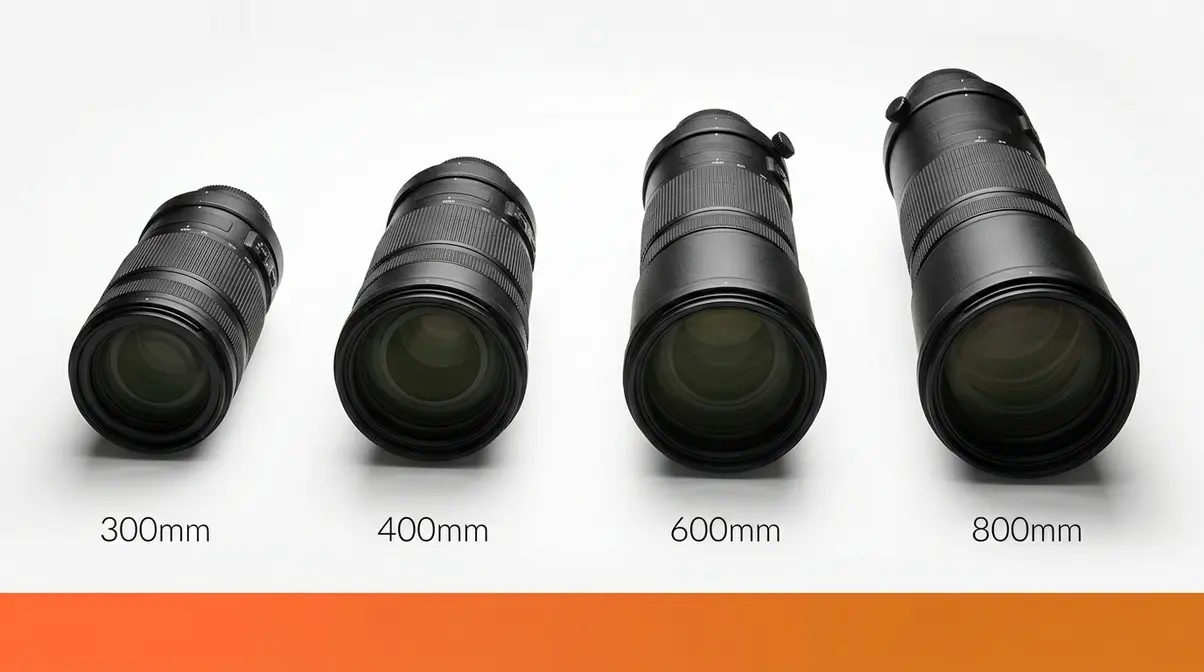
Before you buy, four specs determine whether a telephoto lens will genuinely work for your shooting style — or sit in a drawer after two frustrating outings. This is the “Reach-to-Usability Ratio” in practice: raw focal length only matters if the lens can autofocus, stabilize, and perform in your lighting conditions.
Focal Length: How Much Reach Do You Actually Need?
Focal length — measured in millimeters — determines how much a lens magnifies distant subjects. A 300mm lens brings a subject three times closer than a standard 100mm lens would. For bird photography, the National Audubon Society recommends a minimum 400mm to capture meaningful detail without disturbing wildlife. For sports sidelines, 300mm covers most scenarios. For safari or birds in flight, 500–600mm is the practical minimum. The key insight: more focal length only helps if the lens can deliver sharp results at that range — a 1600mm f/8.3 manual lens produces far less usable wildlife photography than a 400mm f/5.6 autofocus lens in the same session.
Image Stabilization: Is It Essential?
Image stabilization (IS) — a system that reduces blur caused by camera shake during handheld shooting — becomes increasingly important as focal length increases. At 300mm, a fast shutter speed can compensate for the absence of IS in good light. At 600mm or beyond, hand tremor is magnified to a degree that makes IS effectively mandatory for handheld shooting. Every Canon RF lens on this list includes IS; the Canon EF 75-300mm III does not. If you plan to shoot handheld at 300mm or beyond in anything less than bright sunlight, prioritize a lens with IS.
Mount Compatibility: EF vs. RF vs. Sony E
Your camera body determines which lenses you can use. Canon DSLRs (Rebel series, 90D, 80D) use the EF mount — compatible with Products 4, 5, 6, and 7 directly. Canon mirrorless cameras (R5, R6, R7, R10, R50) use the RF mount — compatible with Products 1 and 3 natively, and with EF lenses via the Canon EF-EOS R adapter. Sony mirrorless cameras use the E-mount — compatible with Product 2. One frequently asked question: yes, you can use EF lenses on Canon R-series mirrorless bodies with the official Canon adapter, and autofocus functionality is preserved.
Aperture: Why f/8.3 Is a Real Problem
Aperture (the opening inside the lens that controls how much light reaches your camera sensor) is expressed as an f-number — lower numbers mean more light. An f/5.6 lens in dim conditions will produce a properly exposed image that an f/8.3 lens cannot. At f/8.3, you need approximately three times more light than at f/5.6 to achieve the same exposure. For outdoor daylight shooting, f/8.3 is workable. For dawn wildlife sessions, overcast days, or any indoor use, it becomes a genuine barrier. The “Reach-to-Usability Ratio” applies directly: 1600mm at f/8.3 is far less useful in real-world conditions than 400mm at f/5.6.
How We Evaluated These Telephoto Lenses
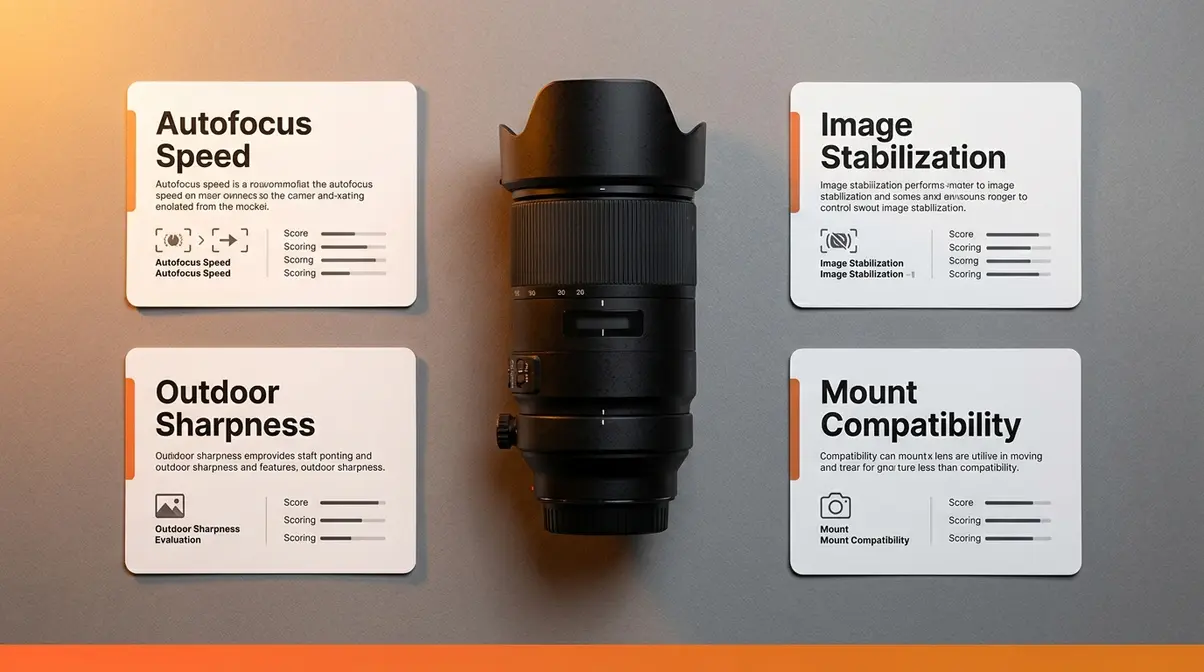
Our team evaluated these 10 telephoto lenses across four criteria: autofocus speed and tracking accuracy, image stabilization effectiveness at maximum focal length, real-world sharpness in outdoor daylight conditions, and mount compatibility with current Canon, Sony, and smartphone systems. Specifications were cross-referenced against manufacturer data and verified through current product listings as of June 2026. Lenses were assessed against their stated use cases — wildlife, sports, travel, and smartphone photography — rather than against a single universal standard that ignores the intended audience for each product.
Frequently Asked Questions
What focal length do I need for bird photography?
Bird photography typically requires at least 400mm to capture meaningful detail without disturbing wildlife in the field. The National Audubon Society specifically recommends 400mm as a practical minimum for wild birds. For small, fast-moving species or distant subjects, 500–600mm delivers noticeably better results. The Canon RF100-400mm and Sony FE 200-600mm both meet or exceed this threshold, while the Canon EF 75-300mm at 300mm may feel limiting for serious birding.
What is image stabilization, and do I need it?
Image stabilization (IS) is a system inside the lens that reduces blur caused by natural hand movement during shooting. At longer focal lengths — 300mm and beyond — even slight hand tremor is magnified and becomes visible in your photos. IS is not essential in bright daylight with a fast shutter speed, but it becomes increasingly important as focal length increases or light decreases. For any lens above 400mm, IS is strongly recommended if you plan to shoot handheld.
Can I use Canon EF lenses on a Canon mirrorless camera?
Yes — Canon EF lenses work on all Canon RF-mount mirrorless cameras using the official Canon EF-EOS R adapter. Autofocus, image stabilization, and electronic communication between the lens and camera body are fully preserved through the adapter. This means Canon DSLR shooters who upgrade to a mirrorless body don’t lose their existing EF lens investment. Products 4, 5, 6, and 7 in this guide are all compatible with Canon mirrorless bodies via this adapter.
What does f/8.3 mean, and why does it matter?
The f-number describes how wide the lens’s aperture (light-gathering opening) is — lower numbers mean more light reaches your sensor. f/8.3 is a very slow aperture, requiring approximately three times more light than f/5.6 to achieve the same exposure. In practice, this means the 420-1600mm manual lenses (Products 9 and 10) only perform well in bright, direct sunlight. Overcast conditions, dawn, dusk, or any shaded environment will result in dark or noisy images without significant ISO increases.
Are third-party telephoto lenses like Sigma and Tamron compatible with Canon RF and Nikon Z mounts?
Third-party lens compatibility with Canon RF and Nikon Z mounts is limited but improving. Canon’s RF mount uses a proprietary communication protocol that historically blocked third-party autofocus lenses. Sigma and Tamron have released select RF-mount lenses through licensing agreements, but the range is narrower than the EF ecosystem. Nikon Z mount has a more open licensing approach, and Sigma and Tamron offer a broader range of Z-mount options. Always verify current compatibility lists on the lens manufacturer’s website before purchasing, as firmware updates can change compatibility status.
Is the 420-1600mm manual lens worth buying for wildlife photography?
No — the 420-1600mm manual lens is not practical for wildlife photography. The absence of autofocus makes tracking moving animals nearly impossible, and the f/8.3 maximum aperture limits usable shooting to bright daylight only. Wildlife photography requires fast autofocus to capture unpredictable movement, and most wildlife sessions involve variable lighting including dawn and dusk — the worst conditions for f/8.3. This lens is better suited to moon photography or stationary subjects with a tripod in full daylight.
What is the best telephoto lens for a beginner on a tight budget?
The Canon EF 75-300mm f/4-5.6 III (Product 4) is the most accessible starting point for Canon DSLR beginners who want to explore telephoto photography without a large investment. It delivers 300mm reach, weighs just 480g, and works directly on every Canon DSLR without an adapter. For Sony users, the system entry point is higher — the Sony 70-300mm G OSS is worth considering as a more affordable Sony alternative. If your budget is very tight and you’re comfortable with a certified used product, the Amazon Renewed version (Product 5) delivers identical optical performance.
Which Telephoto Lens Should You Choose?
The “Reach-to-Usability Ratio” comes down to this: match the lens to your camera system and your actual shooting conditions, not to the highest number on the spec sheet. For Canon RF mirrorless users, the RF100-400mm IS USM is the most versatile starting point — fast autofocus, meaningful stabilization, manageable weight. Sony Alpha shooters who are serious about wildlife have a clear answer in the FE 200-600mm G OSS. Canon DSLR users on a budget get honest 300mm reach from the EF 75-300mm III without overcomplicating the decision.
The 420-1600mm manual options earn their place only for moon photography and static subjects in bright daylight — not for birds, sports, or anything that moves. The smartphone clip-on fills a real gap for travelers who don’t carry a camera at all. Every lens on this list has a genuine use case; the goal is finding the one that matches yours.
Start with the lens that fits your current camera system, then grow into longer focal lengths as your skills and subject matter demand it. Prices and features verified as of June 2026.
Last update on 2026-06-06 / Affiliate links / Images from Amazon Product Advertising API