
Table of Contents
- Key Takeaways
- Time lapse photography meaning and key concepts
- Types of time lapse photography and core differences
- Essential gear and techniques for shooting time lapse
- Creative uses and real-world applications for photographers
- Common mistakes and how to avoid them
- Unlock the Full Potential of Time Lapse Photography Today
- Frequently Asked Questions
- Recommended
This blog post may contain affiliate links. As an Amazon Associate I earn from qualifying purchases.
Every American city skyline seems to shift before your eyes when viewed through time lapse photography, but the real magic is in how beginners can use this tool anywhere in the world. Millions of amateur photographers are discovering that time lapse sequences can reveal stories hidden in everyday life. By learning how this technique condenses hours or days into mesmerizing moments, you can capture dramatic change- whether you are photographing cloud movement, city growth, or blooming flowers.
Key Takeaways
| Point | Details |
|---|---|
| Technique Overview | Time lapse photography condenses extended timeframes into brief sequences, capturing incremental changes that are often invisible to the naked eye. |
| Types and Subjects | Various styles of time lapse photography, such as urban, nature, and astronomical, each require specific techniques and intervals to effectively showcase transformations. |
| Essential Equipment | Key tools include a reliable intervalometer and tripod, which are critical for stable and consistent image capture over extended periods. |
| Common Pitfalls | Avoid mistakes like improper interval selection and lighting inconsistency, as these can negatively impact the visual quality of time lapse sequences. |


Time lapse photography meaning and key concepts
Time lapse photography transforms our perception of slow, gradual processes by compressing extended periods into brief, visually compelling sequences. This innovative photographic technique captures images at specific intervals and plays them back at a much faster rate, revealing transformations normally invisible to the human eye. By strategically reducing the frequency of image capture and accelerating playback, photographers can showcase subtle changes happening over hours, days, or even months in just seconds.
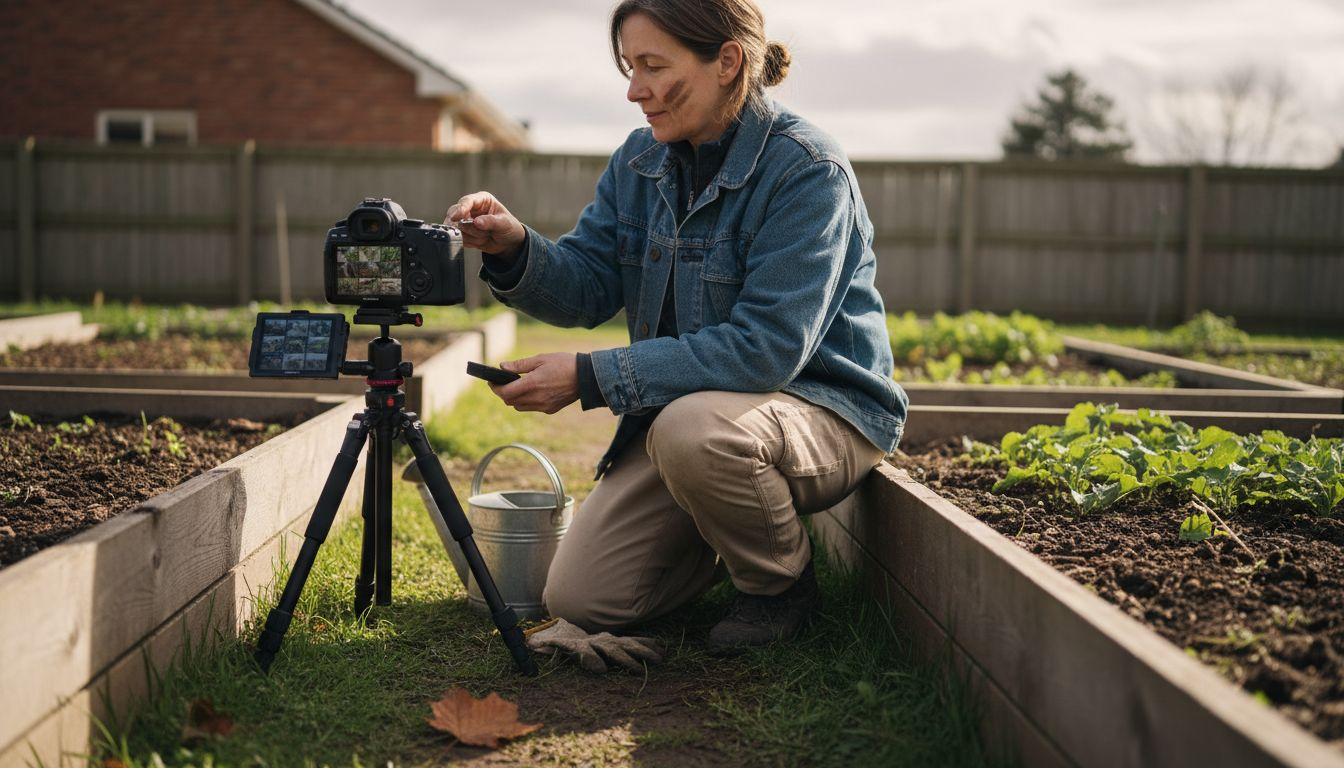
The fundamental mechanics of time lapse photography involve carefully selecting capture intervals that effectively document progression. Professional photographers might capture one frame every few minutes for natural scenes like plant growth or cloud movement, while construction and urban landscape photographers often select intervals ranging from several minutes to hours. Shutter speed techniques play a critical role in determining the smoothness and quality of the final time lapse sequence.
Understanding the core principles requires recognizing how different intervals produce unique visual narratives. Short intervals between 1-5 seconds work well for faster-moving subjects like street traffic or crowd dynamics, while longer intervals of several minutes suit slower transformations like architectural construction or astronomical events. Modern digital cameras and specialized intervalometers make capturing these sequences increasingly accessible to amateur photographers interested in exploring this creative technique.
Pro tip: When starting time lapse photography, always bring extra batteries and storage cards, as capturing hundreds of images during extended shoots can quickly drain your equipment’s resources.
Types of time lapse photography and core differences
Time lapse photography encompasses diverse styles, each capturing unique perspectives of change and motion across different scales and environments. These specialized approaches allow photographers to reveal transformative processes that typically remain imperceptible to the human eye. From urban landscapes to microscopic biological progressions, each time lapse type demands specific technical skills and creative strategies to effectively compress time into visually compelling narratives.
The most prominent types of time lapse photography include urban, landscape, astronomical, nature, and industrial styles. Urban time lapses capture the dynamic rhythm of city life, showcasing traffic patterns, construction projects, and architectural shifts. The basics of photography provide foundational techniques that apply across these varied approaches, with each type requiring nuanced interval and exposure adjustments. Landscape time lapses focus on natural environments, revealing subtle changes in cloud movements, seasonal transformations, and geological shifts over extended periods.
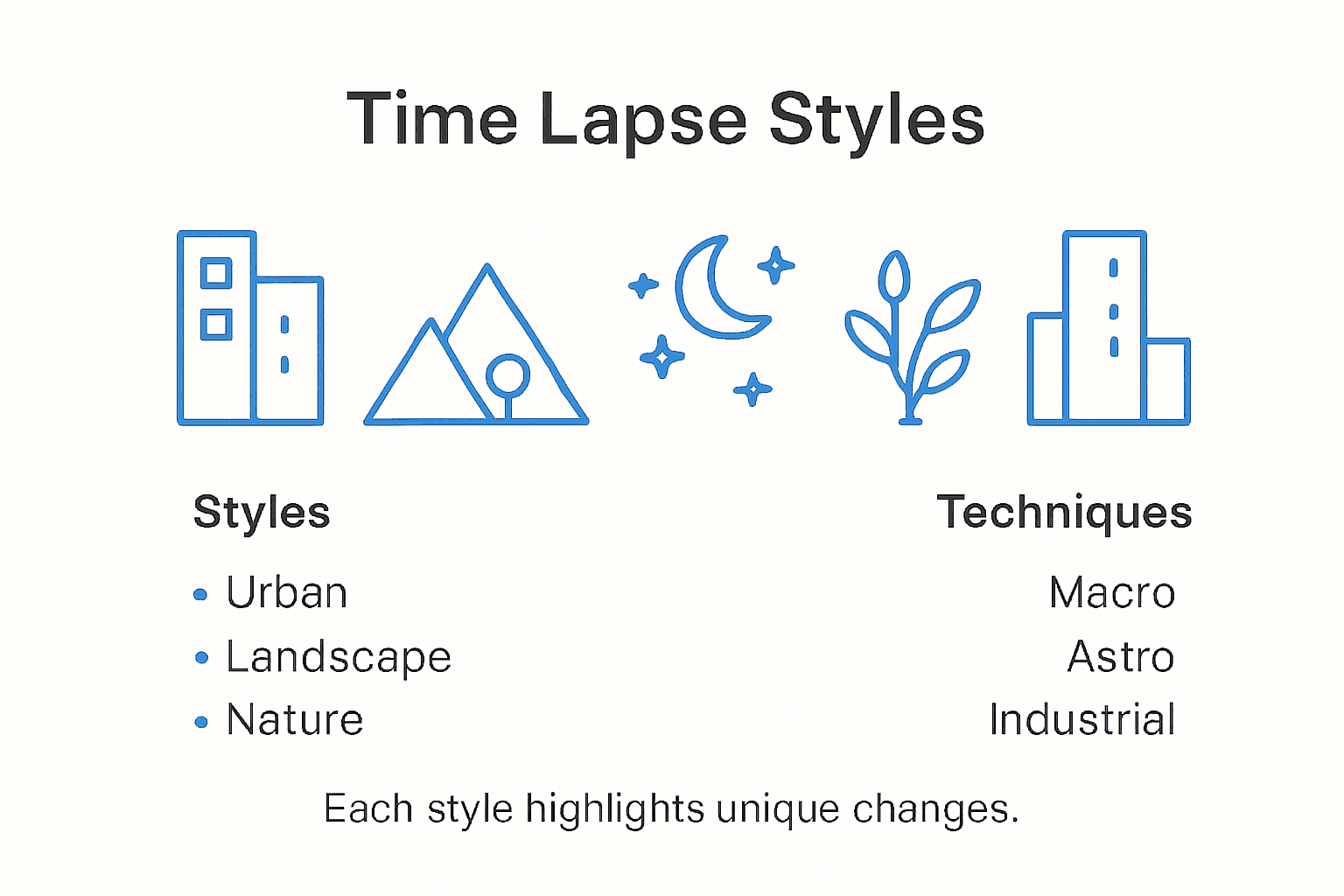
Astronomical and macro time lapse photography represent the most technically challenging variations. Astronomical sequences track celestial movements like star trajectories and planetary transitions, often requiring specialized equipment and precise calibration. Macro time lapses explore microscopic transformations, such as plant growth, crystal formation, or biological processes, demanding extremely precise interval settings and sophisticated camera equipment to capture minute changes.
Pro tip: Invest in a reliable intervalometer and tripod when exploring different time lapse styles to ensure consistent image capture and minimize camera shake during long shooting sessions.
Here’s a summary of time lapse photography types and their unique characteristics:
| Type | Common Subjects | Technical Challenge | Typical Interval |
|---|---|---|---|
| Urban | Traffic, construction | Moderate | 2-10 seconds |
| Landscape | Clouds, seasons | Basic to moderate | 5-60 seconds |
| Astronomical | Stars, planets | Advanced | 30 sec – 10 min |
| Macro (Nature) | Plant growth, crystals | Advanced | 1-60 minutes |
| Industrial | Building projects | Moderate | 5 min – 1 hour |
Essential gear and techniques for shooting time lapse
Time lapse photography requires a strategic combination of specialized equipment and technical expertise to transform ordinary scenes into extraordinary visual narratives. The fundamental gear necessary for successful time lapse shooting extends beyond standard photography equipment, demanding precision instruments that can consistently capture images over extended periods. A robust setup typically includes a camera with manual exposure controls, a reliable intervalometer, and a sturdy tripod capable of maintaining absolute stability throughout the shooting session.
Intervalometers represent the critical technological backbone of time lapse photography, enabling photographers to automate image capture at precise intervals. Action photography techniques share some foundational principles with time lapse shooting, particularly in understanding motion and timing. Modern intervalometers can be built-in camera features or external devices that allow photographers to program complex shooting sequences, controlling not just interval timing but also total number of shots, exposure settings, and advanced bracketing options.
Beyond core equipment, successful time lapse photography demands mastering several technical techniques. Photographers must carefully select exposure settings that maintain consistent lighting across potentially hours-long shooting periods. Neutral density filters become essential for managing changing light conditions, particularly during sunrise or sunset sequences. Advanced practitioners often utilize additional accessories like external battery packs, weatherproof camera housings for outdoor shoots, and specialized wide-angle or telephoto lenses to capture different perspectives and scales of motion.
Pro tip: Always pack extra batteries and memory cards, and conduct a test shoot to verify your intervalometer settings before committing to a long time lapse session.
Below is a quick reference guide for essential time lapse equipment and its function:
| Equipment | Purpose | Benefit |
|---|---|---|
| Intervalometer | Automates timed image capture | Ensures consistent intervals |
| Tripod | Stabilizes camera | Reduces unwanted movement |
| ND Filter | Controls light exposure | Smooth transitions in light |
| External Battery | Prolongs shooting duration | Prevents power loss |
| Wide-angle Lens | Captures broad scenes | Enhances visual impact |
Creative uses and real-world applications for photographers
Time lapse photography has evolved far beyond a simple photographic technique, transforming into a powerful storytelling medium that captures transformative processes across diverse professional and creative domains. From scientific research to marketing campaigns, this innovative approach allows photographers to compress extended temporal experiences into visually compelling narratives that reveal hidden patterns and rhythms invisible to the naked eye.
In scientific and environmental contexts, time lapse photography serves as a critical documentation tool. Creative photography ideas find unique expression through these techniques, especially when capturing natural phenomena like plant growth, geological changes, and ecological transformations. Researchers utilize these visual sequences to study intricate processes such as cellular development, climate change impacts, and complex biological interactions that unfold over extended periods.
Commercial and artistic applications of time lapse photography are equally impressive. Architects and construction firms use this technique to document project progressions, creating dynamic visual records of building developments. Marketing professionals leverage time lapse sequences to showcase product manufacturing processes, urban infrastructure improvements, and brand transformation stories. Filmmakers and documentarians have embraced the technique as a storytelling device, using compressed time sequences to illustrate complex narratives about human activity, environmental changes, and technological evolution.
Pro tip: Experiment with different interval settings and shooting locations to discover unique storytelling perspectives that can transform seemingly mundane scenes into extraordinary visual experiences.
Common mistakes and how to avoid them
Time lapse photography presents unique technical challenges that can easily derail even experienced photographers’ best intentions. Interval selection represents one of the most critical decision points, where photographers frequently stumble by choosing intervals that are either too short or too long, resulting in unnatural or choppy visual sequences. Understanding the nuanced relationship between subject movement speed and capture frequency is essential for creating smooth, compelling time lapse videos.
Camera stability emerges as another critical area where amateur photographers often make significant mistakes. Common photography mistakes highlight the importance of absolute stillness during time lapse shooting. Even microscopic camera movements can create jarring visual artifacts, transforming an otherwise beautiful sequence into a distracting, shaky recording. Professional time lapse photographers invest in high-quality tripods with additional stabilization features, use remote shutter releases, and sometimes even add weight to their camera setups to minimize potential vibration.
Lighting consistency represents a third major challenge that can compromise time lapse quality. Dramatic changes in exposure between frames can create an unpleasant flickering effect, effectively destroying the visual narrative. Advanced photographers mitigate this risk by shooting in manual mode, locking exposure settings, and using neutral density filters to manage changing light conditions. Some practitioners also employ specialized post-processing techniques to smooth exposure variations, though achieving consistency during initial capture remains the most effective strategy.
Pro tip: Always perform a short test sequence before committing to a full time lapse shoot to verify your interval settings, camera stability, and exposure consistency.
Unlock the Full Potential of Time Lapse Photography Today
Time lapse photography brings slow transformations into sharp focus but mastering it requires more than just clicking buttons. From choosing the right intervalometer settings to maintaining camera stability and managing exposure, this technique can feel overwhelming without clear guidance. Whether you struggle with flickering sequences or unsure interval choices, understanding these challenges is the first step towards capturing breathtaking time lapses.
Elevate your skills with practical tips and expert advice found at Amateur Photographer Guide. Explore essential shooting tips, learn the basics of photography, and avoid common photography mistakes that could ruin your sequences. Start your journey now and transform everyday moments into extraordinary visual stories with confidence and ease.
Frequently Asked Questions
What is time lapse photography?
Time lapse photography is a technique that captures images at specific intervals over an extended period and then plays them back at a faster rate, showcasing gradual transformations that are often invisible to the human eye.
What equipment is essential for time lapse photography?
Essential equipment for time lapse photography includes a camera with manual exposure controls, a reliable intervalometer to automate image capture, and a sturdy tripod to ensure stability during shooting sessions.
How do I choose the right interval for capturing time lapse sequences?
Selecting the right interval depends on the subject’s movement speed; shorter intervals (1-5 seconds) work well for fast-moving scenes, while longer intervals (several minutes) are best for slower transformations like construction or natural changes.
What are some common mistakes to avoid when creating time lapse videos?
Common mistakes include choosing incorrect interval settings which can lead to choppy footage, failing to stabilize the camera resulting in shaky sequences, and inconsistencies in lighting between frames that cause flickering effects.
Recommended
- What is Perspective in Photography? Understanding Its Impact
- 7 Essential Steps for a Landscape Photography Checklist
- Best Camera for Landscape Photography: Hidden Features Pros Actually Use
- Step-by-Step Guide to Landscape Photography Success
Last update on 2026-03-07 / Affiliate links / Images from Amazon Product Advertising API