Sensor Size Explained: The Key to Better Photos
Sensor size explained for amateur photographers: learn the impact on image quality, depth of field, lens choices, and how to pick the right camera.

Most american and European camera buyers are surprised to learn that sensor size affects more than just megapixels—over 85 percent of image quality differences are due to sensor size, not resolution. For amateur photographers eager to move beyond auto mode, understanding these often misunderstood sensor basics means better photos from city streets to mountain landscapes. This guide reveals how sensor size truly influences your results, helping you choose a camera with confidence for every creative moment.
What’s in this guide
| Point | Details |
|---|---|
| Sensor Size Matters | Larger sensors typically provide better image quality due to superior light gathering and reduced noise. |
| Megapixels Aren’t Everything | A higher megapixel count does not guarantee better images; sensor size and pixel dimensions are more significant factors. |
| Understand Depth of Field | Sensor size influences depth of field control; larger sensors allow for more creative focus effects. |
| Evaluate Holistically | Consider lens quality and shooting techniques alongside sensor specifications for optimal photographic results. |

Canon EOS Rebel T7 DSLR Camera Double Zoom Lens Kit with EF-S 18-55mm and EF 75-300mm Lenses, 24.1 Megapixel CMOS (APS-C) Sensor, Full HD Videos, Wi-Fi, Beginner Photographers, Digital Camera, Black

Canon EOS Rebel T7 DSLR Camera EF-S 18-55mm f/3.5-5.6 is II Lens Kit, 24.1 Megapixel CMOS (APS-C) Sensor, Full HD Videos, Built-in Wi-Fi, Beginner Photographers, Digital Camera, Black

Canon EOS R100 Mirrorless Camera RF-S18-45mm F4.5-6.3 is STM Lens Kit, 24.1 Megapixel CMOS (APS-C) Sensor, 4K Video, Wi-Fi & Bluetooth, Beginner Photographers and Creators, Digital Camera, Black
8K & 64MP Digital Camera for Photography, 48X Zoom (16X Optical + 3X Digital) with Moon Mode, 180° Flip Screen, WiFi, Micro HDMI, 64GB Card & 2 Batteries, Vlogging Camera for YouTube (Black)

Canon EOS Rebel T7 DSLR Camera w/EF-S 18-55mm F/3.5-5.6 Zoom Lens + 420-800mm Super Telephoto Lens + 100S Sling Backpack + 64GB Memory Cards, Professional Photo Bundle (42pc Bundle) (Renewed)
Sensor Size Defined and Common Myths
A digital camera sensor is essentially the digital equivalent of film, capturing light and transforming it into an image. Understanding sensor size goes far beyond technical specifications it fundamentally impacts how photographers capture and create visual stories. Sensors come in various dimensions, with each size bringing unique characteristics that influence image quality, depth of field, and overall photographic performance.
Contrary to popular belief, sensor size is not just about megapixels. Professional photographers recognize that larger sensors generally provide superior light gathering capabilities, resulting in improved image clarity, better dynamic range, and reduced digital noise. Crop sensor differences play a significant role in how images are captured and interpreted, creating nuanced variations in field of view and image characteristics.
Some common myths surrounding sensor size deserve critical examination. Many amateur photographers mistakenly believe that more megapixels automatically translate to better image quality. In reality, sensor size often matters more than pixel count. A larger sensor can capture more light information, leading to richer, more detailed photographs even with fewer megapixels. The physical size of each pixel becomes crucial, with larger pixels typically performing better in challenging lighting conditions.
Pro tip: When selecting a camera, prioritize sensor size over total megapixel count, especially if you frequently shoot in low light or want greater creative control over depth of field.
Types of Camera Sensors and Formats
Digital camera sensors represent the core technology transforming light into visual information, with multiple formats offering photographers diverse capabilities. The primary sensor types include full-frame, APS-C, and Micro Four Thirds sensors, each delivering unique performance characteristics that dramatically impact image quality and photographic flexibility. File formats in photography complement these sensor technologies, influencing how digital images are processed and stored.
Two fundamental sensor technologies dominate the digital photography landscape: Charge-Coupled Device (CCD) and Complementary Metal-Oxide-Semiconductor (CMOS). CCD sensors traditionally offered superior image quality but consumed more power, while modern CMOS sensors provide excellent performance with significantly reduced energy consumption. Full-frame sensors, typically measuring 35mm, offer the largest light-gathering surface and are preferred by professional photographers for their exceptional low-light performance and wide dynamic range.
Smaller sensor formats like APS-C and Micro Four Thirds have gained substantial popularity among enthusiast photographers and mirrorless camera users. These compact sensors provide a strategic balance between image quality, camera size, and lens compatibility. The crop factor associated with smaller sensors means that a given lens will effectively have a narrower field of view, which can be advantageous for telephoto and wildlife photography.
Pro tip: When choosing a camera, consider your primary shooting environment and preferred subjects to match the most appropriate sensor size and type for your specific photographic needs.
Here’s a quick comparison of the most common digital camera sensor sizes and their key characteristics:
| Sensor Format | Typical Size (mm) | Notable Strengths | Key Limitations |
|---|---|---|---|
| Full-Frame (35mm) | 36 x 24 | Best low-light, dynamic range | Larger, heavier cameras |
| APS-C | 24 x 16 | Balance of quality and size | Narrower field of view |
| Micro Four Thirds | 17.3 x 13 | Compact, lightweight system | Lower light-gathering power |
How Sensor Size Affects Image Quality
Image quality represents the intricate relationship between sensor technology and photographic performance. Larger sensors fundamentally transform image capture by providing more surface area to collect light, which translates directly into superior visual outcomes. When buying a digital camera, understanding how sensor size impacts image quality becomes crucial for making an informed decision.
The physical dimensions of a camera sensor dramatically influence several critical photographic parameters. Larger sensors typically produce images with less digital noise, improved dynamic range, and enhanced color depth. This occurs because bigger sensors contain larger individual pixels, which can capture more light information and process visual data with greater precision. Professional photographers often prefer full-frame sensors precisely because they offer exceptional performance in challenging lighting conditions, allowing for cleaner images with remarkable detail.
Understanding sensor size goes beyond simple measurements. Different sensor sizes create unique visual characteristics that affect depth of field, low-light performance, and overall image rendering. Smaller sensors compress visual information more aggressively, potentially reducing subtle tonal gradations and color nuances. Conversely, larger sensors provide more breathing room for light capture, resulting in images with smoother transitions, more vibrant colors, and greater visual complexity.
Pro tip: When evaluating camera sensors, remember that physical pixel size matters more than total pixel count, so prioritize sensors with larger individual pixels for superior image quality.
Depth of Field, Low Light, and Crop Factor
Depth of field represents a critical photographic concept intimately connected with sensor size and technological capabilities. Understanding how sensor dimensions interact with optical principles reveals the nuanced relationship between image creation and technical performance. Depth of field techniques fundamentally transform how photographers control focus and visual storytelling across different sensor platforms.
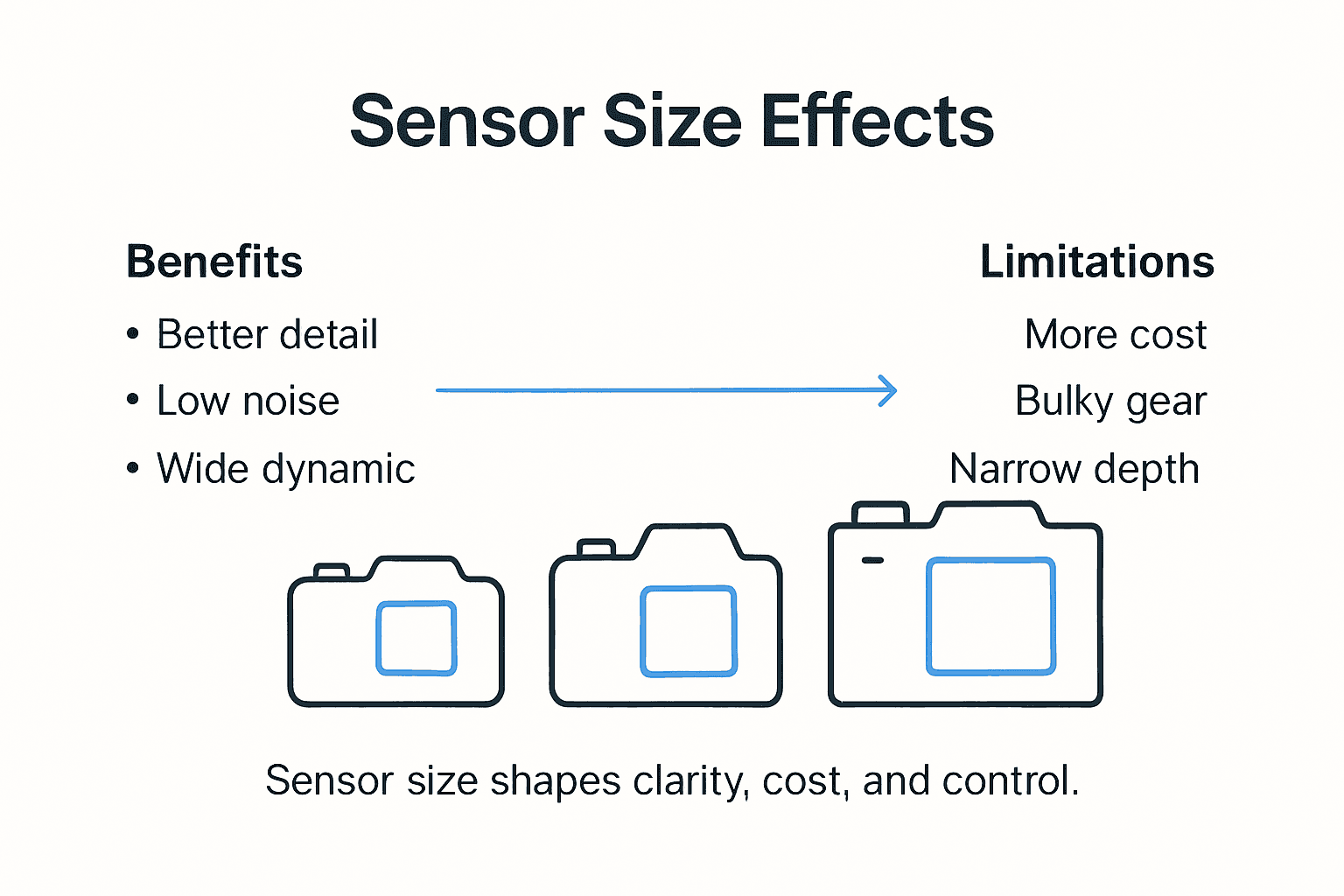
The crop factor serves as a mathematical translation between sensor sizes, dramatically influencing how lenses perform across different camera systems. Smaller sensors effectively multiply a lens’s focal length, creating a narrower field of view compared to full-frame sensors. This phenomenon means a 50mm lens on an APS-C sensor might behave more like a 75mm lens, providing photographers with unique framing opportunities and compressed perspectives that can be strategically advantageous for wildlife, sports, and telephoto photography.
Low-light performance emerges as another critical dimension where sensor size plays a pivotal role. Larger sensors containing bigger individual pixels can capture more light information, resulting in cleaner, more detailed images in challenging illumination conditions. Back-illuminated sensor technologies have further enhanced this capability, allowing smaller sensors to perform remarkably well by improving light-gathering efficiency. Professional photographers understand that sensor size is not just about resolution, but about the subtle nuances of light capture and image rendering.
Pro tip: When shooting in challenging light, prioritize cameras with larger pixels and back-illuminated sensor technologies, regardless of the overall sensor size.
The table below summarizes how sensor size impacts critical image attributes:
| Sensor Size | Depth of Field Control | Low-Light Performance | Field of View Impact |
|---|---|---|---|
| Large (Full-Frame) | Shallow, more control | Excellent | Wide, less crop factor |
| Medium (APS-C) | Moderate separation | Good | Moderate crop factor |
| Small (Micro 4/3) | Deep, less separation | Fair | Significant crop factor |
Sensor Size Versus Alternatives and Mistakes
Sensor selection represents far more than a simple technical decision it is a nuanced choice that impacts photographic creativity and performance. When buying a digital camera, photographers must look beyond simplistic metrics and understand the complex interplay between sensor technology, optical systems, and creative potential. Many amateurs mistakenly believe that larger sensors automatically guarantee superior images, overlooking critical factors like lens quality, image processing, and shooting technique.
Alternative strategies can often compensate for smaller sensor limitations. Advanced lens technologies, sophisticated image processing algorithms, and precise shooting techniques can dramatically enhance image quality across different sensor platforms. APS-C sensors, for instance, offer remarkable performance by leveraging computational photography techniques that maximize their inherent capabilities. These sensors provide a strategic balance between image quality, camera size, and cost, making them an attractive option for photographers who prioritize flexibility and affordability.
Common mistakes in sensor evaluation include oversimplifying performance comparisons and ignoring contextual factors. Photographers frequently make the error of direct sensor size comparisons without considering crop factors, lens compatibility, and specific shooting requirements. Each sensor format presents unique advantages appropriate for different photographic scenarios. A full-frame sensor excels in low-light conditions and provides exceptional dynamic range, while smaller sensors might offer superior burst shooting speeds or more compact lens ecosystems.
Pro tip: Always evaluate sensor performance holistically by testing actual image output in your specific shooting environments, rather than relying solely on technical specifications.
Master Sensor Size to Capture Stunning Photos
Understanding sensor size is a game changer for photographers aiming to elevate their image quality and creative control. If you struggle with choosing the right camera or get overwhelmed by technical jargon like crop factor and pixel size this article has clarified the key concepts for you. Now, it’s time to take the next step and explore how you can apply this knowledge to your photography journey.
Unlock your full potential with practical advice and expert guidance at Amateur Photographer Guide. Discover in-depth camera buying guides so you pick the sensor size that fits your shooting style. Learn depth of field techniques to creatively use your sensor’s capabilities and master low-light shooting with confidence. Visit now and start transforming your photos one smart decision at a time.
Frequently Asked Questions
What is sensor size, and why does it matter in photography?
Sensor size refers to the physical dimensions of a digital camera’s sensor, impacting how light is captured, which influences image quality, depth of field, and overall photographic performance. Larger sensors typically collect more light, resulting in better low-light performance and reduced noise.
How does sensor size affect image quality in low-light conditions?
Larger sensors have bigger individual pixels, allowing them to capture more light information. This results in clearer, more detailed images with less digital noise when shooting in low-light environments, making full-frame sensors often preferred by professionals for such conditions.
What are the main types of camera sensors, and how do they differ?
The three primary types of camera sensors are full-frame, APS-C, and Micro Four Thirds. Full-frame sensors (35mm) offer superior low-light capabilities and dynamic range, APS-C sensors balance quality and size, and Micro Four Thirds sensors are compact but typically have lower light-gathering power.
How does crop factor impact the use of lenses on different sensor sizes?
Crop factor refers to the difference in field of view among sensor sizes. For example, a 50mm lens on an APS-C sensor behaves like a 75mm lens due to the crop factor, resulting in a narrower field of view. This can be beneficial for telephoto photography, allowing photographers to use shorter focal lengths effectively.
Recommended
Last update on 2026-07-21 / Affiliate links / Images from Amazon Product Advertising API

Dave King
Hi, I'm Dave, the founder of Amateur Photographer Guide. I created this site to help beginner and hobbyist photographers build their skills and grow their passion. Here, you’ll find easy-to-follow tutorials, gear recommendations, and honest advice to make photography more accessible, enjoyable, and rewarding.