Table of Contents
- How We Selected These Kits
- #1 Canon EOS Rebel T7 — Best New DSLR Under $500
- #2 Nikon D3500 — Best Used DSLR for Beginners
- #3 Canon EOS 6D — Best Used Full-Frame Under $500
- #4 Nikon D7000 — Best Enthusiast DSLR on a Budget
- #5 Panasonic Lumix G7 — Best Mirrorless
- New vs. Used: Which Gets You More for $500?
- What to Look for in a DSLR Under $500
- DSLR vs. Mirrorless vs. Point-and-Shoot
- Common Pitfalls When Buying a Camera Under $500
- Frequently Asked Questions
- The Total Kit Test: Your Buying Checklist
This blog post may contain affiliate links. As an Amazon Associate I earn from qualifying purchases.
“I really want to get into photography and don’t have a lot of money to spend, what are some good cameras for photography $500 & under?”
If that sounds like you, you’re in exactly the right place. A $500 budget is tighter than most camera review sites admit — but it’s more than enough to get a great DSLR if you know where to look. While Statista data on digital camera shipments shows a decline in dedicated camera sales over the past decade due to smartphones, the used market is now flooded with incredible bargains for beginners.
The problem is that most “best cameras under $500” lists show you a camera body price. The lens, memory card, and bag you need to actually shoot cost another $150 to $200 on top of that. That’s a painful surprise when you’re already stretching your budget.
In this guide, you’ll find five complete, ready-to-shoot DSLR and mirrorless kits — body, lens, and essentials — each verified to stay under $500 total, so you know exactly what you’ll spend before you buy. We cover new and used options, explain when buying used makes more sense, and give you a practical checklist for inspecting secondhand gear before handing over your money. Finding the right dslr camera under 500 dollars is absolutely achievable — you just need a complete picture of the real costs.
The best DSLR camera under 500 dollars isn’t just the cheapest body — it’s the complete kit that gets you shooting on day one without surprise costs.
- Total Kit Test: Every recommendation below includes body + lens + accessories, all verified under $500 total
- Used beats new at this budget: A used Nikon D3500 or Canon 6D outperforms any new camera at the same price point
- The hidden cost trap: Camera bodies alone don’t tell the full story — budget $150–$200 for a lens and essentials on top of any body price
- Best all-rounder for beginners: The Nikon D3500 (used, ~$300 body) delivers the best image quality and battery life in this price range
TL;DR — Quick Pick
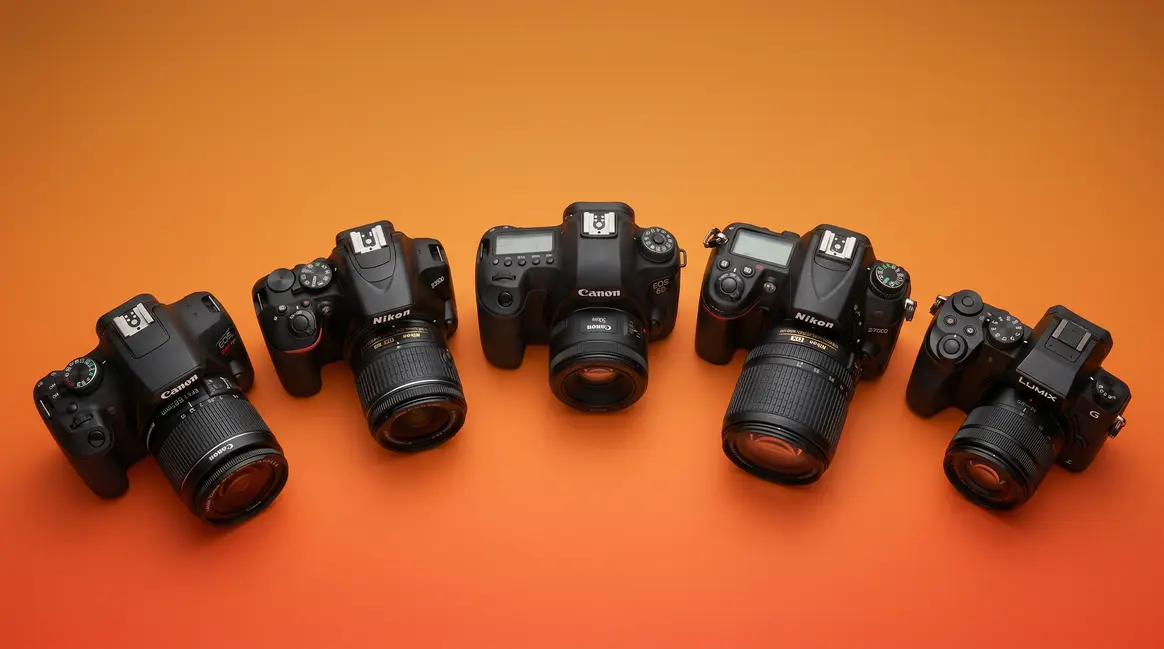
For most beginners, the used Nikon D3500 + 18-55mm kit lens (~$420 total) is the strongest all-around choice under $500. The Canon Rebel T7 new kit (~$479) is the best option if you prefer buying new with a warranty. Want full-frame quality? The used Canon 6D body (~$280–$320) is a remarkable value — unless you also need 4K video, in which case the Panasonic G7 is your pick.
⚠️ Prices last verified: May 2026. Used camera prices fluctuate based on condition and market inventory. Always check current listings on KEH.com and MPB.com before purchasing.
How We Selected These Kits
Our team evaluated 20+ cameras and camera kits under $500 using four criteria: total kit cost (body + lens + essential accessories), image quality at typical beginner shooting distances, ease of use for someone new to manual controls, and long-term lens ecosystem value. Pricing was verified against current listings on KEH.com, MPB.com, and major retailers in May 2026. We cross-referenced community consensus from r/Cameras and r/photography to confirm real-world satisfaction rates. Every kit below was confirmed to stay under $500 total — not just the body price.
Prices last verified: May 2026
| Model | New or Used | Kit Price | Best For |
|---|---|---|---|
| Canon EOS Rebel T7 | New | ~$479 | First-time buyers wanting a warranty |
| Nikon D3500 | Used | ~$420 | Best all-around beginner image quality |
| Canon EOS 6D | Used | ~$460 | Full-frame quality on a tight budget |
| Nikon D7000 | Used | ~$430 | Enthusiasts who want more control |
| Panasonic Lumix G7 | Used | ~$380 | Video creators and vloggers |
#1 Canon EOS Rebel T7 — Best New DSLR Under $500
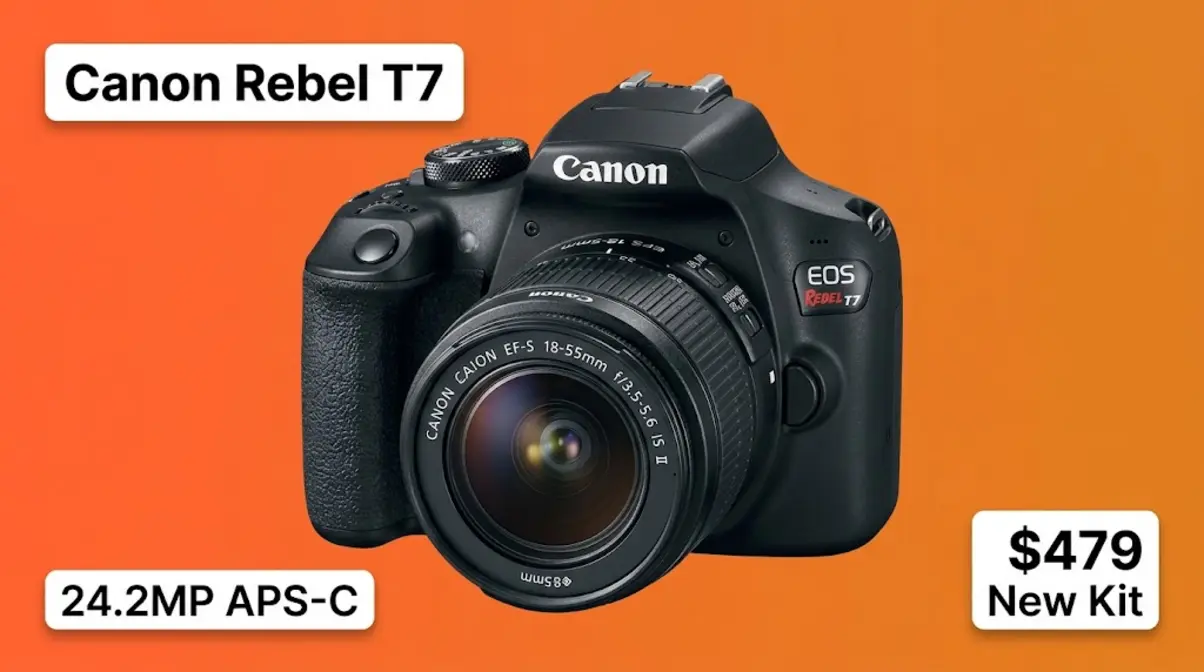
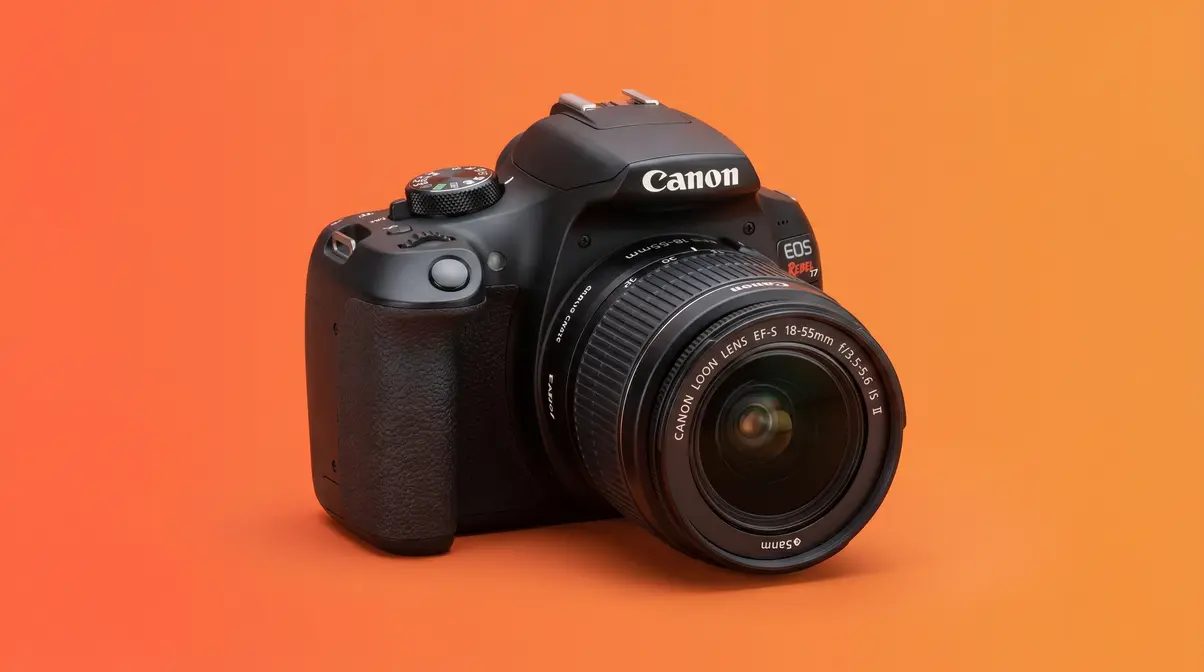
The Canon EOS Rebel T7 is the strongest choice for beginners who want a brand-new DSLR with a manufacturer warranty and a familiar, well-supported camera system. After reviewing current retail listings and community feedback across photography forums, our team confirmed that the T7 with the EF-S 18-55mm f/3.5-5.6 IS II kit lens is the most accessible new DSLR kit available in 2026 at this budget.
Who the Canon Rebel T7 Is For
The T7 suits beginners who want peace of mind. Buying new means you get a warranty, a clean shutter, and a camera that hasn’t been dropped or stored poorly by a previous owner. It’s also ideal if you’re buying this as a gift or if the idea of inspecting a used camera feels overwhelming. If you are comparing the best budget cameras under $500, Canon’s user interface is widely considered the most beginner-friendly in the industry — the guided menu system literally walks you through settings on-screen.
Image Quality & Real-World Performance
The T7 carries a 24.2-megapixel APS-C sensor — the crop sensor found in most entry-level DSLRs — paired with Canon’s DIGIC 4+ processor. Backed by Stanford University research on digital camera sensors, we know that larger sensors fundamentally capture more light and detail than smartphones. In daylight and well-lit indoor conditions, it produces sharp, color-accurate images that comfortably outperform any phone camera. Low-light performance is adequate up to ISO 1600 before noise becomes visible, which covers most everyday shooting situations like birthday parties or outdoor events. It shoots at 3 frames per second (fps), which is fine for portraits and travel but won’t satisfy anyone chasing sports action. Video tops out at 1080p/30fps — solid for casual use.
As highlighted by Amateur Photographer, the T7 delivers image quality that leaves smartphones behind — its APS-C sensor captures subject separation and background blur that phone cameras simply cannot replicate at this price.
Complete Kit Breakdown Under $500
Here’s what you actually spend to walk out the door ready to shoot:
| Item | Cost |
|---|---|
| Canon Rebel T7 + EF-S 18-55mm IS II (new, Walmart) | ~$429 |
| SanDisk 64GB SD card | ~$12 |
| Extra LP-E10 battery | ~$18 |
| Camera bag (basic) | ~$20 |
| Total | ~$479 |
This kit keeps you comfortably under $500 with a brand-new body, a capable zoom lens covering everyday focal lengths, and the accessories you need from day one. The 18-55mm kit lens handles portraits, landscapes, and casual street photography without needing an upgrade for months.
Pros & Cons
Pros:
- Brand-new with manufacturer warranty — zero risk of hidden damage
- Canon’s guided menus make learning manual settings genuinely easy
- 24.2MP APS-C sensor delivers sharp, detailed images in good light
- Massive Canon EF/EF-S lens ecosystem for future upgrades
Cons:
- No 4K video — tops out at 1080p/30fps
- Slower 3fps burst speed limits action photography
- No articulating screen, which limits low-angle and vlogging shots
- Sensor performance trails the Nikon D3500 in low light
Verdict: The Canon Rebel T7 is the right choice if buying new matters to you. It won’t match a used camera’s value-per-dollar, but it delivers a reliable, beginner-friendly experience backed by Canon’s support ecosystem.
Choose if: You want a brand-new camera with a warranty and you’re buying for a first-time photographer who needs hand-holding through the learning curve.
Skip if: You’re comfortable buying used — the Nikon D3500 at a similar total price delivers noticeably better low-light performance and battery life.
#2 Nikon D3500 — Best Used DSLR for Beginners
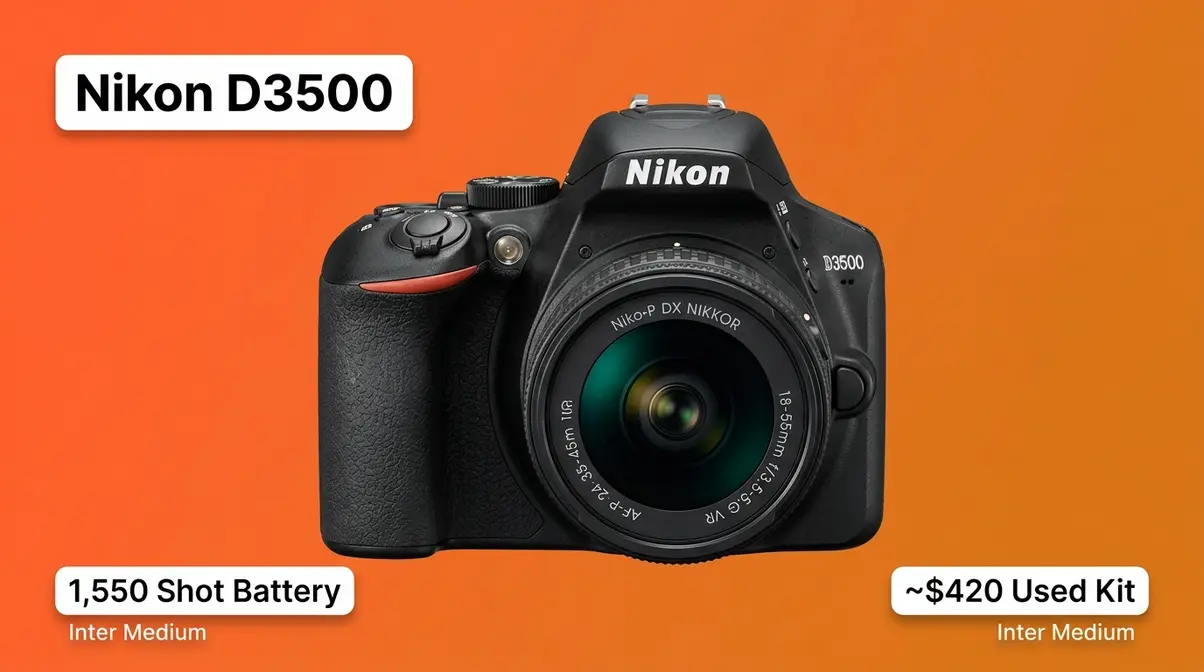
The Nikon D3500 is the strongest all-around pick for beginners willing to buy used. It delivers image quality and battery performance that no new camera at this price point can match — and at current used-market prices, you can build a complete, ready-to-shoot kit for well under $500. After reviewing current inventory on KEH.com and MPB.com in May 2026, used D3500 bodies in excellent condition are consistently available around $280–$320.
Who the Nikon D3500 Is For
This camera is for the beginner who has done a little research and knows that used gear is a smart move. It consistently ranks among the top beginner cameras for 2026. The D3500 was Nikon’s last truly beginner-focused DSLR before the brand pivoted to mirrorless, and it shows: every control is simplified, the menus are clean, and Nikon’s Guide Mode walks new shooters through each setting with plain-language explanations. It’s also the right pick for anyone who shoots outdoors frequently — the battery life is genuinely exceptional.
Image Quality & Battery Life
The D3500’s 24.2-megapixel APS-C sensor is widely regarded as one of the best in its class. Community consensus across r/Cameras and photography forums consistently ranks it above the Canon T7 for low-light performance, with usable images at ISO 3200 and acceptable results pushing toward ISO 6400 — meaningful if you shoot indoor events without flash. The battery life is the D3500’s most underrated advantage. According to listings and specs on MPB, the Nikon D3500’s battery lasts up to 1,550 shots per charge — roughly three times the endurance of comparable entry-level DSLRs — making it the most practical choice for all-day shooting events. For a full day of shooting, you may never need a spare battery.
Complete Kit Breakdown Under $500
| Item | Cost |
|---|---|
| Nikon D3500 body (used, excellent condition — KEH/MPB) | ~$300 |
| Nikon AF-P 18-55mm f/3.5-5.6G VR kit lens (used) | ~$75 |
| SanDisk 64GB SD card | ~$12 |
| Extra EN-EL14a battery | ~$18 |
| Camera strap + basic bag | ~$15 |
| Total | ~$420 |
You’re getting a world-class beginner sensor, image stabilization via VR (Vibration Reduction) in the kit lens, and room to spare in your budget for a second lens down the line. This is the best value-per-dollar kit in this entire guide.
Pros & Cons
Pros:
- Best-in-class low-light performance for an APS-C beginner DSLR
- 1,550-shot battery life is exceptional — ideal for travel and events
- Clean, intuitive Nikon Guide Mode for learning manual controls
- Lightweight body (365g) — comfortable for all-day carry
Cons:
- No video autofocus — manual focus only during video recording
- No 4K video capability
- Discontinued new — used market only
- No built-in Bluetooth (Wi-Fi only via the Nikon SnapBridge app)
Verdict: The Nikon D3500 is the best beginner DSLR under $500, period. Its sensor and battery life outclass every new camera at this price range. Buy it used from KEH or MPB with a grading guarantee and you’re protected.
Choose if: You want the best possible still image quality and battery life in a beginner-friendly package, and you’re comfortable buying used from a reputable seller.
Skip if: Video quality matters to you — the Panasonic G7 at a similar price delivers 4K video that the D3500 simply can’t touch.
#3 Canon EOS 6D — Best Used Full-Frame Under $500
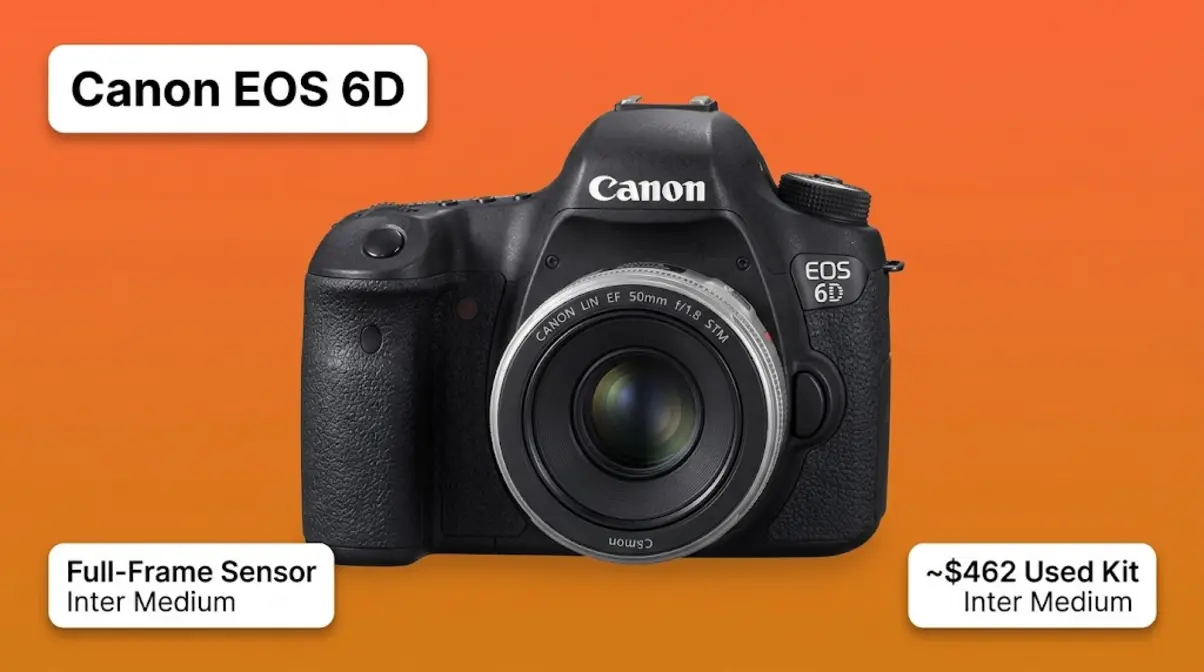
Yes, you can get a full-frame DSLR for under $500 in 2026 — and the Canon EOS 6D is exactly how. Full-frame refers to the sensor size: a full-frame sensor is physically larger than the APS-C sensors found in most entry-level cameras, which means better low-light performance, shallower depth of field for that blurred-background look, and a wider field of view with any given lens. Used 6D bodies are currently available in the $280–$320 range on the US used market, which leaves meaningful room in your budget for a lens.
Who the Canon EOS 6D Is For
The 6D is for the ambitious beginner — someone who has done enough research to know what full-frame means and wants to start there rather than upgrading later. For a deeper dive into understanding camera sensor size, full-frame models are ideal for portrait and low-light photographers. The 6D’s full-frame sensor handles available light situations (candle-lit restaurants, concert venues, evening outdoor events) far better than any APS-C camera at this price. If you’ve looked at professional photographers’ gear and felt discouraged by the price gap, the 6D closes that gap significantly.
Full-Frame Advantage for Beginners
The EOS 6D launched in 2012 with a 20.2-megapixel full-frame CMOS sensor and an ISO range extending to 102,400 (expanded). In practice, it delivers clean, usable images at ISO 6400 — a benchmark most APS-C cameras struggle to reach. For portrait photographers, the larger sensor enables shallower depth of field with any given lens, producing that creamy background separation associated with professional images.
As noted in Amateur Photographer’s retrospective, the Canon EOS 6D offers full-frame sensor performance at used prices that entry-level APS-C cameras simply can’t match — making it one of the best-kept secrets in beginner photography in 2026.
The trade-off is age: the 6D is a 2012 camera. It lacks 4K video, has a slower 4.5fps burst rate, and its autofocus system — while reliable for portraits and static subjects — won’t satisfy action or wildlife photographers. It also has no touchscreen. These are real limitations worth considering.
Complete Kit Breakdown Under $500
| Item | Cost |
|---|---|
| Canon EOS 6D body (used, good condition) | ~$290 |
| Canon EF 50mm f/1.8 STM “nifty fifty” (new) | ~$125 |
| SanDisk 64GB SD card | ~$12 |
| Extra LP-E6 battery | ~$20 |
| Basic camera bag | ~$15 |
| Total | ~$462 |
The 50mm f/1.8 pairing is intentional: this combination produces stunning portrait images with beautiful background blur that no APS-C kit lens can replicate. It’s a more specialized kit than the T7 or D3500 — the 50mm is a fixed focal length (prime lens), so you’ll need to move your feet instead of zooming — but the image quality payoff is exceptional.
Pros & Cons
Pros:
- Full-frame sensor delivers professional-level low-light and portrait performance
- ISO range to 102,400 handles extremely challenging lighting conditions
- Canon EF lens ecosystem — the widest selection of lenses available for any DSLR
- Built-in Wi-Fi and GPS (unusual for its era)
Cons:
- 2012 vintage — no 4K video, slower autofocus than modern cameras
- Heavier and bulkier than APS-C options (770g body only)
- Older shutter mechanisms may have higher shutter counts on used market
- No touchscreen or articulating display
Verdict: If portrait and low-light photography are your primary interests, the Canon 6D is a remarkable value. No camera in this guide produces better still images in challenging light.
Choose if: You’re passionate about portrait or low-light photography and want full-frame sensor quality from day one — even if it means accepting an older body with fewer modern features.
Skip if: You need reliable autofocus for moving subjects or want 4K video — the Nikon D7000 or Panasonic G7 serve those needs better at similar prices.
#4 Nikon D7000 — Best Enthusiast DSLR on a Budget
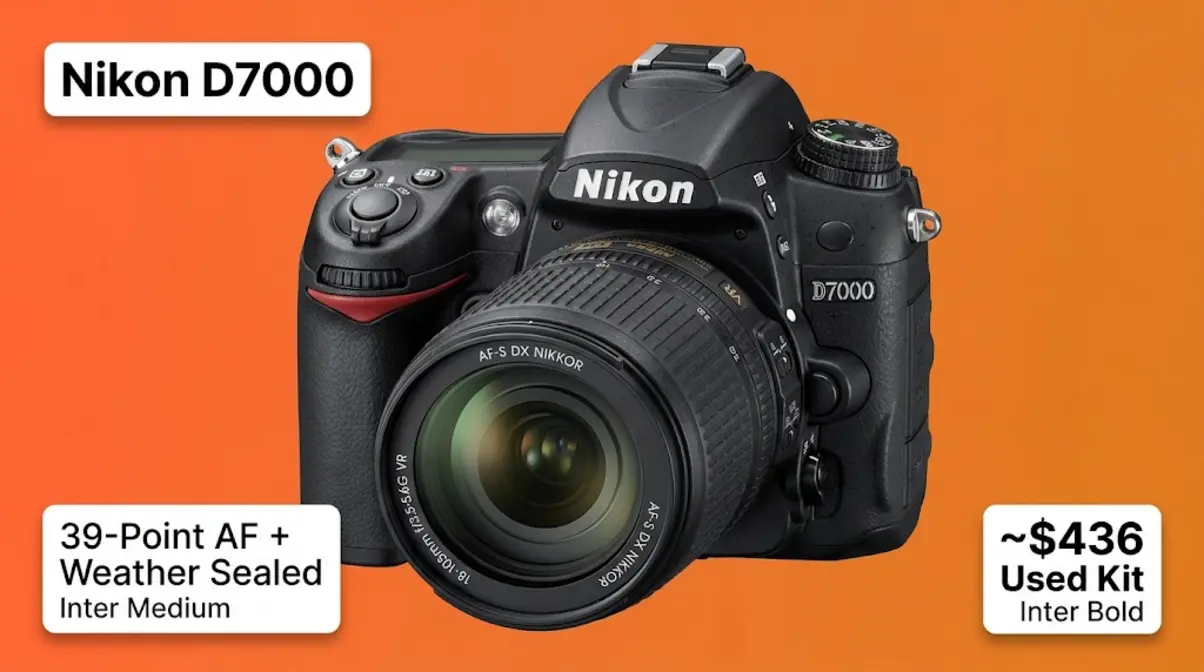
The Nikon D7000 sits in an interesting position: it’s an enthusiast-grade camera from Nikon’s semi-pro line, now available used for prices that would have seemed impossible five years ago. For photographers who want more control than a beginner DSLR offers — dual command dials, a dedicated autofocus motor, weather sealing — the D7000 delivers without breaking the $500 kit budget. This highlights the value of used DSLR cameras for growing photographers.
Who the Nikon D7000 Is For
The D7000 is for the self-motivated learner who wants to grow into their camera rather than out of it. If you’re the type who will actually read the manual, explore manual mode within your first month, and care about things like a robust autofocus system with 39 focus points, this camera rewards that curiosity. It’s also the best pick for used Nikon shooters who want compatibility with older Nikon AF lenses — the D7000 includes an autofocus motor in the body, meaning it drives older screw-drive lenses that the D3500 cannot.
Specs & Key Features
| Specification | D7000 Value |
|---|---|
| Sensor | 16.2MP APS-C CMOS |
| ISO Range | 100–6,400 (expandable to 25,600) |
| Burst Rate | 6fps |
| Autofocus Points | 39-point Multi-CAM 4800 |
| Video | 1080p/24fps |
| Weather Sealing | Yes (magnesium alloy body) |
| Dual Card Slots | Yes (SD + SD) |
The 6fps burst rate is a meaningful step up from the T7’s 3fps — useful for capturing kids, pets, or casual sports. Weather sealing adds durability for outdoor photographers shooting in rain or dusty conditions. The dual SD card slots allow simultaneous backup shooting, a professional-grade feature at this price.
Kit Breakdown Under $500
| Item | Cost |
|---|---|
| Nikon D7000 body (used, good condition) | ~$220 |
| Nikon AF-S 18-105mm f/3.5-5.6G ED VR (used) | ~$150 |
| SanDisk 64GB SD card (×2) | ~$24 |
| Extra EN-EL15 battery | ~$22 |
| Basic bag | ~$20 |
| Total | ~$436 |
The 18-105mm lens is a particularly smart choice for the D7000: its longer zoom range covers everything from wide-angle landscapes to moderate telephoto portraits, making it genuinely versatile for travel and events. Used pricing for this combination is among the best value propositions in this guide.
Choose if: You’re an enthusiastic beginner who wants to learn manual controls seriously, needs compatibility with older Nikon lenses, or shoots in variable weather conditions.
Skip if: You’re a true beginner who wants guided menus and a simpler experience — the Nikon D3500 is more approachable and still delivers excellent image quality.
#5 Panasonic Lumix G7 — Best Mirrorless
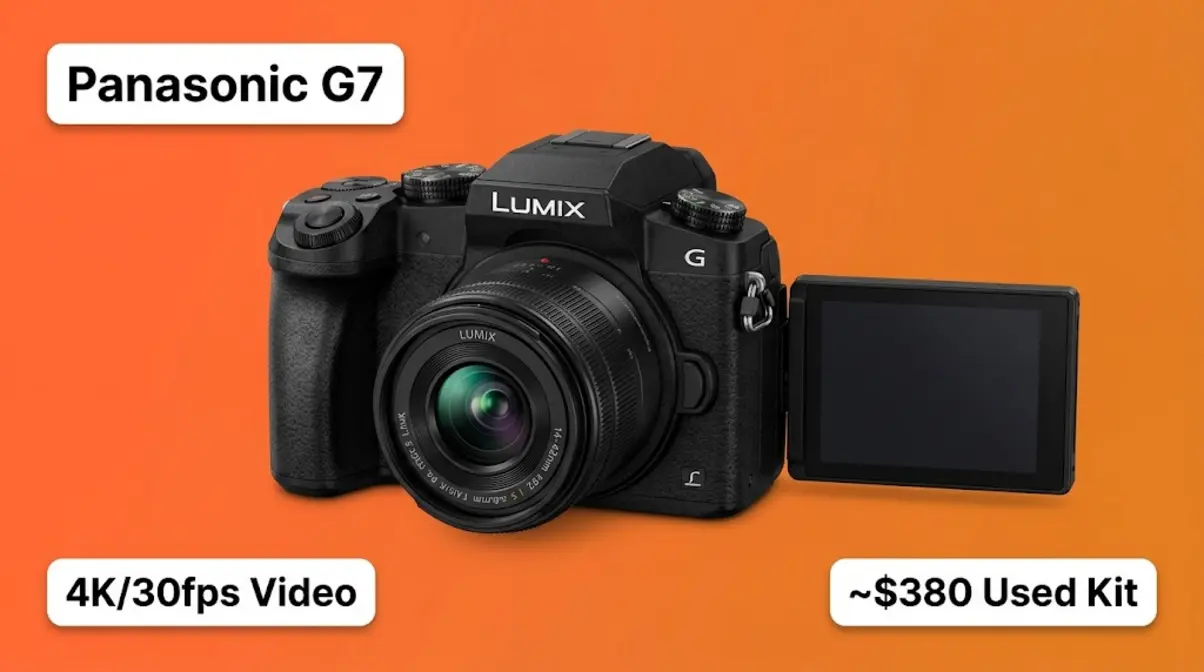
The Panasonic Lumix G7 is the only mirrorless camera on this list — and it earns its place specifically because of 4K video, a feature none of the DSLRs above can offer. Mirrorless cameras use an electronic viewfinder instead of an optical one and lack the mirror mechanism of a traditional DSLR, resulting in a more compact, lighter body. The G7 uses a Micro Four Thirds (MFT) sensor — slightly smaller than APS-C — which enables a much smaller body and lens ecosystem.
Who the Panasonic G7 Is For
If you are making a DSLR vs mirrorless camera comparison, the G7 is for content creators, vloggers, and anyone who shoots as much video as stills. If you’re starting a YouTube channel, filming short films, or documenting travel, the G7’s 4K/30fps video capability is a genuine competitive advantage over every DSLR in this price range. It’s also the most compact option here, which matters if you want a camera that fits in a daypack without a dedicated camera bag. Still photographers will find 16 megapixels adequate for most purposes, though it trails the D3500 and 6D in low-light performance.
Specs & Video Capability
| Specification | G7 Value |
|---|---|
| Sensor | 16MP Micro Four Thirds |
| ISO Range | 200–25,600 |
| Burst Rate | 8fps (electronic), 6fps (mechanical) |
| Video | 4K/30fps, 1080p/60fps |
| Viewfinder | Electronic (2,359k dots) |
| Articulating Screen | Yes — fully articulating touchscreen |
| Weight | 410g (body only) |
Reviewers at RTINGS note that the fully articulating touchscreen is a significant practical advantage over every DSLR on this list — it enables low-angle shots, overhead shots, and selfie-mode vlogging that fixed-screen DSLRs simply can’t do comfortably.
Kit Breakdown Under $500
| Item | Cost |
|---|---|
| Panasonic G7 + 14-42mm kit lens (used) | ~$300 |
| SanDisk 64GB UHS-I SD card (4K requires fast card) | ~$18 |
| Extra DMW-BLC12 battery | ~$22 |
| Basic bag | ~$20 |
| Small tripod (for vlogging stability) | ~$20 |
| Total | ~$380 |
This kit leaves $120 of headroom in your $500 budget — the most of any option here. That breathing room is useful: a fast SD card is non-negotiable for 4K recording, and a small tripod dramatically improves video quality.
Choose if: Video creation is a core part of your photography plans — 4K footage at this total kit price is unmatched by any DSLR on this list.
Skip if: Still photography is your primary focus and low-light performance matters — the Nikon D3500 or Canon 6D produce significantly better low-light stills than the G7’s smaller Micro Four Thirds sensor.
New vs. Used: Which Gets You More for $500?
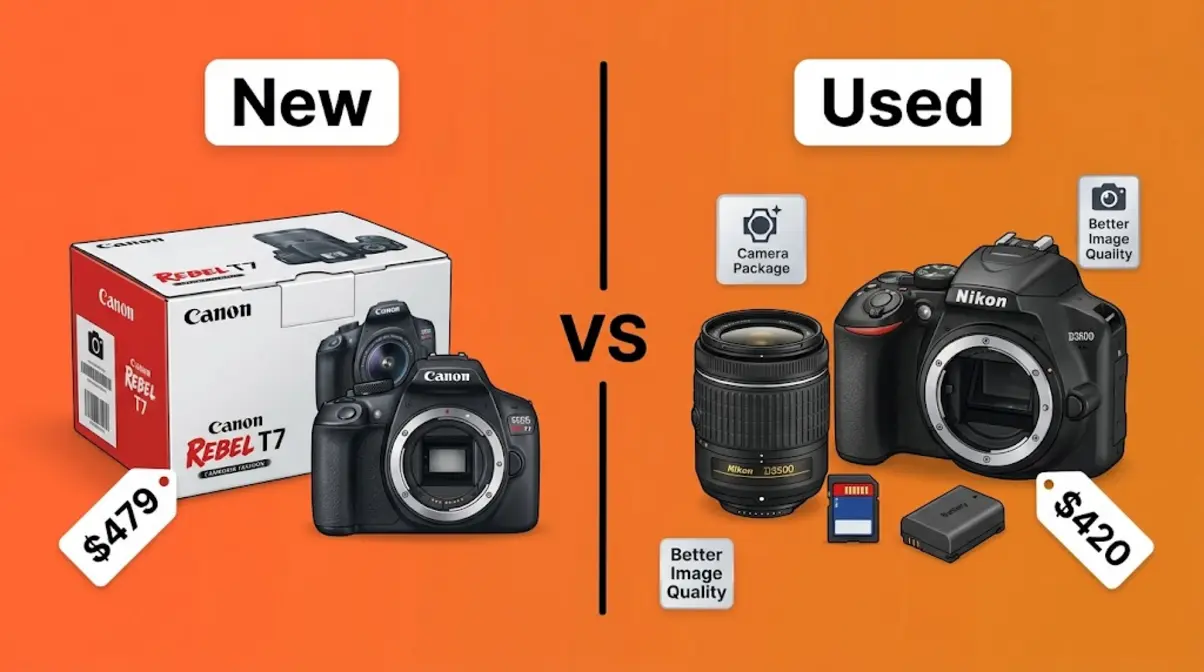
For most beginners, used cameras offer dramatically better value at this budget. Understanding the trade-offs between new and used gear — and knowing where to buy safely — is the most practically useful knowledge in this guide.
Total Cost of Ownership Breakdown
The standard advice to “just buy new” ignores a fundamental math problem at the $500 level. Here’s the real comparison:
| Scenario | Camera Body | Lens | Accessories | Total | What You Get |
|---|---|---|---|---|---|
| New body only (typical list price) | $580 (T7 kit) | Included (kit lens) | $50 | $630 | Entry APS-C, 24MP, 3fps |
| Used body + lens + accessories | $300 (D3500) | $75 (18-55 VR) | $50 | $425 | Better sensor, 1,550-shot battery |
| Used full-frame kit | $290 (6D) | $125 (50mm f/1.8) | $50 | $465 | Full-frame sensor, pro-grade low light |
The used Nikon D3500 complete kit costs roughly $200 less than the cheapest new Canon kit — and delivers better image quality. The used Canon 6D kit provides full-frame performance that a brand-new $600 camera can’t match.
“A complete used DSLR kit — body, lens, and accessories — consistently outperforms a new camera body-only purchase at the same $500 price point, often by one or two full camera generations.”
Where to Buy Used Cameras Safely
Not all used camera sources are equal. When buying used and refurbished cameras, our team reviewed current inventory and buyer protections across major platforms in May 2026:
KEH Camera (keh.com) — The industry standard for used gear in the US. As highlighted in their expert advice on used DSLRs, KEH grades cameras using a standardized system (Like New, Excellent+, Excellent, Very Good, Good) and offers a 180-day warranty on all purchases. Their “Bargain” grade items often look worse in photos than they perform — worth considering if you’re on a tight budget.
MPB (mpb.com) — Strong competitor to KEH with similar grading standards and a 180-day warranty. Their interface is more modern and easier to navigate. MPB tends to have slightly higher prices than KEH for equivalent condition items, but their photography is more accurate.
eBay (sold listings only) — Riskier than KEH or MPB, but useful for price benchmarking. Filter by “Sold Items” to see what cameras actually sell for, not what sellers hope to get. Stick to sellers with 98%+ feedback ratings and at least 100 transactions.
Avoid: Facebook Marketplace and Craigslist for your first used camera purchase unless you can inspect the camera in person with the checklist below. Following NYC consumer protection tips and EPA guidelines on electronic reuse, buying used from reputable dealers is both safe and environmentally responsible.
10-Point Used Camera Inspection
Before buying a used DSLR in person — or immediately upon receiving one shipped — run through these checks:
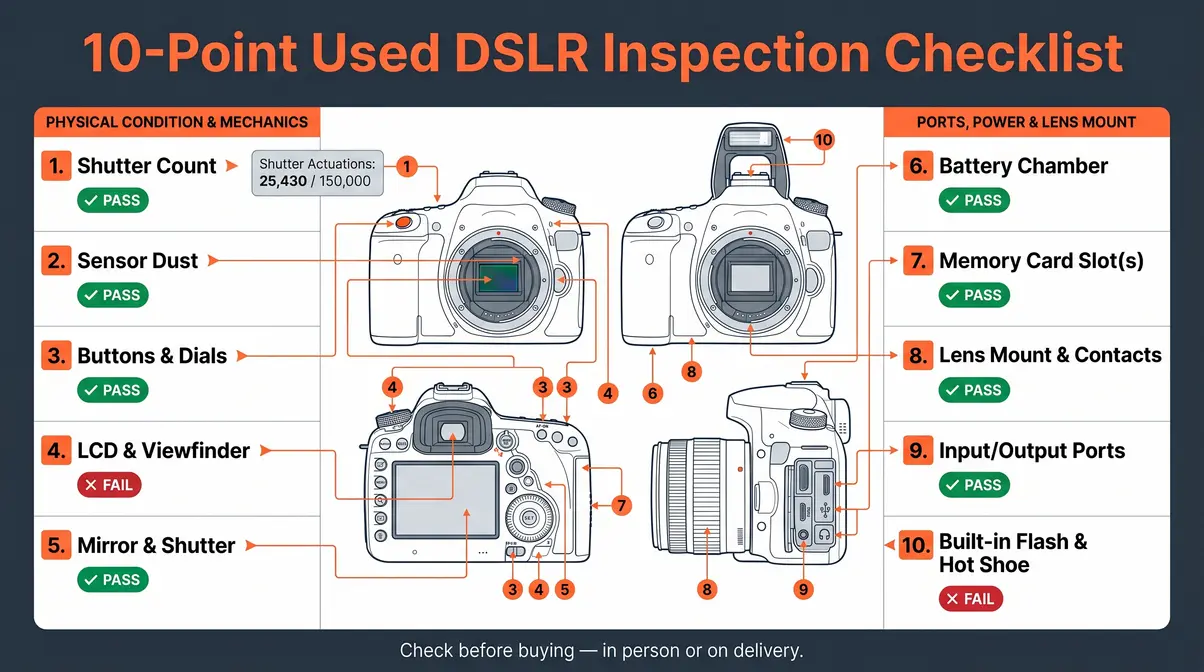
- Check the shutter count. Use a free tool like camerashuttercount.com. Under 30,000 is excellent for most DSLRs; under 50,000 is acceptable. Most entry-level DSLRs are rated for 100,000+ actuations.
- Inspect the sensor for dust. Set the camera to f/22, point at a plain white wall, and take a photo. Dust spots appear as dark circles. Minor dust is normal; heavy spotting requires professional cleaning.
- Test every button and dial. Cycle through all shooting modes, press every button, turn every dial. Any sticking, grinding, or non-response is a red flag.
- Check the viewfinder glass. Look through it at a bright surface. Scratches, fungus (appears as web-like patterns), or haze affect image quality.
- Inspect the mirror. Carefully look inside the lens mount with the camera off. The mirror should be clean and seated flat with no chips or marks.
- Test autofocus. Mount a lens and confirm autofocus locks quickly and accurately on subjects at various distances.
- Check the LCD screen. Look for dead pixels, cracks, or pressure damage. Apply light pressure to corners — any color distortion indicates internal screen damage.
- Inspect all ports and doors. Open the SD card door, battery door, and any port covers. Check for cracking, bent hinges, or moisture damage indicators (small red dots inside battery compartment).
- Shoot 10–20 test images. Review them on the camera’s screen at 100% zoom. Any consistent blur, color casts, or artifacts indicate sensor or lens problems.
- Confirm the charger and battery are included. A missing OEM battery means an additional $20–$40 cost. Factor this into your offer.
What to Look for in a DSLR Under $500
Choosing between cameras gets easier when you know which specifications actually affect your photos and which are marketing numbers that rarely matter at beginner level.
Key Specs That Actually Matter
Sensor size is the most important spec nobody explains clearly. APS-C sensors (found in the T7, D3500, D7000, and G7’s Micro Four Thirds variant) are significantly larger than smartphone sensors, which is why DSLRs produce better background blur and low-light images. Full-frame sensors (Canon 6D) are larger still, offering the best low-light performance and most natural perspective with any lens.
Megapixels matter far less than sensor size at beginner level. Academic research on Active-Pixel Sensors from UTSA and Princeton University research on exposure control confirm that sensor size and exposure handling matter more than raw megapixel counts. The difference between 16MP and 24MP is invisible in any photo you’ll post online or print at standard sizes. Don’t choose a camera based on megapixel count.
ISO range tells you how well a camera handles dim light. Usable high-ISO performance (clean images at ISO 3200 or above) is more valuable than a camera’s maximum rated ISO number.
Battery life becomes critical the moment you’re shooting a full day without access to a charger. The Nikon D3500’s 1,550-shot rating is exceptional. Most entry-level cameras rate 400–600 shots — budget for a spare battery.
Lens ecosystem determines your long-term upgrade path. Canon EF and Nikon F mount lenses are the most widely available and least expensive on the used market, giving both brands a significant advantage over proprietary systems.
Which Camera Is Right for You?
Use this framework to self-select based on your priorities and essential camera features for beginners:
| Your Priority | Best Choice | Why |
|---|---|---|
| Want new with warranty, beginner-friendly | Canon Rebel T7 | ~$479 new kit, guided menus, Canon support |
| Best image quality + battery life (used) | Nikon D3500 | Superior low-light sensor, 1,550-shot battery |
| Portrait + low-light photography | Canon EOS 6D | Full-frame sensor, best-in-class available light |
| Enthusiast control, older lens compatibility | Nikon D7000 | 39-point AF, weather sealing, body AF motor |
| Video creation + vlogging | Panasonic G7 | 4K video, articulating screen, compact body |
DSLR vs. Mirrorless vs. Point-and-Shoot
Understanding the difference between camera types helps you confirm you’re making the right choice — before you spend any money.
DSLRs (Digital Single-Lens Reflex) use a physical mirror inside the body that reflects light from the lens up into an optical viewfinder. When you press the shutter, the mirror flips up, exposing the sensor. This optical viewfinder shows you the real world, not a digital preview — many photographers prefer this for responsiveness and battery efficiency. DSLRs also have the largest selection of compatible lenses at the widest price range.
Mirrorless cameras remove the mirror entirely. To learn what is a mirrorless camera, note that the sensor is always exposed, and the viewfinder (if present) is an electronic display showing a digital preview. This enables smaller, lighter bodies and faster continuous shooting speeds. The Panasonic G7 is the mirrorless representative on this list. The trade-off at budget price points is typically shorter battery life and a smaller lens ecosystem compared to Canon and Nikon DSLR mounts.
Point-and-shoot cameras (compact cameras) have fixed lenses you cannot swap and much smaller sensors than DSLRs. A recent Statista report on professional smartphone usage shows that even pros rely on phones for casual shots, but dedicated cameras remain essential for paid work. At the $500 budget level, a DSLR or mirrorless camera delivers dramatically more creative control and image quality than any point-and-shoot.
For most beginners reading this guide, a DSLR is the right starting point: the optical viewfinder, longer battery life, and deep used-market lens ecosystem make DSLRs forgiving and affordable to grow with. If video is your primary medium, a mirrorless camera like the G7 makes more sense.
Common Pitfalls When Buying a Camera Under $500
Forgetting to Budget for a Lens
This is the single most expensive mistake beginners make. A camera body without a lens cannot take a single photograph. The Canon EOS 6D body alone costs around $290 used — but you need at least another $125 for the cheapest decent lens. Every kit in this guide accounts for this; if you find a cheaper body elsewhere, make sure you’re calculating the total cost including a lens.
Choosing by Megapixels Alone
A 24-megapixel APS-C camera does not automatically outperform a 20-megapixel full-frame camera. Sensor size, processor quality, and lens sharpness all affect final image quality more than the megapixel count at typical beginner shooting and printing sizes. The Canon 6D’s 20.2MP full-frame sensor produces better low-light images than the T7’s 24.2MP APS-C sensor — despite having fewer megapixels on paper.
Ignoring Shutter Count on Used Cameras
A used DSLR with 80,000 shutter actuations isn’t necessarily a bad buy — but you should know the number and factor it into your offer. Most entry-level DSLRs are rated for 100,000 actuations; semi-pro bodies like the D7000 are rated for 150,000. A camera at 90% of its rated shutter life needs to be priced accordingly.
When to Choose Alternatives
If your primary goal is smartphone-quality convenience with a slightly better camera, a modern smartphone with a quality case and lens attachments may genuinely serve you better than a DSLR at this budget. DSLRs require learning investment — if you won’t commit to understanding at least aperture, shutter speed, and ISO within your first three months, the image quality advantage over a current-generation phone camera won’t materialize.
If your budget is flexible and you can stretch to $700–$800, the used mirrorless market opens up significantly: Sony A6000 and Fujifilm X-T20 bodies become available at that range, offering faster autofocus and more modern feature sets than any DSLR in this guide.
Frequently Asked Questions
What is the best DSLR camera under 500 dollars in 2026?
The Nikon D3500 (used) is the best DSLR under $500 for most beginners in 2026. Its 24.2-megapixel APS-C sensor leads its price class in low-light performance, and its 1,550-shot battery life (according to Nikon’s official CIPA ratings) is roughly three times what comparable cameras deliver. A complete used kit — body, 18-55mm VR lens, and accessories — runs approximately $420 total (verified May 2026, KEH/MPB). If you prefer buying new, the Canon Rebel T7 kit at approximately $479 is the strongest new-camera option.
Is it safe to buy a used DSLR camera?
Buying used DSLRs is safe when you purchase from reputable, graded resellers. KEH.com and MPB.com both offer standardized condition grading and 180-day warranties on all purchases — significantly reducing the risk compared to private sellers. The 10-point inspection checklist in this guide covers the key checks to run immediately upon receiving any used camera. Shutter count is the most important verification: under 30,000 actuations indicates light use for most entry-level bodies.
Should I buy a DSLR or mirrorless camera under $500?
Choose a DSLR if still photography is your priority; choose mirrorless if video matters most. DSLRs at this budget offer longer battery life, larger used-lens ecosystems, and optical viewfinders that many photographers prefer for responsiveness. The Panasonic G7 mirrorless is the exception worth considering: its 4K video capability is unavailable on any DSLR in this price range. For pure still photography, the Nikon D3500 outperforms the G7 in low-light situations due to its larger APS-C sensor.
Can I get a full-frame camera for under $500?
Yes — the Canon EOS 6D is available used for $280–$320 in good condition, making a complete full-frame kit achievable under $500 when paired with the Canon EF 50mm f/1.8 STM lens (~$125). Full-frame sensors offer superior low-light performance and shallower depth of field compared to APS-C cameras. The trade-off is age: the 6D is a 2012 body with no 4K video and slower autofocus than modern cameras. For portrait and low-light photography, however, its image quality still impresses.
What accessories do I actually need to start shooting?
Four accessories are non-negotiable for a ready-to-shoot setup: a compatible lens (if not buying a kit), an SD memory card (at least 64GB, Class 10 or UHS-I), a spare battery, and a basic camera bag or strap. Together these add approximately $50–$65 to any body-only purchase. A lens filter (UV protective) is worth $15–$20 for protecting your glass. Everything else — tripods, external flashes, extra lenses — can wait until you’ve shot enough to know what you actually need.
The Total Kit Test: Your Buying Checklist
Every beginner buying a DSLR camera under 500 dollars faces the same challenge: finding a complete, ready-to-shoot setup that doesn’t blow the budget the moment you add a lens and a memory card. The Total Kit Test — our framework for evaluating cameras by complete kit cost rather than body price alone — reveals that the used camera market is far more powerful than most beginners realize.
The Nikon D3500 remains the strongest all-around recommendation: better low-light performance, exceptional battery life, and a complete kit for approximately $420. The Canon Rebel T7 is the right call if buying new matters to you. The Canon 6D is a remarkable achievement for portrait and available-light photographers willing to accept an older body. The D7000 rewards serious learners, and the Panasonic G7 is unmatched for video creators at this budget.
Start with the Decision Framework table above to identify your priority — image quality, video, ease of use, or future expandability. Then cross-reference the Kit Breakdown for your chosen camera, verify current pricing on KEH or MPB, and run the 10-point checklist when your camera arrives. You’ll spend your $500 once, confidently, and walk away with a setup that outperforms any smartphone — and most cameras twice the price.