

Table of Contents
This blog post may contain affiliate links. As an Amazon Associate I earn from qualifying purchases.
Every photographer eventually battles the sharp intrusions of grain and colored specks that creep into digital photos. Over 80 percent of beginners report frustration with noise ruining their images and dimming detail in shadows or solid backgrounds. Understanding digital noise is crucial for anyone who wants clean, crisp shots. This guide breaks down the different types of noise, shows what causes them, and reveals simple ways to take control and protect image quality.
Key Takeaways
| Point | Details |
|---|---|
| Understanding Digital Noise | Digital noise disrupts image quality, primarily caused by high ISO settings, low-light conditions, and sensor limitations. |
| Types of Image Noise | Familiarity with different noise types, such as Gaussian and color noise, helps in strategizing noise management. |
| Camera Settings and Noise | ISO, aperture, and shutter speed significantly impact noise levels; lower ISO settings tend to produce cleaner images. |
| Noise Reduction Techniques | Employing techniques such as shooting at native ISO, using proper lighting, and post-processing tools can effectively minimize noise. |
Defining Noise in Digital Photography
Digital noise is a visual artifact that can significantly impact the quality and aesthetic of photographic images. Think of it like static on an old television screen – random, unpredictable specks and graininess that disrupt the smooth visual information in your photograph.
At its core, noise represents random variations in brightness or color information within a digital image. These variations typically manifest as tiny, scattered pixels that create a grainy or speckled appearance, especially noticeable in uniform areas like solid-colored backgrounds or shadowy regions. The primary culprits behind digital noise include high ISO settings, challenging low-light shooting conditions, and limitations in image sensor technology.
Photographers encounter noise through several distinct characteristics:
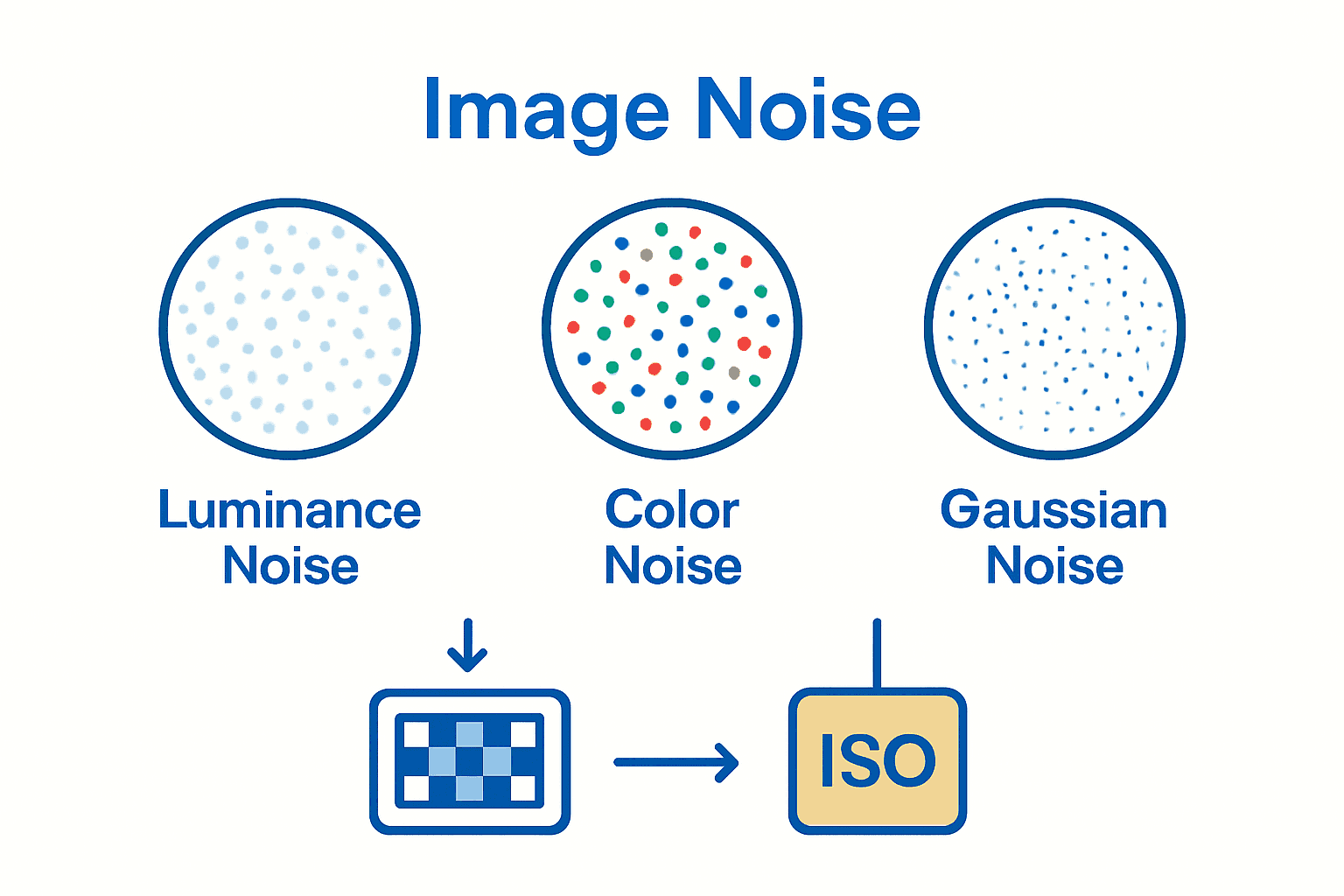
- Luminance Noise: Appears as grayscale speckles affecting image brightness
- Color Noise: Shows up as random colored pixels, often red, green, or blue
- Sensor-Based Noise: Directly related to the physical capabilities of your camera’s image sensor
Understanding noise becomes crucial when you want to maintain image quality. In low light photography tutorials, photographers learn strategies to minimize these unwanted visual disruptions. The goal isn’t always total elimination, but strategic management of noise to preserve image integrity.
Types of Image Noise and Their Differences
Understanding the diverse types of image noise helps photographers strategically manage and mitigate visual disruptions in their photographs. While digital noise might seem like a uniform problem, it actually manifests in several distinct forms, each with unique characteristics and visual impacts.
The primary categories of image noise include Gaussian noise, impulse noise, speckle noise, and Poisson noise. Gaussian noise appears as randomly distributed brightness variations across an image, creating a uniform graininess that looks like fine sand sprinkled over your photograph. This type of noise is most common in low-light conditions and occurs when digital sensors struggle to capture consistent light information.
Other notable noise types have specific visual signatures:
- Impulse Noise: Characterized by sudden, dramatic pixel value changes
- Speckle Noise: Often seen in ultrasound or radar imaging, creating a salt-and-pepper like effect
- Poisson Noise: Related to the statistical variation of photon counts during image capture
In ISO in Photography: Complete Guide for Beginners, photographers learn that understanding these noise variations is crucial for maintaining image quality. Each noise type requires different post-processing techniques and shooting strategies to minimize their visual impact.
Main Causes of Noise in Photos
Digital noise emerges from several critical factors that challenge image quality, turning potentially crisp photographs into grainy, less detailed representations. Understanding these causes helps photographers proactively manage and minimize unwanted visual disruptions in their images.
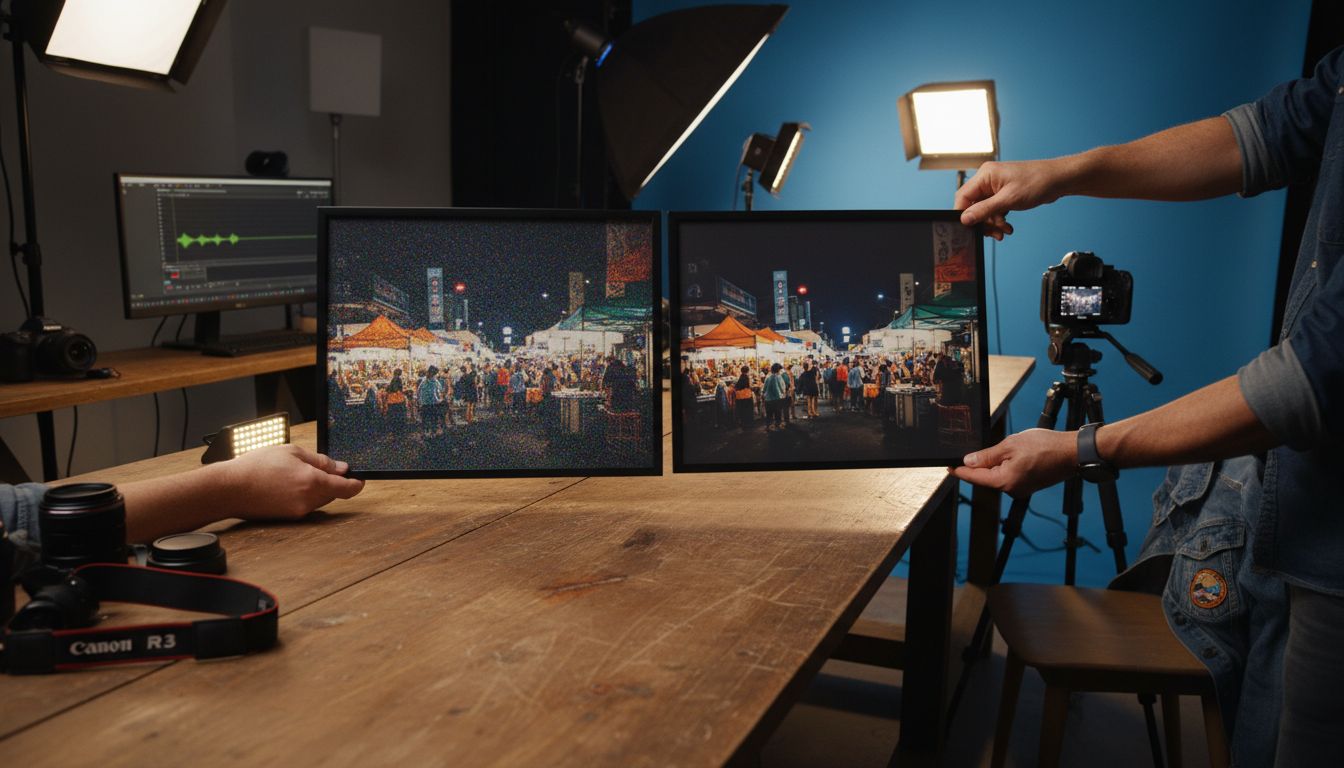
The most prominent cause of noise is undoubtedly high ISO settings. When photographers increase ISO to capture images in low-light conditions, they’re essentially amplifying the signal from the camera’s image sensor. This amplification, while helpful for visibility, also magnifies random electronic signals, resulting in those characteristic speckled or grainy textures that degrade image clarity. Think of ISO like a volume dial – the higher you turn it, the more background static you’ll hear.
Multiple factors contribute to image noise:
- Sensor Temperature: Warmer camera sensors generate more electronic interference
- Low Light Conditions: Insufficient light forces cameras to work harder, increasing noise
- Sensor Size and Quality: Smaller or older sensors typically produce more noise
- Exposure Duration: Longer exposures can generate additional thermal noise
In low light photography tutorials, photographers learn strategic techniques to minimize noise while maintaining image quality. The key is balancing technical settings with creative shooting techniques to produce cleaner, more professional photographs.
How Camera Settings Affect Noise
Camera settings are the primary control mechanisms photographers have for managing image noise, acting like intricate levers that can dramatically influence the visual quality of their photographs. Understanding how each setting interacts with your camera’s sensor is crucial for capturing cleaner, more professional images.
The most significant setting impacting noise is ISO. As ISO increases, the camera’s sensor becomes more sensitive to light, but simultaneously amplifies electronic signals that create visual interference. It’s similar to turning up an audio system’s volume – the higher you go, the more background static emerges. Lower ISO settings typically produce cleaner images with less digital noise, while higher settings introduce more graininess, especially in darker environments.
Multiple camera settings contribute to noise generation:
- Aperture: Wider apertures allow more light, potentially reducing the need for high ISO
- Shutter Speed: Longer exposures can generate thermal noise in the sensor
- White Balance: Incorrect settings can amplify color noise
- Image Processing: In-camera noise reduction algorithms impact final image quality
In the beginner’s guide to camera settings, photographers learn how to balance these technical parameters to minimize noise while maintaining image clarity. Mastering these interactions is key to producing professional-quality photographs across various shooting conditions.
Effective Techniques to Reduce Noise
Reducing digital noise requires a strategic approach that combines in-camera techniques and post-processing skills. Photographers have multiple tools at their disposal to minimize those unwanted grainy artifacts and preserve image quality across different shooting conditions.
One of the most powerful noise reduction strategies involves careful image capture. This means intentionally controlling camera settings to minimize noise generation from the start. Photographers can reduce noise by selecting the lowest practical ISO setting, using a tripod to enable longer exposures without camera shake, and ensuring proper lighting conditions that don’t force extreme sensor sensitivity.
Key techniques for noise reduction include:
- Shoot at Native ISO: Use the camera’s lowest standard ISO setting
- Use Appropriate Lighting: Add external light sources when possible
- Utilize Image Stacking: Capture multiple images and average them in post-processing
- Shoot in RAW: Provides more flexibility for noise reduction during editing
- Use Noise Reduction Software: Advanced post-processing tools can clean up grainy images
In processing your photos using software, photographers discover advanced techniques for minimizing noise while maintaining critical image details. The goal is not total noise elimination, but strategic management to produce visually compelling photographs.
Master Noise Control and Elevate Your Photography Skills Today
Struggling with digital noise that ruins your shots in low light or at high ISO settings is common for many amateur photographers. Understanding concepts like luminance noise, color noise, and how your camera settings impact image quality is crucial. If you want to capture crisp, clear images without the distracting grain or color speckles tackle these challenges with proven tips and expert advice.

Explore practical techniques and clear explanations in Our Beginner’s Guide to Camera Settings and learn how to shoot effectively in challenging conditions with Low Light Photography Tutorials. Don’t let noise hold back your creativity. Visit Amateur Photographer Guide now and start improving your photos with confidence.
Frequently Asked Questions
What is digital noise in photography?
Digital noise refers to visual artifacts that appear as graininess or speckled pixels in a photograph, disrupting its smooth visual quality. It is similar to static on an old television and is often more noticeable in low-light or uniformly colored areas.
What causes noise in photographs?
The primary causes of noise include high ISO settings, low-light shooting conditions, sensor temperature, sensor size and quality, and exposure duration. These factors can amplify random variations in brightness and color information, leading to grainy images.
How can I reduce noise in my photographs?
To minimize noise, photographers can shoot at a lower ISO, use appropriate lighting, employ image stacking techniques, shoot in RAW format for more editing flexibility, and utilize noise reduction software during post-processing.
What types of noise are commonly found in images?
Common types of noise include luminance noise (grayscale speckles), color noise (random colored pixels), Gaussian noise (random brightness variations), impulse noise (sudden pixel value changes), speckle noise (salt-and-pepper effect), and Poisson noise (statistical variations in photon counts).
Recommended
- ISO in Photography: Complete Guide for Beginners – Amateur Photographer Guide
- What Is a Stop in Photography? Complete Overview – Amateur Photographer Guide
- What Is Exposure in Photography? Complete Guide – Amateur Photographer Guide
- Low Light Photography: Everything You Need to Know – Amateur Photographer Guide