

Table of Contents
- Key Takeaways
- Best Sellers: Camera with Photo Metadata
- Photo Metadata Defined and Explained
- Types of Photo Metadata and Differences
- How Photo Metadata Is Created and Stored
- Protecting Privacy and Managing Metadata
- Practical Uses for Amateur Photographers
- Master Your Photo Metadata and Elevate Your Photography Skills
- Frequently Asked Questions
- Final Thoughts: Mastering Your Digital Footprint
- Recommended
This blog post may contain affiliate links. As an Amazon Associate I earn from qualifying purchases.
Every digital photo carries a hidden story that goes far beyond what appears on screen. For american photographers, understanding photo metadata opens the door to a rich layer of technical and creative detail often overlooked.
Over 90 percent of images taken with modern devices contain embedded metadata, shaping organization, privacy, and copyright for anyone serious about managing photos. This guide unlocks how photo metadata impacts your workflow and why it matters for both amateurs and professionals.
Key Takeaways
| Point | Details |
|---|---|
| Understanding Photo Metadata | Photo metadata encompasses technical, descriptive, and administrative information that enhances image management. |
| Automatic and Manual Generation | Metadata is generated automatically by cameras and can be enriched manually by photographers for better organization. |
| Privacy Management | Proactive management of photo metadata is crucial to protect sensitive information from being publicly shared. |
| Practical Uses for Amateur Photographers | Leveraging metadata allows amateur photographers to efficiently manage their collections and track their creative development. |
Best Sellers: Camera with Photo Metadata




Photo Metadata Defined and Explained
Photo metadata represents the hidden digital information embedded within image files, providing a comprehensive background story beyond what the naked eye perceives.
This digital fingerprint includes technical specifications, descriptive details, and contextual information that photographers and visual professionals use to understand and manage their digital assets.
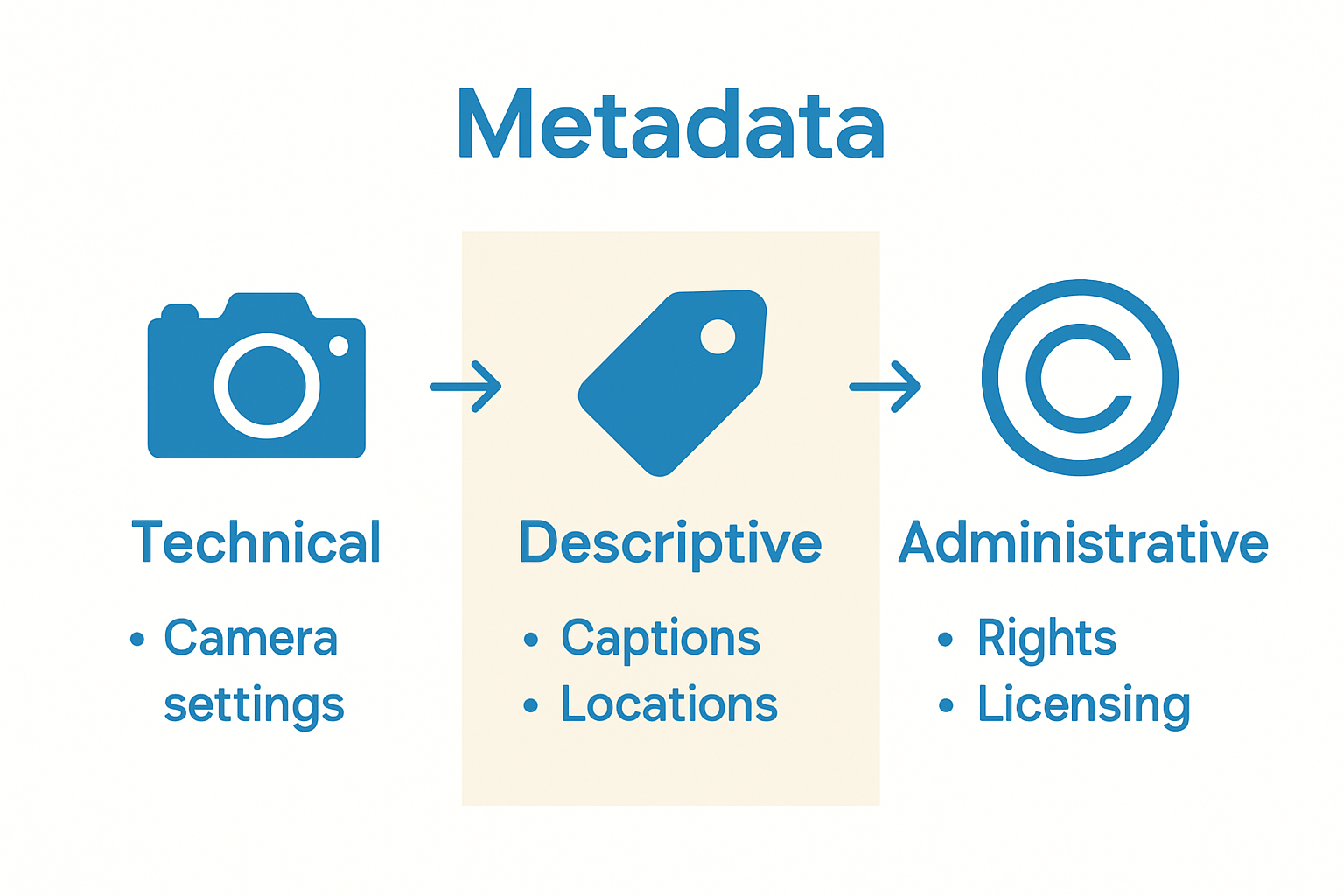
At its core, photo metadata encompasses several critical categories of information. Technical metadata reveals precise camera settings like aperture, shutter speed, ISO, lens details, and capture timestamp.
Descriptive metadata includes elements such as titles, keywords, captions, and location information. Administrative metadata tracks copyright details, usage rights, creator information, and potential licensing restrictions.
The real power of photo metadata lies in its ability to transform seemingly static images into rich, searchable, and manageable digital resources. Photographers can leverage this embedded information for organization, rights management, and tracking the technical evolution of their photographic work.
Check out our guide on file formats in photography to understand how different image formats handle and preserve metadata.
Understanding photo metadata isn’t just for professional photographers. Hobbyists and amateur enthusiasts can use this information to track their gear progression, analyze shooting patterns, and improve their technical skills.
By learning to read and interpret metadata, you gain insights into your photographic techniques and can make more informed decisions about equipment, settings, and creative approaches.

Types of Photo Metadata and Differences
Photo metadata is strategically categorized into three primary types, each serving a unique purpose in documenting and managing digital images. Understanding these distinct metadata categories helps photographers and digital professionals effectively organize, track, and utilize their visual assets with precision and clarity.
Technical Metadata represents the most objective and automatically generated information about an image. This category captures precise details directly from the camera or imaging device, including sensor specifications, capture settings, and file characteristics. Key technical metadata elements include:
- Camera make and model
- Aperture, shutter speed, and ISO settings
- Lens focal length
- Image dimensions and resolution
- Date and time of capture
- File format and color space
Descriptive Metadata adds context and meaning to images by providing human-interpretable information. Unlike technical metadata, these details are often manually added and focus on content, subject, and creative aspects.
Photographers use descriptive metadata to improve searchability and provide additional insights about their images. Learn more about editing techniques in our comprehensive photography guide to understand how metadata plays a crucial role in image management.
Finally, Administrative Metadata handles the legal and management aspects of image files. This critical metadata type covers ownership, usage rights, and preservation information.
It protects photographers’ intellectual property and provides clear guidelines for image distribution and licensing. Administrative metadata typically includes copyright information, creator details, usage restrictions, and potential preservation instructions for long-term archival purposes.
How Photo Metadata Is Created and Stored
Photo metadata is generated through two primary mechanisms: automatic capture by digital devices and manual input by photographers.
Modern digital cameras and smartphones are equipped with sophisticated sensors and software that instantaneously record technical details at the moment an image is captured, creating a comprehensive digital record of the photographic event.
Automatic Metadata Generation occurs directly within the camera or imaging device. When you press the shutter button, the camera’s internal systems simultaneously record critical technical information such as:
- Precise date and time of capture
- Camera model and manufacturer
- Exact camera settings (aperture, shutter speed, ISO)
- Lens characteristics
- GPS location (if enabled)
- White balance settings
- Exposure compensation
Manual Metadata Enrichment allows photographers to supplement the automatically generated information with descriptive and administrative details.
Check out our guide on editing photos for advanced metadata management to understand how professional photographers enhance their image files. Photographers can add keywords, captions, copyright information, and creative context using specialized image management software or integrated editing tools.
Metadata is typically stored within the image file itself using standard formats like EXIF (Exchangeable Image File Format) for digital cameras, IPTC (International Press Telecommunications Council) for journalistic and professional photography, and XMP (Extensible Metadata Platform) developed by Adobe.
These standardized storage methods ensure compatibility across different software platforms and preserve the rich contextual information that transforms a simple image into a comprehensive visual document.
Protecting Privacy and Managing Metadata
Metadata privacy represents a critical concern in the digital photography landscape, where seemingly innocuous image details can potentially expose sensitive personal information.
Each digital photograph carries an invisible layer of data that, if left unmanaged, could reveal precise location details, timestamps, device information, and other potentially compromising personal insights.
Privacy Risks in Metadata can emerge through several unexpected channels. Digital images shared online might inadvertently disclose:
- Exact GPS coordinates of photo capture
- Precise date and time of image creation
- Device-specific identifiers
- Camera model and serial number
- Personal contact information embedded by some devices
Proactive Metadata Management requires strategic approaches to protect personal privacy. Photographers and casual users alike can implement several protective techniques to safeguard their digital footprint.
Review our comprehensive privacy guide to understand the full scope of digital image protection. These strategies include manually removing sensitive location data, using privacy-focused image editing tools, and understanding the metadata stripping capabilities of different platforms and applications.
Effective metadata management is not about complete elimination but strategic control. By understanding the information embedded in your images and consciously choosing what to preserve or remove, you can share photographs while maintaining personal privacy boundaries.
Professional photographers and privacy-conscious individuals often use specialized software that allows granular control over metadata, enabling them to selectively remove or modify sensitive information before public sharing.
Practical Uses for Amateur Photographers
Metadata transforms digital photography from simple image capture to a sophisticated system of organization, tracking, and creative management. Amateur photographers can leverage this powerful tool to streamline their workflow, enhance image searchability, and develop a more professional approach to their photographic collections.
Photo Collection Management becomes dramatically more efficient with strategic metadata use. Photographers can create comprehensive systems for organizing images by:
- Adding descriptive keywords
- Tagging images by location
- Tracking camera settings across different shoots
- Creating custom categories and collections
- Filtering images based on specific technical characteristics
- Maintaining a chronological record of photographic progression
Creative and Professional Development represents another critical application of metadata for amateur photographers. Explore our beginner photography tips for additional insights into maximizing your photographic potential.
Metadata helps track technical improvements by preserving detailed information about camera settings, lighting conditions, and shooting environments.
This historical record allows photographers to analyze their skill development, understand their preferred shooting techniques, and make informed decisions about future equipment investments.
Beyond personal organization, metadata provides crucial protection for creative work. Amateur photographers can embed copyright information, contact details, and usage restrictions directly into their image files.
This proactive approach ensures proper attribution, helps prevent unauthorized use, and establishes a professional foundation for those transitioning from hobbyist to professional photography.
By understanding and utilizing metadata, photographers transform their digital images from simple visual records into rich, informative, and protected creative assets.
Master Your Photo Metadata and Elevate Your Photography Skills

Understanding photo metadata unlocks a hidden layer of information that can transform your photography journey. From tracking camera settings and locations to protecting your creative work, managing metadata effectively helps you stay organized and confident in your craft.
If you have ever felt overwhelmed by technical details or concerned about privacy risks, you are not alone. Many amateur photographers seek clear, practical guidance to harness metadata’s power without confusion.
Explore detailed tutorials and expert advice on how to read, edit, and protect your photo metadata at Amateur Photographer Guide. Start optimizing your photo management today with simple steps and gain control over your digital images.
Visit our comprehensive photography guide and discover how metadata knowledge can enhance your workflow and creative development. Take the next step now and make your photos work smarter for you.
Frequently Asked Questions
What is photo metadata?
Photo metadata is the additional information embedded within image files that provides details beyond what is visible in the photograph. It includes technical specifications, descriptive details, and administrative information regarding the image.
What are the types of photo metadata?
There are three primary types of photo metadata: technical metadata (which includes camera settings and specifications), descriptive metadata (which provides context such as titles and keywords), and administrative metadata (which covers copyright and usage rights).
How is photo metadata created?
Photo metadata is created through automatic capture by digital devices when an image is taken and by manual input from photographers who can add descriptive and administrative details using image management software.
Why is photo metadata important for photographers?
Photo metadata is important as it helps photographers manage their image collections, track technical settings, enhance searchability, protect copyright, and analyze their photographic skills and development over time.
Final Thoughts: Mastering Your Digital Footprint
In an era where we capture thousands of moments every year, photo metadata is the invisible thread that keeps our digital lives organized, searchable, and professional.
Whether you’re a professional photographer protecting your intellectual property via IPTC data or a casual hobbyist trying to remember exactly where you took that sunset shot using GPS coordinates, understanding this data is essential.
However, as we’ve explored, metadata is a double-edged sword. While it provides incredible utility for organization and SEO, it also carries a digital trail of your location and equipment. Mastering the art of stripping sensitive EXIF data before sharing on social media is just as important as knowing how to read it.
By taking control of your metadata, you aren’t just managing files—you’re preserving the “who, what, where, and how” of your creative journey while keeping your private data exactly where it belongs: with you.
Recommended
- Complete Guide to File Formats in Photography – Amateur Photographer Guide
- The Essential Guide to Editing in Photography – Amateur Photographer Guide
- Understanding Exposure: How to Get the Perfect Shot – Amateur Photographer Guide
- Role of Editing in Photography: Complete Guide – Amateur Photographer Guide
Last update on 2026-03-07 / Affiliate links / Images from Amazon Product Advertising API