

Table of Contents
This blog post may contain affiliate links. As an Amazon Associate I earn from qualifying purchases.
Capturing that perfect shot can be frustrating when your camera stubbornly loses focus at the last moment. For self-taught photographers eager to go beyond basic snap-and-shoot habits, mastering back button focus offers a powerful path to better control. This technique separates focusing from the shutter button, letting you lock sharpness exactly where you want it and avoid the common pitfalls that come with accidental refocusing. You’ll quickly see how a simple adjustment transforms both your creative freedom and technical results.



Key Takeaways
| Point | Details |
|---|---|
| Back Button Focus Offers Enhanced Control | This technique separates focus and shutter release, allowing photographers to lock focus and recompose shots without unwanted refocusing. |
| Improves Performance in Dynamic Scenarios | Back button focus excels in action and wildlife photography, where maintaining sharp focus on moving subjects is crucial. |
| Adapts Easily to Different Shooting Environments | Photographers can practice back button focus in controlled settings to build muscle memory and improve technique before tackling complex scenes. |
| Simplifies Workflow for Amateur Photographers | By reducing accidental refocusing, beginners can shoot more confidently, enhancing their understanding of composition and focus management. |
Back Button Focus Explained Simply
Photographers seeking more precise control over their image capture have discovered a game changing technique: back button focus. This method fundamentally transforms how you interact with your camera by separating the focusing and shutter release functions. Instead of using the traditional half-press shutter technique, back button focus allows you to engage autofocus through a dedicated button on the camera’s back panel.
The core advantage of this technique lies in its incredible flexibility. By decoupling focus from the shutter button, you gain unprecedented control over when and how your camera establishes sharp focus. Imagine tracking a fast moving subject like a bird in flight or capturing a spontaneous moment without worrying about accidental refocusing. With back button focus, you can lock focus on a specific area and then recompose your shot without the camera attempting to refocus every time you press the shutter.
Implementing back button focus requires a few simple camera setting adjustments. Most modern digital cameras allow you to reassign the autofocus function from the shutter button to another button, typically located near your thumb on the camera’s rear panel. The process involves navigating to your camera’s custom function or button configuration menu and selecting a dedicated button specifically for autofocus. Once configured, you’ll press this back button to acquire focus and then release it, allowing you to take multiple shots without the camera attempting to refocus.
Key Benefits of Back Button Focus:
- Complete separation of focus and shutter release
- Ability to lock focus and recompose instantly
- Enhanced control for action and wildlife photography
- Reduced chances of accidentally shifting focus
- Simplified workflow for complex shooting scenarios
Pro tip: Practice configuring back button focus in a controlled environment before using it during critical shooting moments to build muscle memory and confidence.
Traditional Autofocus Versus Back Button Method
Traditional autofocus systems have long relied on a single method of focusing that combines both image capture and lens adjustment through the shutter button. When photographers press the shutter button halfway, the camera engages its autofocus mechanism, attempting to lock onto the perceived subject. While convenient, this approach introduces several significant limitations that can frustrate photographers seeking precise control over their images.
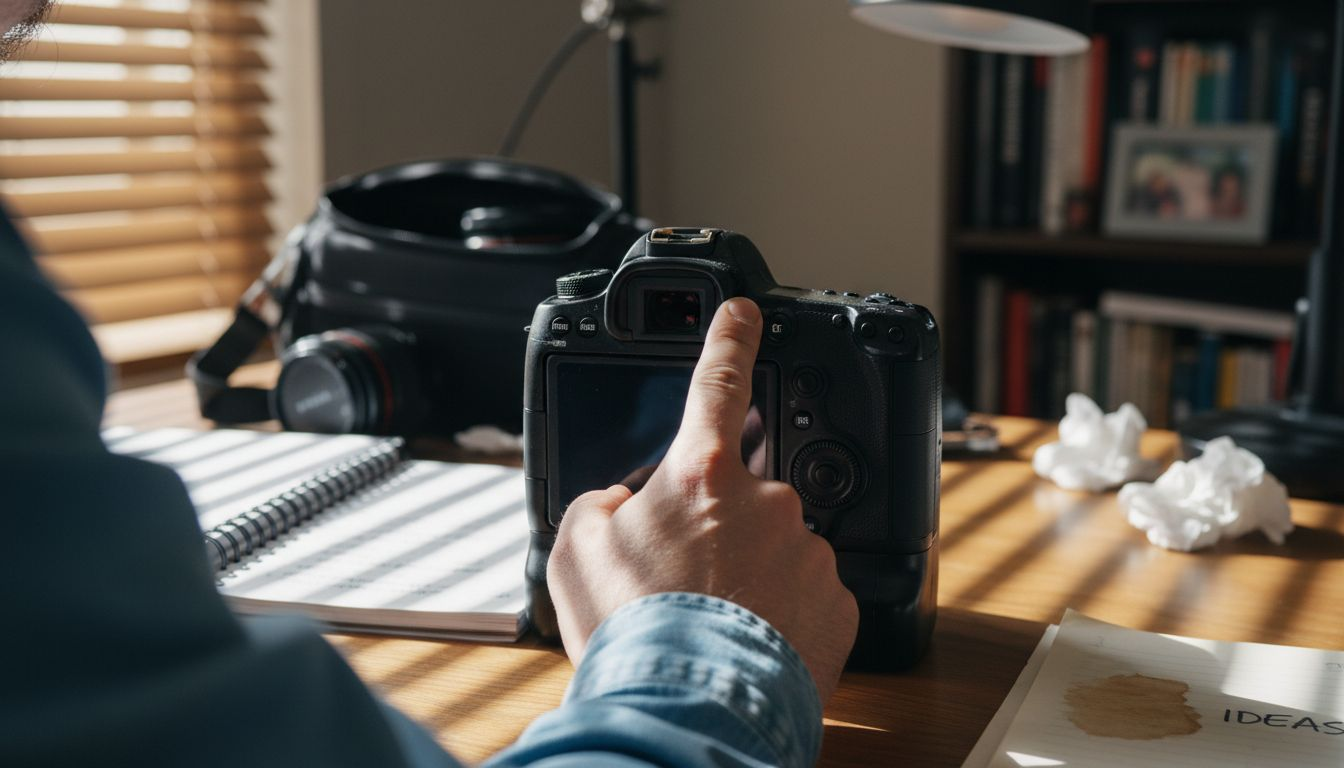
The primary challenge with traditional autofocus emerges during complex shooting scenarios. For instance, when tracking a moving subject or capturing a series of shots with consistent framing, the standard half-press method often causes unintended focus shifts. Continuous autofocus systems typically struggle to maintain consistent sharpness, forcing photographers to constantly re-engage the focusing mechanism. Back button focus resolves these issues by separating focus acquisition from image capture, giving photographers granular control over when and how their lens focuses.
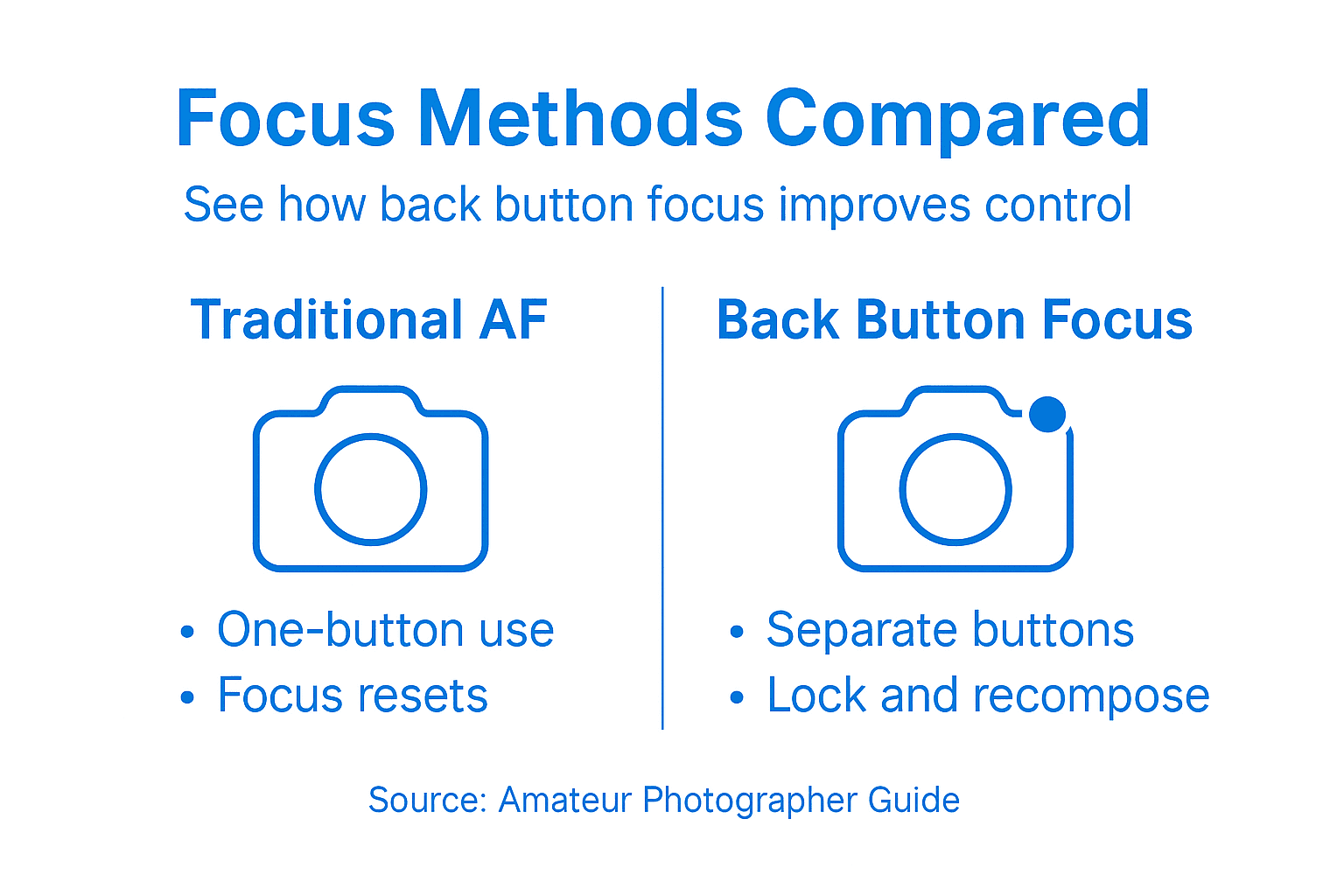
Understanding the technical differences reveals why back button focus has become a preferred technique for serious photographers. Traditional autofocus operates in two primary modes: single-shot autofocus (AF-S), which locks focus when the shutter is half-pressed, and continuous autofocus (AF-C), which attempts to track moving subjects. Back button focus transforms these modes by allowing photographers to independently manage focusing without disrupting composition. This means you can lock focus on a specific point, recompose your shot, and shoot multiple images without the camera attempting to refocus each time.
Key Differences Between Traditional and Back Button Focus:
- Traditional Method:
- Focus and shutter controlled by same button
- Potential for accidental refocusing
- Limited compositional flexibility
- Back Button Focus:
- Dedicated focus button separate from shutter
- Precise focus control
- Ability to lock and maintain focus
- Enhanced shooting flexibility
Pro tip: Experiment with back button focus during stationary shooting sessions to build muscle memory and understand how the technique changes your photographic workflow.
Here’s a quick comparison of when each autofocus method is most effective:
| Shooting Scenario | Traditional Autofocus | Back Button Focus |
|---|---|---|
| Portraits | Acceptable for static subjects | Best for recomposing and locking focus |
| Action/Sports | Can miss fast-moving subjects | Superior tracking and focus retention |
| Landscapes | Simple, but may refocus by error | Prevents unwanted focus changes |
| Macro/Detail Shots | Focus drift is possible | Maintains precise focus placement |
Key Benefits for Amateur Photographers
Amateur photographers often struggle with capturing precise, consistently sharp images, and back button focus emerges as a powerful solution to many common focusing challenges. By separating the autofocus function from the shutter release, this technique provides unprecedented control that can transform how beginners approach photography. 7 Essential Photography Beginner Tips recommend mastering techniques that enhance image quality, and back button focus stands out as a game changing method for improving technical skills.
The most significant benefit for amateur photographers is the ability to lock focus without compromising composition. Traditional focusing methods often force photographers to re-engage autofocus repeatedly, leading to missed shots and frustration. With back button focus, you can precisely select a focus point, recompose your shot, and shoot multiple images without the camera constantly readjusting. This is particularly valuable when photographing subjects that require careful framing, such as portraits, macro photography, or scenes with complex foreground and background elements.
Learning back button focus also accelerates skill development by encouraging more intentional photographic techniques. Instead of relying on automatic systems, photographers must actively think about focus placement, depth of field, and composition. This method naturally trains visual awareness and technical precision, helping amateurs transition from point-and-shoot approaches to more deliberate, professional-level image making. The technique becomes especially powerful when capturing dynamic subjects like sports, wildlife, or children, where maintaining consistent focus is crucial.
Key Advantages for Amateur Photographers:
- Improved focus control and precision
- Reduced accidental refocusing
- Enhanced compositional flexibility
- Better understanding of camera mechanics
- More consistent image sharpness
- Faster shooting in complex environments
Pro tip: Start practicing back button focus during stationary subjects to build muscle memory before attempting more challenging shooting scenarios.
Preventing Common Focus Problems
Photographers frequently encounter frustrating focus challenges that can ruin otherwise perfect shots. Focus hunting, unexpected refocusing, and missed focus are recurring nightmares for both amateur and professional photographers. These issues often stem from traditional autofocus systems that struggle to maintain consistent sharpness in complex shooting environments. How to Choose a Camera for Amateur Photographers emphasizes selecting gear with robust focusing capabilities, but back button focus offers an immediate solution to many of these persistent problems.
The most common focus problems emerge in dynamic shooting scenarios like sports photography, wildlife documentation, or capturing active children. Traditional autofocus systems can struggle to maintain sharp focus when subjects move quickly or when backgrounds contain multiple potential focal points. Back button focus allows photographers to lock focus precisely and maintain that focus point regardless of minor subject movements. This technique prevents the camera from randomly searching for focus or accidentally shifting focus when the shutter is pressed, which eliminates the risk of blurry images caused by focus uncertainty.
Understanding and preventing focus problems requires developing a strategic approach to camera control. Back button focus empowers photographers to manually override automatic focus systems, giving complete control over when and how the lens focuses. By separating focus activation from shutter release, photographers can pre-focus on a specific area, track moving subjects more effectively, and reduce the likelihood of focus errors. This method is particularly powerful in challenging lighting conditions or scenes with complex depth of field, where traditional autofocus might struggle to identify the intended subject.
Common Focus Problems Solved by Back Button Focus:
- Eliminating focus hunting
- Preventing accidental refocusing
- Maintaining consistent sharpness
- Improving tracking of moving subjects
- Reducing missed focus incidents
- Enhanced control in challenging environments
Pro tip: Practice back button focus techniques in controlled settings like your home or backyard to build muscle memory before attempting complex shooting scenarios.
Switching to Back Button Focus: Practical Steps
Transitioning to back button focus requires a methodical approach and understanding of your specific camera’s menu configuration. While the process might seem intimidating initially, most modern digital cameras offer relatively straightforward customization options for button assignments. Photography Habits for Beginners emphasizes developing technical skills through deliberate practice, and mastering back button focus is an excellent example of this principle.
The first critical step involves navigating your camera’s custom controls or button configuration menu. Typically, you’ll want to locate the autofocus settings and reassign the focus activation from the shutter button to a dedicated rear button, often labeled AF-ON. This process varies slightly between camera manufacturers, but generally involves selecting custom controls, finding focus activation options, and deselecting autofocus from the shutter button half-press. Some cameras offer preset back button focus configurations, which can simplify the initial setup for photographers unfamiliar with advanced menu navigation.
Successful implementation of back button focus demands patience and consistent practice. After configuring your camera, spend time deliberately practicing in controlled environments to build muscle memory. Start with stationary subjects, practicing the technique of pressing the rear button to acquire focus and then releasing it before composing and shooting. This approach helps train your muscle memory and prevents the automatic reflex of half-pressing the shutter button. Experiment with different scenarios like portrait photography, landscape shots, and moving subjects to understand how back button focus transforms your shooting experience.
Key Steps for Switching to Back Button Focus:
- Access camera custom control menu
- Locate autofocus button assignment settings
- Disable autofocus on shutter button
- Assign autofocus to rear button (AF-ON)
- Verify configuration in camera settings
- Practice in controlled shooting environments
Pro tip: Keep your camera manual nearby during initial configuration and consider watching online tutorials specific to your camera model for detailed guidance.
Typical camera brands handle back button focus setup differently:
| Camera Brand | Button Name | Menu Location | Notes |
|---|---|---|---|
| Canon | AF-ON | Custom Functions | Often a dedicated button |
| Nikon | AF-ON or AE-L/AF-L | Custom Controls | Button must be reassigned |
| Sony | AF-ON or Custom | Button Settings | May require customizing C buttons |
| Fujifilm | AF-ON or AE-L | Button/Dial Setting | Available on recent models |
Master Your Focus with Confidence and Precision
Struggling to keep your shots sharp and perfectly composed is a common hurdle for many amateur photographers. The article “Why Back Button Focus Changes Your Photography” highlights essential challenges like accidental refocusing and difficulty tracking moving subjects. These issues can make capturing the perfect moment feel frustrating and out of reach. Understanding and implementing back button focus offers a solution that puts you fully in control of your focus points and shooting flow. This technique not only prevents focus hunting but also gives you the freedom to lock your focus and recompose effortlessly.

Ready to transform your photography skills with practical, easy-to-follow guidance? Visit Amateur Photographer Guide to explore detailed tutorials on setting up back button focus, learn 7 Essential Photography Beginner Tips to enhance your techniques, and get advice on How to Choose a Camera for Amateur Photographers. Start mastering your focus today and never miss a sharp shot again.
Frequently Asked Questions
What is back button focus?
Back button focus is a photography technique that separates the autofocus function from the shutter release, allowing photographers to engage autofocus using a dedicated button on the back of the camera instead of the shutter button.
How does back button focus improve my photography?
By decoupling focus from the shutter button, back button focus offers greater control over focus placement, prevents accidental refocusing, and allows users to lock focus on a subject while recomposing their shot confidently.
Can back button focus be used for action photography?
Yes, back button focus is particularly beneficial for action or wildlife photography, as it enables photographers to maintain focus on moving subjects without the camera attempting to refocus when the shutter button is pressed.
What are the main differences between traditional autofocus and back button focus?
Traditional autofocus relies on a half-press of the shutter button to engage focus, which can lead to accidental refocusing and limited flexibility. Back button focus uses a dedicated button for focus, providing precise control, the ability to lock focus, and enhanced compositional flexibility.
Recommended
- How Autofocus Works: Sharper Photos Made Simple
- Focal Plane in Photography: Why It Matters For Better Photos
- Continuous Autofocus: Unlocking Sharper Action Shots
- What Is Bokeh and Its Impact on Creative Photos
Last update on 2026-03-07 / Affiliate links / Images from Amazon Product Advertising API