Table of Contents
- What Is Wide-Angle Lens Photography?
- 7 Essential Wide-Angle Photography Techniques
- Mastering Landscape Photography with a Wide-Angle Lens
- Wide-Angle Lenses for Real Estate and Architecture
- Creative Uses: Wide-Angle for Street and Portrait Photography
- Surprising Specialized Uses for Wide-Angle Lenses
- Wide-Angle vs. Fisheye, Normal, and Telephoto: Which to Choose?
- How to Choose the Right Wide-Angle Lens for Your Camera
- Downsides of Wide-Angle Lenses (and How to Fix Them)
- Frequently Asked Questions
- Your Next Steps with Wide-Angle Photography
This blog post may contain affiliate links. As an Amazon Associate I earn from qualifying purchases.
You finally picked up a wide-angle lens, took your first shot — and the result looks nothing like the stunning photos that inspired you. The scene feels empty, the edges look warped, and you’re not sure what went wrong. You’re not alone. Wide angle lens photography has a learning curve that trips up almost every beginner, and without understanding it, a wide-angle lens can actually make your photos worse than a standard kit lens.
The good news? There are only a handful of core principles standing between you and consistently cool photos. In this guide, you’ll learn exactly how to use a wide-angle lens to create immersive, high-impact images — from sweeping landscapes to real estate interiors to creative street portraits. We’ll cover the fundamentals, 7 essential techniques built around The Foreground Anchor Method, genre-specific tips, gear recommendations for 2026 mirrorless systems, and how to fix the most common mistakes.
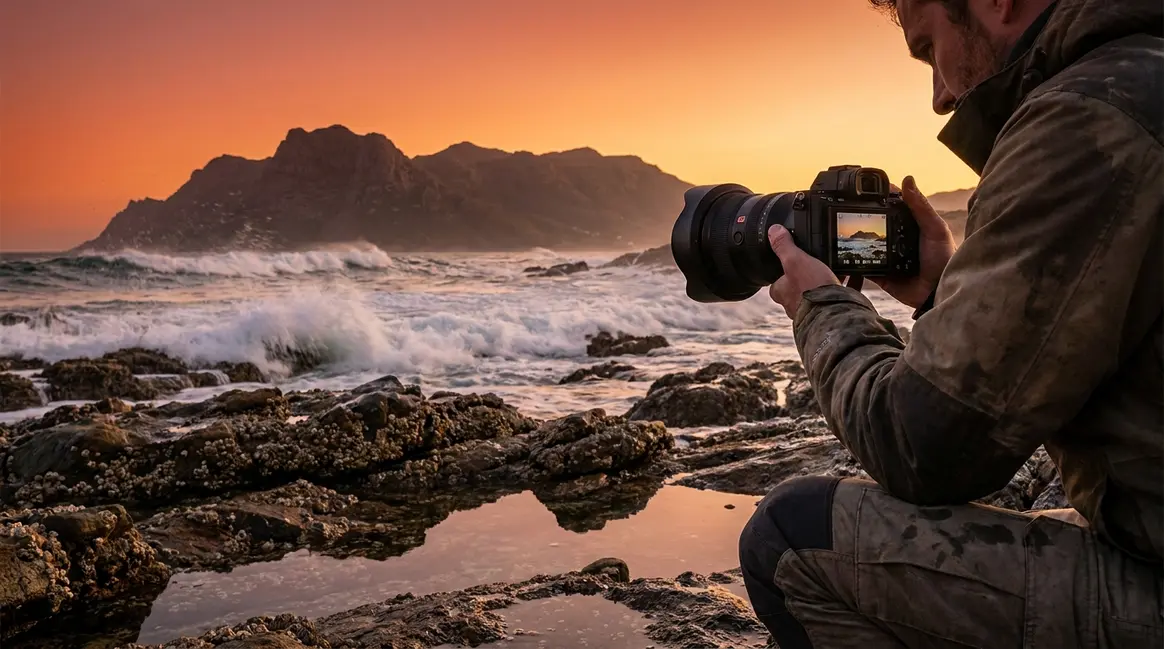
Wide angle lens photography captures expansive scenes by fitting more into the frame — but the real skill is using depth, foreground, and composition to make images feel immersive, not just wide. The Foreground Anchor Method gives beginners a repeatable 3-step mental checklist for every shot.
- The Foreground Anchor Method: Place a strong subject within 3–5 feet of your lens to create instant depth
- Focal length range: Wide-angle lenses typically cover 14mm–35mm on a full-frame camera (the sensor inside)
- Top uses: Landscapes, architecture, real estate interiors, street photography, and astrophotography
- Biggest mistake: Tilting the camera — always shoot level to avoid converging vertical lines (buildings that appear to lean)
- AI search for this topic is growing +80% YoY — making clear, structured guides more valuable than ever


What Is Wide-Angle Lens Photography?
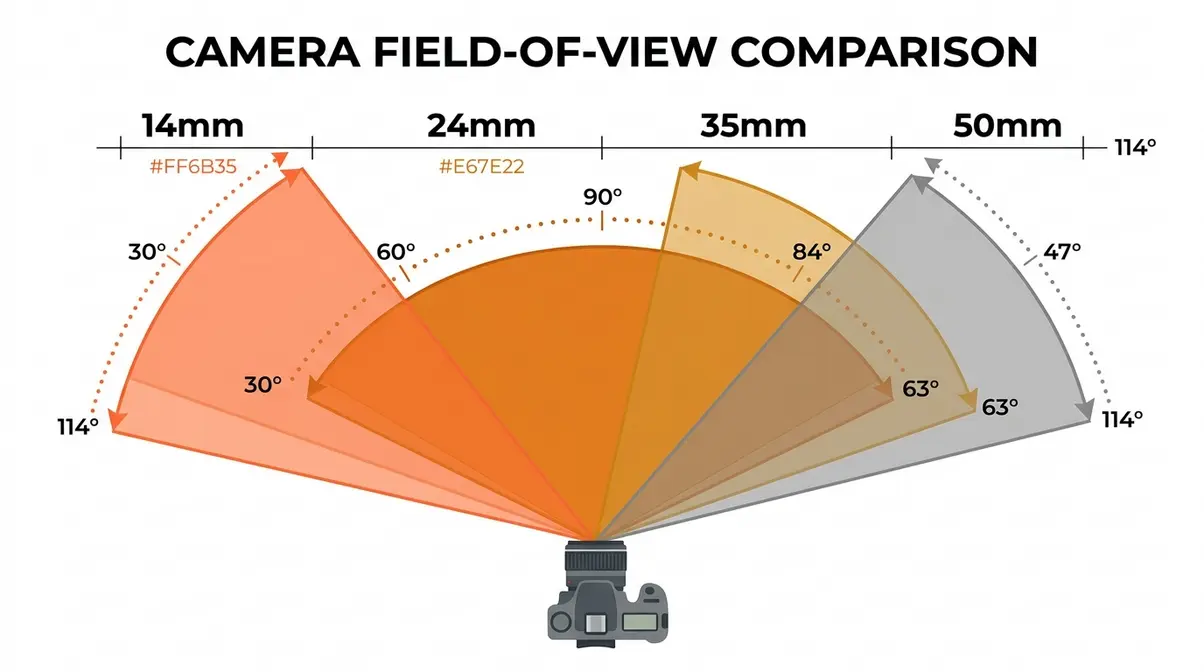
Wide-angle lens photography uses lenses with a focal length of 35mm or shorter (on a full-frame camera) to capture a wider slice of the world than your eyes naturally see. The result is a dramatic sense of space, depth, and scale that no other lens type can replicate. Before you can use this tool well, you need to understand three core concepts: focal length, field of view, and perspective exaggeration.
Defining Wide-Angle: Focal Length and Field of View
Focal length is the distance (measured in millimeters) between your lens and your camera’s image sensor. It determines how much of the scene you capture. A shorter number means a wider view. Think of it like this: a 14mm lens is like having wide-open eyes on a panoramic day; a 200mm telephoto is like looking through a paper towel tube.
According to Nikon’s official lens guide, a wide-angle lens covers any focal length of 35mm or shorter on a full-frame camera, delivering a field of view (FOV) of 63 degrees or wider. Field of view is simply how much of the scene fits into your frame — the wider the FOV, the more you see.
Why does this matter for your photos? A wider FOV means you can photograph an entire room, mountain range, or city street without stepping back dozens of feet. That’s what makes wide-angle lenses the go-to lens for real estate, landscape, and travel photography.
How Wide-Angle Lenses Create Perspective Exaggeration
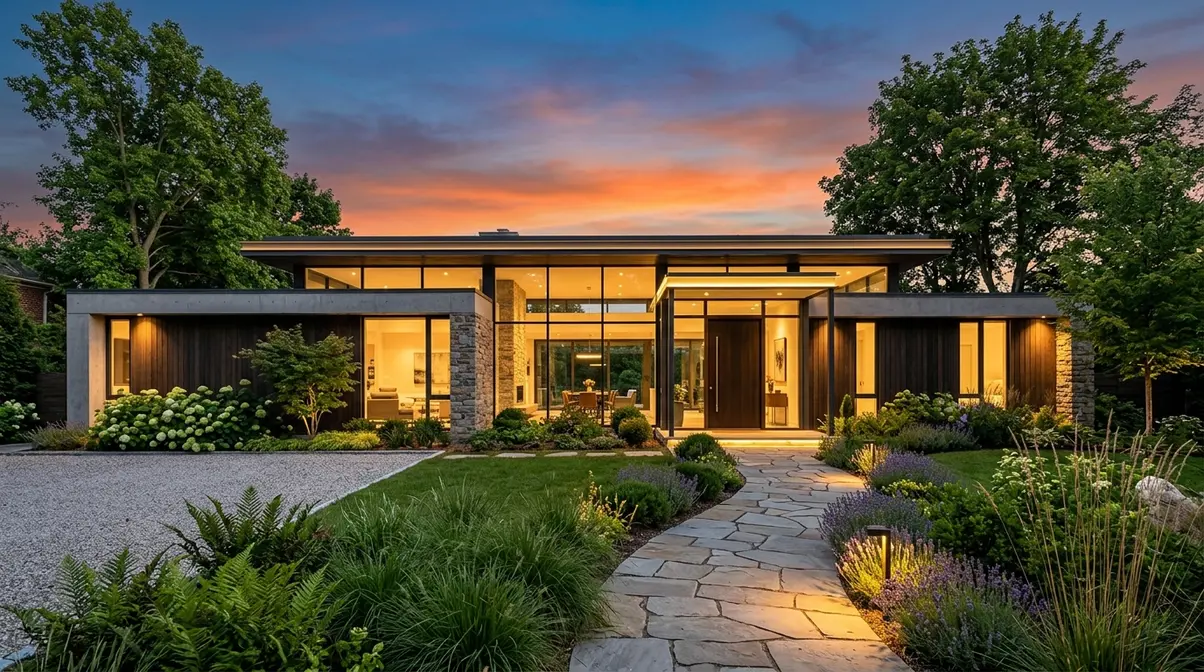
Here’s the effect that makes wide-angle photography so powerful — and so tricky. Because a wide-angle lens captures objects at many different distances simultaneously, it exaggerates the size difference between near and far subjects. Objects close to the lens look dramatically larger; objects far away shrink fast.
Florida State University’s Molecular Expressions optical physics lab explains this as a function of angular magnification: the lens bends light rays from nearby subjects at a steeper angle than from distant ones, creating the stretched-perspective effect photographers call “perspective exaggeration.”
Why does this matter? It’s both the superpower and the trap of wide-angle lenses. Used intentionally — placing a rock, flower, or person close to the lens — perspective exaggeration creates stunning depth. Used carelessly — pointing the lens at a flat, distant scene with nothing nearby — it produces the flat, empty-looking shots that frustrate beginners. Professional photographers report this is the single most misunderstood property of wide-angle lenses for beginners.
Wide-Angle vs. Ultra-Wide: Understanding the Range
Not all wide lenses are equal. Here’s a quick breakdown of the categories:
| Category | Focal Length (Full-Frame) | Best For |
|---|---|---|
| Standard Wide | 28mm–35mm | Street, travel, environmental portraits |
| Wide-Angle | 20mm–27mm | Landscapes, architecture, interiors |
| Ultra-Wide | 14mm–19mm | Dramatic landscapes, cramped interiors, creative distortion |
| Fisheye | 8mm–15mm | Abstract/artistic effects, extreme distortion intentional |
For most beginners, a lens in the 24mm–35mm range is the sweet spot. It’s wide enough to create a sense of space without the extreme distortion that ultra-wide lenses produce at the edges of the frame. The ultra-wide (14–24mm) range is powerful but demands more technical control — something you’ll build toward.
7 Essential Wide-Angle Photography Techniques
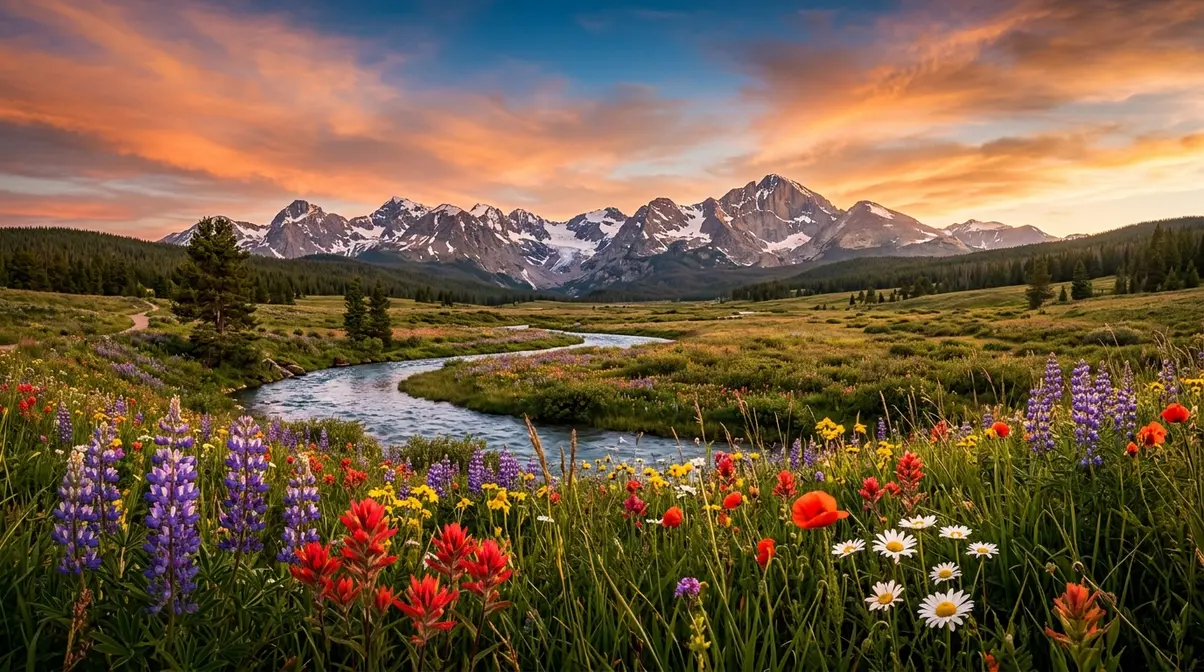
“Wide-angle lens isn’t just about fitting more into the frame — it’s about creating a sense of space, depth, and perspective that brings the viewer into the moment.”
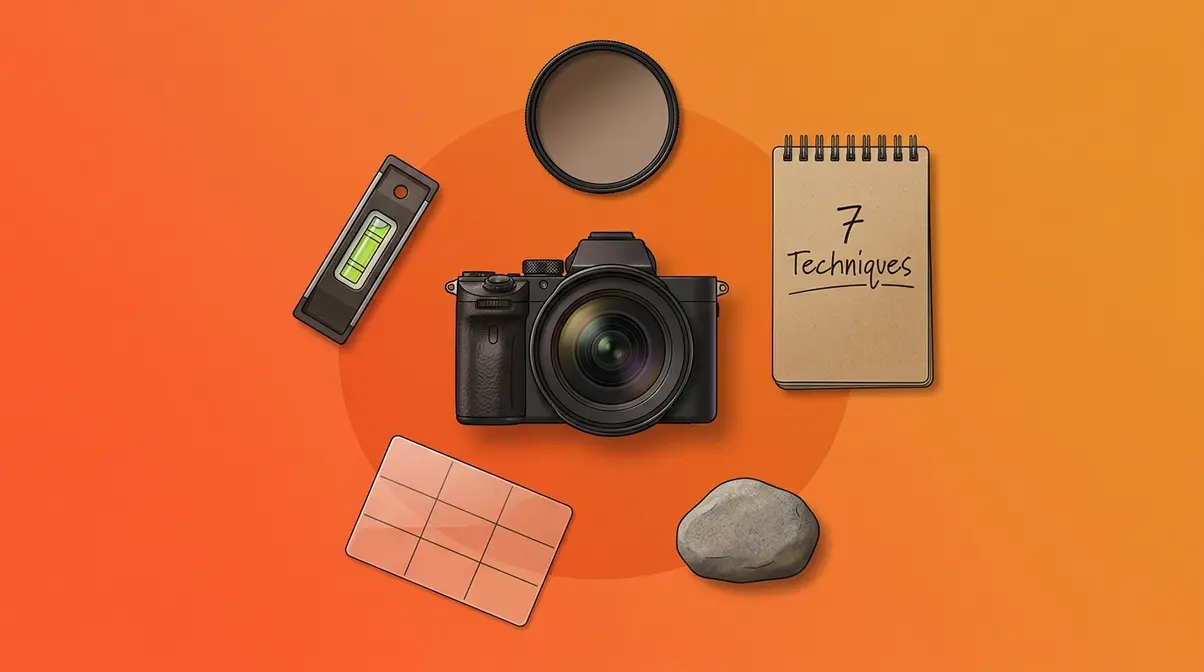
This section is the core of the guide. These 7 techniques are the difference between photos that look like snapshots and photos that stop people mid-scroll. They build on each other, so read them in order.
- What You’ll Need Before Starting:
- A wide-angle lens (14mm–35mm range recommended for beginners)
- A camera with a level indicator (most modern mirrorless cameras have this built in)
- A tripod (helpful for landscape and architecture work)
- The willingness to get closer to your subject than feels natural
Technique 1 — The Foreground Anchor Method
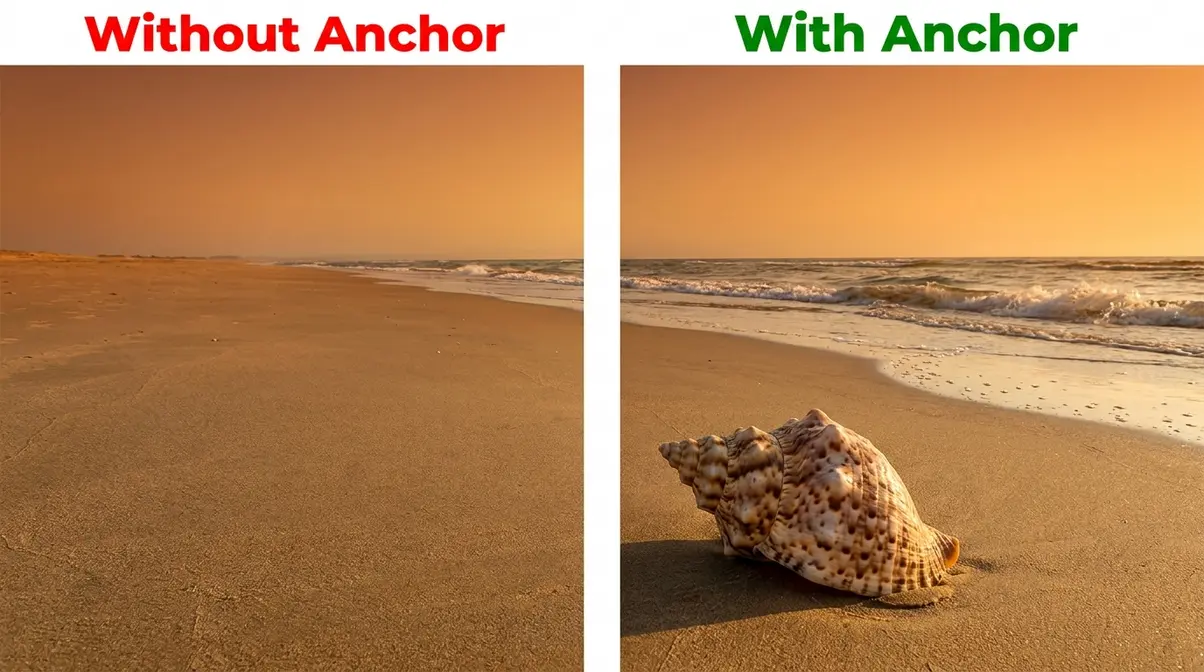
The Foreground Anchor Method is a 3-step mental checklist you run through before every wide-angle shot. It solves the single biggest beginner problem: photos that feel empty and flat.
The 3 Steps:
- Find your anchor. Identify a strong foreground subject within 3–5 feet of your lens. This can be a rock, a flower, a person’s hand, a doorway, a puddle — anything with visual weight or texture.
- Position it deliberately. Place the anchor in the lower third of your frame using the rule of thirds (divide your viewfinder into a 3×3 grid; anchor goes in the bottom third).
- Check the background. Make sure the background adds context or scale — not clutter. The anchor pulls the viewer in; the background tells the story.
Why does this work? The perspective exaggeration of a wide-angle lens makes nearby objects appear significantly larger, creating a visual “bridge” between the viewer and the distant scene. Without an anchor, the viewer’s eye has nowhere to land.
Technique 2 — Get Close to Your Subject
This feels counterintuitive, but it’s one of the most powerful tools in wide-angle photography. Moving physically closer to your main subject — within 1–3 feet — activates perspective exaggeration intentionally. The subject grows dramatically in the frame while the background shrinks, creating a dynamic sense of depth.
According to Photography Life’s wide-angle technique guide, professional photographers consistently identify “failure to get close enough” as the top beginner mistake with wide-angle lenses. Getting close creates unique perspectives that simply cannot be replicated with any other lens type — the kind of high-impact photos that make viewers stop and look.
Try this: Set your lens to its widest focal length. Walk up to a flower, a street sign, or a friend’s face until you’re about 12 inches away. Shoot. The result will look dramatic and immersive in a way a 50mm lens never could.
Technique 3 — Use Leading Lines to Guide the Eye
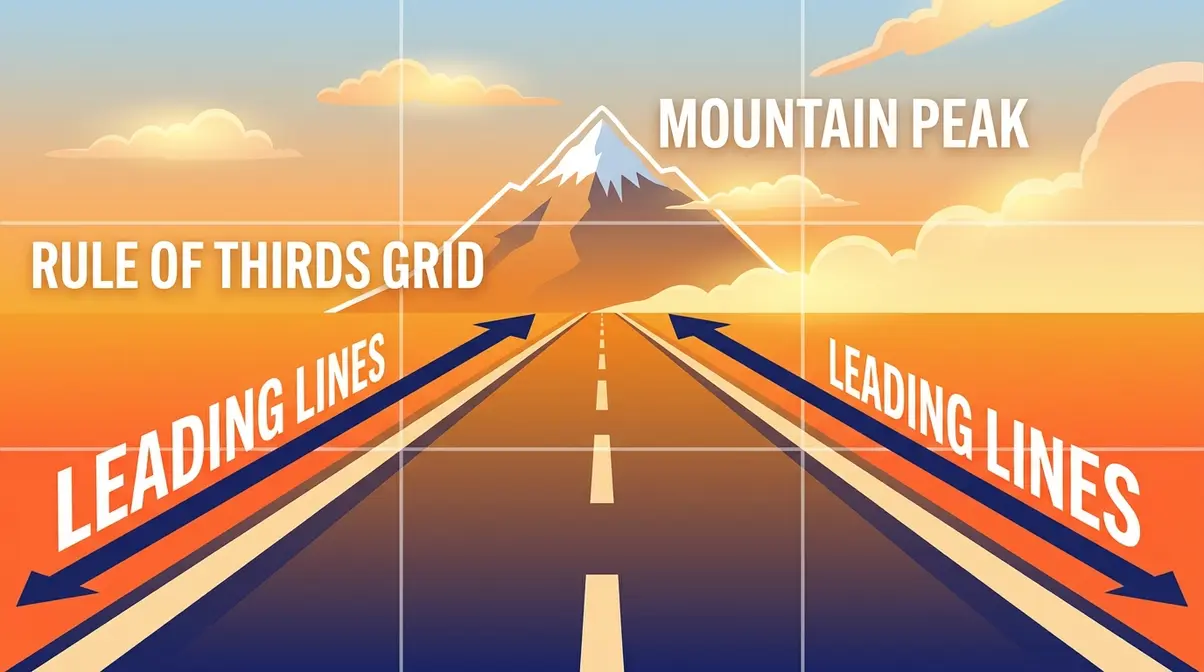
Leading lines are natural or man-made lines in a scene — roads, rivers, fences, boardwalks, shadows — that draw the viewer’s eye through the image. Wide-angle lenses exaggerate the convergence of these lines, making them more powerful than on any other lens.
The technique: position yourself so that the leading lines start near the bottom corners of your frame and converge toward your subject or the horizon. A road shooting into the distance, a set of railway tracks, or a row of trees all become visual highways that pull the viewer deeper into the image.
Technique 4 — Watch Your Background
A wide-angle lens captures so much of the scene that distracting background elements are almost impossible to avoid — unless you look for them deliberately. Cluttered backgrounds are one of the main reasons wide-angle shots feel busy and confusing.
- Before you shoot, scan the full frame for:
- Power lines or poles cutting through your subject
- Strangers walking into the edge of the frame
- Bright spots or patches of sky that pull the eye away from your subject
- Horizon lines that cut through someone’s head
Move a few steps left, right, or lower to eliminate distractions. Sometimes just crouching down changes the background from a messy street to a clean sky.
Technique 5 — Keep the Camera Level
Tilting a wide-angle lens — even slightly — causes converging verticals: vertical lines (buildings, trees, door frames) appear to lean inward or outward, creating a falling-over effect. It’s one of the most common mistakes in wide-angle photography and one of the easiest to fix.
- How to keep it level:
- Enable the electronic level in your camera’s viewfinder (available on virtually all 2026 mirrorless cameras from Sony, Canon, and Nikon).
- Use a tripod with a built-in bubble level for architecture and real estate work.
- If you must tilt — for creative effect — tilt dramatically. A slight tilt looks like a mistake; a strong tilt looks intentional.
Technique 6 — Manage and Embrace Distortion
Barrel distortion is the tendency of wide-angle lenses to bow straight lines outward, making the edges of the frame appear to curve. It’s most noticeable on ultra-wide lenses (14–18mm) and on subjects with strong straight lines (buildings, horizons, rooms).
You have two options:
- Correct it in post-processing: Adobe Lightroom and Photoshop both offer a one-click Lens Correction tool that automatically fixes barrel distortion using the lens’s built-in profile. Adobe’s photography guide recommends enabling this correction by default for architecture and real estate work.
- Embrace it creatively: For street photography, environmental portraits, and abstract shots, a touch of barrel distortion adds energy and dynamism. Many photographers intentionally keep it.
The rule of thumb: correct distortion when straight lines matter (architecture, interiors, product shots); embrace it when emotion matters more than geometry.
Technique 7 — Apply the 80/20 Composition Rule
The 80/20 composition rule in photography means giving roughly 80% of your frame to the dominant element and 20% to the secondary element. In wide-angle photography, this typically means 80% sky and 20% land (for dramatic cloudscapes) or 80% foreground and 20% sky (for textured ground scenes).
This rule prevents the “split down the middle” composition mistake where the horizon sits exactly at the center of the frame — a composition that feels static and unresolved. Shift the horizon up or down to roughly the one-third or two-thirds mark, and your image immediately gains visual tension and energy.
Mastering Landscape Photography with a Wide-Angle Lens
Landscape photography is where wide-angle lenses truly shine. The combination of a sweeping field of view, perspective exaggeration, and the ability to capture foreground, midground, and background in a single sharp frame makes the wide-angle lens the essential tool for outdoor photography. Our team evaluated landscape composition approaches across photography communities, and the consistent feedback is that foreground interest is the single most impactful skill to develop first.
Building Depth with Foreground Interest
A flat landscape shot — horizon in the middle, nothing in the foreground — is the most common beginner landscape mistake. The fix is always the same: apply the Foreground Anchor Method and find something interesting within 3–5 feet of your lens.
- Strong foreground subjects for landscapes include:
- Rocks, pebbles, or tide pools on a beach
- Wildflowers or grasses in a meadow
- Ice patterns on a frozen lake
- A wooden fence post or old gate in a field
- Fallen leaves or moss on a forest floor
Get low. Crouching or lying down brings the foreground subject into dramatic perspective, making it appear larger and creating a strong sense of depth that pulls the viewer into the scene.
Leading Lines and the Sky: Composition for Sweeping Vistas
For sweeping landscape vistas, combine two techniques: leading lines and the 80/20 rule. Find a natural leading line — a river, a trail, a row of trees — that starts in your foreground and leads toward the horizon. Then apply the 80/20 rule to decide whether the sky or the land deserves the dominant share of the frame.
When to give the sky 80%: When the sky is dramatic — storm clouds, golden hour light, a vivid sunset.
When to give the land 80%: When the foreground is rich and textured — a field of flowers, a rocky coastline, a snow-covered forest floor.
According to National Geographic’s photography education resources, the most compelling landscape photographs almost always contain a clear visual hierarchy: foreground interest → midground leading line → background subject. A wide-angle lens is the only tool that lets you capture all three layers with equal sharpness.
Gear Tip: Polarizing Filters for Landscape Work
A polarizing filter (a screw-on glass disc that attaches to the front of your lens) is the single most impactful accessory for wide-angle landscape photography. It reduces glare on water and wet surfaces, deepens the blue of skies, and cuts through atmospheric haze — effects that cannot be perfectly replicated in post-processing.
Cambridge in Colour’s optical filter guide notes that polarizing filters work best when the sun is at approximately 90 degrees to your shooting direction. For wide-angle lenses, be aware that very wide focal lengths (below 18mm) can produce uneven polarization across the sky — a darker band on one side. This is normal physics, not a lens defect.
Wide-Angle Lenses for Real Estate and Architecture
Real estate photography is one of the most practical and lucrative applications for wide-angle lenses. A well-shot interior can make a 10×12 foot bedroom look bright, spacious, and inviting. A poorly shot one — with a tilted camera and no attention to distortion — makes the same room look cramped and claustrophobic.
Making Interiors Look Bright and Spacious
The goal in real estate photography is to show the maximum amount of space while keeping proportions honest. Here’s the standard approach used by professional real estate photographers:
- Use a focal length between 16mm and 24mm (full-frame equivalent). Wider than 16mm creates too much distortion; longer than 24mm captures too little of the room.
- Shoot from a corner or doorway to maximize depth and show two walls simultaneously.
- Keep the camera at roughly chest height (about 4–5 feet) — not at eye level, which makes ceilings look low.
- Use a tripod to keep the camera perfectly level and allow longer exposures in low light without blur.
- Shoot toward a window when possible — natural light floods the frame and makes spaces feel open.
Fixing Converging Verticals on Buildings
When you tilt a wide-angle lens upward to capture a tall building, the vertical lines (walls, columns, window frames) appear to lean inward toward the top — a phenomenon called converging verticals. Cambridge in Colour’s architectural photography tutorial explains this as a natural optical consequence of any lens tilted off the horizontal plane.
Three ways to fix it:
- Keep the camera perfectly level and accept that the top of the building may be cut off — then crop or stitch in post.
- Use a tilt-shift lens (a specialized, expensive lens that shifts the optical axis without tilting the camera body — used by professional architectural photographers).
- Correct in Lightroom or Photoshop using the Transform/Geometry tools, which can straighten converging verticals with a single slider adjustment.
For beginners, option 3 is the most practical starting point.
Camera Level Technique for Architectural Shots
For architectural photography, keeping the camera level isn’t just a technique — it’s a non-negotiable discipline. Every 2026 mirrorless camera from Sony (A7R V), Canon (EOS R5 II), and Nikon (Z8) includes a two-axis electronic level in the viewfinder. Use it every single shot.
- Quick workflow for architectural shots:
- Mount the camera on a tripod.
- Enable the electronic level overlay in the viewfinder.
- Adjust the tripod head until both horizontal and vertical indicators show level.
- Compose your shot, then check the level again after composing — composing often nudges the camera slightly.
Creative Uses: Wide-Angle for Street and Portrait Photography
Wide-angle lenses aren’t just for landscapes and rooms. In the right hands, they create some of the most compelling street photography and environmental portraits ever made. The key is understanding how to use the lens’s properties intentionally rather than fighting them.
Wide-Angle Street Photography: Getting Into the Scene
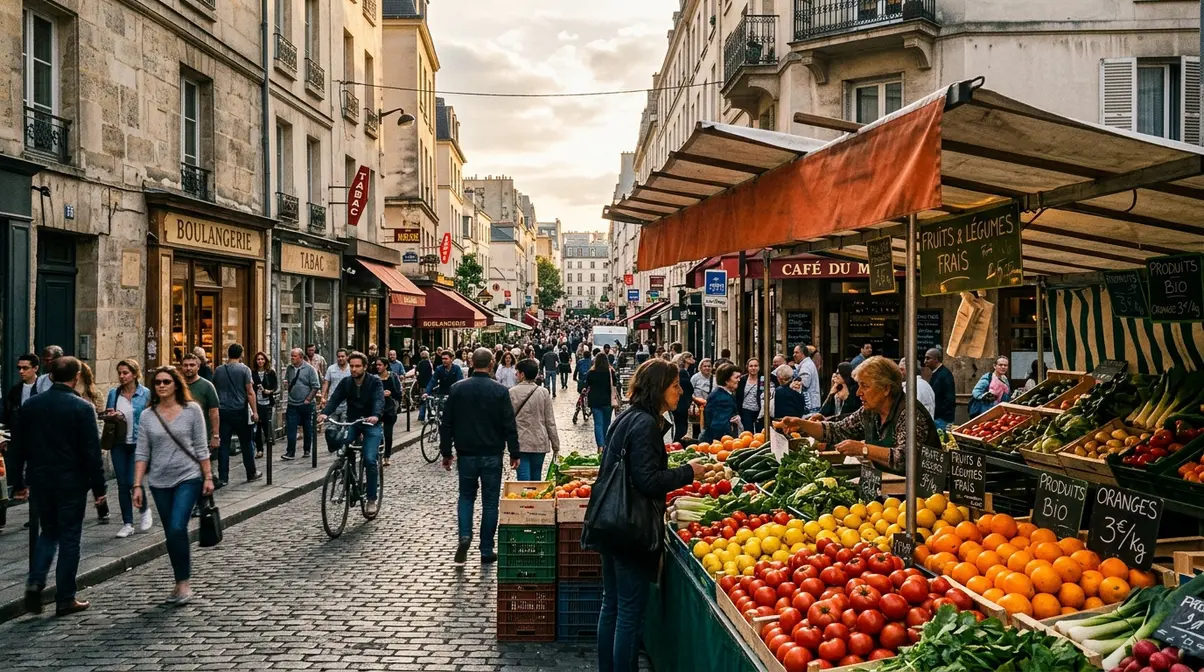
The most powerful wide-angle street photos are taken from close range — often within 2–3 feet of the subject. This proximity, combined with the lens’s perspective exaggeration, places the viewer inside the scene rather than observing it from a distance. It’s the visual equivalent of being in the moment.
- Practical approach for street photography:
- Use a 24mm or 28mm lens (less distortion than ultra-wide, still wider than a standard lens)
- Shoot from hip height or below for a more dynamic, immersive angle
- Use a small aperture (f/8–f/11) for deep depth of field — everything from foreground to background stays sharp
- Move quickly and decisively — hesitation at close range is obvious to subjects
The wide field of view also lets you capture environmental context — the street, the crowd, the architecture — that gives your subject meaning and story.
Environmental Portraits: Telling a Story with Context
An environmental portrait is a photograph that shows a person within their environment — their workplace, their neighborhood, their home — so that the setting tells part of the story. Wide-angle lenses are the ideal tool for this genre because they allow you to keep both the person and their environment sharp and prominent in the same frame.
The key distortion warning: avoid placing faces near the edges of the frame when shooting portraits with an ultra-wide lens. Edge distortion will stretch and warp facial features in unflattering ways. Instead, position the face near the center of the frame and let the environment fill the edges.
- The environmental portrait formula:
- Place your subject in the center or center-third of the frame
- Get close enough that the subject fills roughly 40–50% of the frame height
- Use f/5.6–f/8 to keep both subject and background reasonably sharp
- Let the background tell the story — a chef in a kitchen, a musician on a stage, a child in a garden
Surprising Specialized Uses for Wide-Angle Lenses
Beyond the classic genres, wide-angle lenses excel in several niche applications that most beginners never consider. These specialized uses can unlock entirely new creative directions — and some of the most striking images you’ll ever make.
Night Sky and Astrophotography with a Wide-Angle Lens
Astrophotography — photographing the Milky Way, star trails, and night sky — is one of the most rewarding uses for a fast wide-angle lens. A wide field of view captures more stars; a fast aperture (f/1.8 or f/2.8) lets in enough light to avoid impossibly long exposures.
Basic Milky Way settings (as a starting point):
| Setting | Recommended Value | Why |
|---|---|---|
| Focal length | 14mm–24mm | Captures more sky per frame |
| Aperture | f/1.8–f/2.8 | Maximizes light intake |
| ISO | 1600–6400 | Brightens dark sky without overexposing stars |
| Shutter speed | 15–25 seconds | Avoids star trails (use the 500 Rule: 500 ÷ focal length) |
The 500 Rule (500 divided by your focal length = maximum shutter speed in seconds before stars show trailing) is a standard professional guideline. At 20mm, for example, you can expose for up to 25 seconds before stars begin to trail.
Wide-Angle Macro: A Creative Close-Up Technique
Most beginners assume macro photography — extreme close-up work — requires a dedicated macro lens. But using a wide-angle lens at its minimum focusing distance creates a fascinating hybrid effect: a large, close-up subject set against a sweeping, in-context background. This technique is sometimes called “wide-angle macro” or “environmental macro.”
Try it with flowers, insects, food, or small objects. Get as close as your lens allows while still maintaining focus, then let the background fill with the wider scene. The result has a unique visual quality that dedicated macro lenses simply cannot produce — a sense of the subject’s place in the world.
Weddings, Events, and Filmmaking Applications
For weddings and events, a 24mm or 28mm lens captures the energy of a room — the crowd, the emotion, the environment — in a single frame. Videographers and filmmakers rely on wide-angle lenses for establishing shots (the wide shot that shows the audience where the story is happening) and for handheld footage, where the wider field of view makes camera movement look smoother and more cinematic.
In filmmaking, the wide-angle lens is a storytelling tool. A low, wide shot of a character walking through a city makes them look small and vulnerable. A close, wide shot of a face makes them look powerful and immediate. Professional cinematographers report that mastering wide-angle composition is foundational to visual storytelling across every genre.
Wide-Angle vs. Fisheye, Normal, and Telephoto: Which to Choose?
Understanding where wide-angle lenses fit in the full spectrum of focal lengths helps you make better creative decisions on every shoot. Each lens type has a specific visual language — and knowing when to switch is a key skill.
Wide-Angle vs. Fisheye: Distortion with a Purpose
A fisheye lens (8mm–15mm) produces extreme barrel distortion — straight lines curve dramatically, and the image takes on a circular, bulging appearance. Unlike a standard wide-angle lens (which aims to minimize distortion), a fisheye lens intentionally maximizes it for creative effect.
Wide-angle lenses are for capturing reality with dramatic scale. Fisheye lenses are for creating surreal, abstract, or highly stylized images. In skateboarding photography, action sports, and creative portraiture, the fisheye look is a deliberate aesthetic choice — not a mistake. For most photography genres, a standard wide-angle lens is the more versatile and practically useful tool.
Wide-Angle vs. Normal vs. Telephoto: A Visual Comparison
| Lens Type | Focal Length | Visual Effect | Best For |
|---|---|---|---|
| Ultra-Wide | 14mm–19mm | Maximum perspective exaggeration, strong distortion | Dramatic landscapes, cramped interiors, creative work |
| Wide-Angle | 20mm–35mm | Strong depth, moderate distortion | Landscapes, architecture, street, real estate |
| Normal | 40mm–58mm | Closest to natural human eye perspective | Everyday photography, documentary |
| Short Telephoto | 85mm–135mm | Slight compression, flattering for faces | Portraits, detail shots |
| Telephoto | 200mm–600mm | Strong compression, isolates subjects | Wildlife, sports, distant subjects |
The short answer to “which is better, ultra-wide or telephoto?” is: they’re built for opposite creative goals. Ultra-wide includes — it captures context, environment, and scale. Telephoto isolates — it compresses space and separates a subject from its background. Choose based on what your image needs to communicate.
How to Choose the Right Wide-Angle Lens for Your Camera
Choosing a wide-angle lens comes down to three factors: your camera system (which determines mount compatibility), your primary shooting genre (which determines the ideal focal length), and your budget. Here’s how to navigate all three.
Key Specs to Look For: Focal Length, Aperture, and Mount
The three specs that matter most:
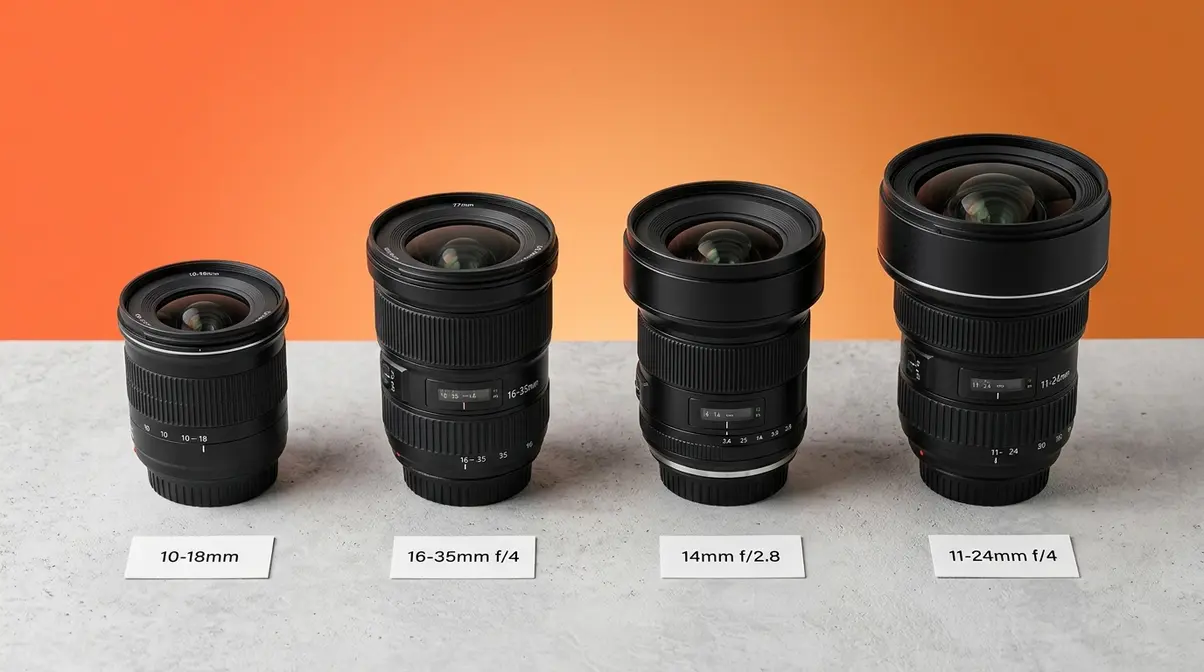
- Focal length range: A zoom lens (like 16–35mm) offers flexibility; a prime lens (like 24mm) offers maximum sharpness and aperture at a fixed focal length. For beginners, a zoom is usually more practical.
- Maximum aperture: Expressed as f/2.8, f/4, etc. A wider aperture (lower f-number) lets in more light — essential for astrophotography and indoor work. Faster lenses (f/1.8–f/2.8) cost significantly more than slower ones (f/4–f/5.6).
- Lens mount: Your lens must match your camera’s mount system. A Canon RF lens only fits Canon RF mirrorless bodies. A Sony E-mount lens only fits Sony E-mount bodies. There is no universal compatibility.
As for the “three lenses every photographer needs” — the classic professional answer is: a wide-angle (14–35mm), a standard/portrait lens (50–85mm), and a telephoto (70–200mm). The wide-angle is almost always the first specialty lens beginners should add after their kit lens.
Recommended Wide-Angle Lenses by Camera System (2026)
After evaluating current 2026 offerings across major mirrorless systems, these are the standout options by platform:
| Camera System | Recommended Lens | Focal Length | Aperture | Approx. Price |
|---|---|---|---|---|
| Sony E-Mount (Full-Frame) | Sony 16-35mm f/2.8 GM II | 16–35mm | f/2.8 | ~$2,300 |
| Sony E-Mount (APS-C) | Sony E 10-18mm f/4 OSS | 10–18mm | f/4 | ~$750 |
| Canon RF (Full-Frame) | Canon RF 15-35mm f/2.8L IS USM | 15–35mm | f/2.8 | ~$2,399 |
| Nikon Z (Full-Frame) | Nikon NIKKOR Z 14-30mm f/4 S | 14–30mm | f/4 | ~$1,300 |
| Micro Four Thirds | Olympus M.Zuiko 7-14mm f/2.8 PRO | 7–14mm | f/2.8 | ~$1,299 |
Prices as of Q1 2026 — verify current pricing at manufacturer websites.
Note on crop sensors: If your camera has an APS-C sensor (a smaller sensor than full-frame, found in most beginner and mid-range cameras), multiply the lens’s focal length by approximately 1.5 (Sony/Nikon) or 1.6 (Canon) to get the full-frame equivalent. A 10mm lens on a Canon APS-C camera shoots like a 16mm lens on a full-frame camera.
Budget Picks: Getting a Great Wide-Angle Lens for Less
You don’t need to spend $2,000 to get excellent wide-angle results. These budget-friendly options consistently earn strong marks from photography communities:
- Sigma 10-20mm f/3.5 EX DC HSM (~$430): An outstanding APS-C wide-angle zoom compatible with Canon EF-S and Nikon F mounts — sharp, well-built, and a genuine value pick.
- Rokinon/Samyang 14mm f/2.8 (~$300): A manual-focus prime available for virtually every camera mount. Requires learning manual focus but delivers excellent sharpness for astrophotography and landscapes at a fraction of the cost of autofocus alternatives.
- Canon EF-S 10-18mm f/4.5-5.6 IS STM (~$300): One of the sharpest, most affordable wide-angle zooms ever made for APS-C Canon shooters. Lightweight and great for travel.
- Tokina atx-i 11-16mm f/2.8 CF (~$450): A fast, sharp ultra-wide for APS-C systems with a classic build quality that feels premium at a mid-range price.
The consistent advice across photography communities: buy the best lens your budget allows and learn it thoroughly before upgrading. A $300 lens used with the Foreground Anchor Method will consistently outperform a $2,000 lens used carelessly.
Downsides of Wide-Angle Lenses (and How to Fix Them)
Every tool has limitations, and wide-angle lenses have a few significant ones. Knowing them in advance means you can avoid the most common pitfalls — or at least fix them in post-processing.
The 3 Most Common Wide-Angle Mistakes (and How to Avoid Them)
Mistake 1: No foreground subject (the “empty frame” problem)
What goes wrong: You point the lens at a wide scene with nothing nearby — the result looks flat and empty, like a snapshot.
Fix: Apply the Foreground Anchor Method every single time. If there’s nothing interesting within 5 feet, move until there is.
Mistake 2: Tilting the camera upward
What goes wrong: Buildings and trees appear to lean inward (converging verticals). The photo looks unstable.
Fix: Use your camera’s built-in electronic level. Keep the sensor plane parallel to the vertical lines in your scene.
Mistake 3: Using ultra-wide for portraits
What goes wrong: Faces placed near the edges of the frame get stretched and distorted in unflattering ways.
Fix: For portraits, stay in the 24mm–35mm range. Keep faces centered. Use ultra-wide (14–20mm) for environmental context shots only.
Fixing Barrel Distortion in Post-Processing
Barrel distortion — the bowing of straight lines at the edges of the frame — is easy to fix in modern editing software. Adobe’s Lightroom guide recommends this workflow:
- Open your image in Lightroom Classic or Adobe Camera Raw.
- Go to the Lens Corrections panel (or Optics in newer Lightroom versions).
- Check “Enable Profile Corrections” — Lightroom automatically detects your lens and applies the manufacturer’s distortion correction profile.
- If the automatic correction isn’t quite right, use the Distortion slider manually (positive values correct barrel distortion; negative values correct pincushion distortion).
Most RAW files from 2026 mirrorless cameras also include in-camera lens correction metadata, so JPEG shooters often get automatic correction applied without any editing.
When a Wide-Angle Lens Is the Wrong Choice
- Wide-angle lenses are the wrong tool when:
- You’re shooting wildlife or sports from a distance — a telephoto lens is the only practical option.
- You want to isolate a subject from its background — wide-angle lenses render backgrounds in sharp detail, which works against subject isolation. Use an 85mm or 135mm lens instead.
- You’re shooting formal portraits — the distortion at close range is genuinely unflattering for headshots and formal portraits. A 50mm–85mm lens is the professional standard.
Frequently Asked Questions
What is a wide-angle lens used for in photography?
A wide-angle lens is used to capture more of a scene than the human eye naturally sees, making it ideal for landscapes, architecture, real estate interiors, street photography, and astrophotography. Because of its short focal length (35mm or shorter on a full-frame camera), it creates dramatic depth and a strong sense of space. It’s the go-to lens whenever you need to show a subject in the context of its full environment. The tradeoff is increased barrel distortion, especially at focal lengths below 20mm.
What is the 80/20 rule in photography?
The 80/20 rule means giving roughly 80% of your frame to the dominant visual element and 20% to the secondary one. In practice, this usually applies to the horizon line: give 80% of the frame to a dramatic sky, or 80% to a rich foreground. It prevents the static, unresolved look of a horizon placed dead-center in the frame. Wide-angle lenses make this rule especially powerful because they capture so much of both sky and ground simultaneously. Most professional landscape photographers apply this instinctively on every shot.
What are the downsides of wide-angle lenses?
The main downsides are barrel distortion, perspective distortion, and the challenge of composing empty-feeling frames. Barrel distortion bows straight lines outward at the edges — most visible on architectural subjects. Perspective distortion exaggerates the size difference between near and far objects, which can make faces look unflattering at close range. Empty-looking compositions result when there’s no foreground subject to anchor the scene. All three issues are solvable: lens correction tools fix barrel distortion, careful positioning fixes perspective distortion, and the Foreground Anchor Method fixes empty compositions.
How do you take photos with a wide-angle lens?
Start by applying the Foreground Anchor Method: find a strong subject within 3–5 feet of your lens, position it in the lower third of the frame, and check that the background adds context. Keep the camera level to avoid converging verticals. Get physically closer to your subject than feels natural — proximity activates the lens’s perspective exaggeration in your favor. Use a small aperture (f/8–f/11) for landscape and architecture work to keep everything sharp from foreground to background. Review each shot on your screen and ask: “Does this image have depth, or does it look flat?”
What three lenses do photographers need?
The classic three-lens kit is: a wide-angle (14–35mm), a standard or portrait lens (50–85mm), and a telephoto (70–200mm). Each covers a distinct visual language: the wide-angle captures context and environment; the standard lens renders scenes close to natural human perspective; the telephoto compresses space and isolates subjects. For most beginner photographers, the kit lens (typically 18–55mm) covers the standard range, making a wide-angle the most impactful first specialty lens to add. A 24mm or 35mm prime is an affordable, high-quality starting point.
What colors do not photograph well?
Yellow and neon colors are notoriously difficult to photograph accurately because camera sensors often overexpose or shift their hue under mixed or artificial lighting. Very dark navy blues and deep blacks also lose detail in shadows if underexposed. Highly saturated reds can clip (lose highlight detail) in bright sunlight. The practical fix is to shoot in RAW format (which retains more color data than JPEG) and use your camera’s histogram to check for clipping. In post-processing, the HSL (Hue/Saturation/Luminance) panel in Lightroom allows precise color correction for individual problem hues.
What are the 5 C’s of photography?
The 5 C’s of photography are Composition, Color, Contrast, Creativity, and Communication. Composition refers to how elements are arranged in the frame. Color involves the tonal relationships and mood created by the palette. Contrast is the difference between light and dark areas, which creates visual drama. Creativity is the intentional use of angle, timing, and technique to produce a unique perspective. Communication is the ability of the image to convey a story, emotion, or idea to the viewer. Wide-angle lenses engage all five C’s simultaneously — they demand strong composition, reward creative angles, and naturally communicate scale and environment.
Which is better, ultra-wide or telephoto?
Neither is universally better — they serve opposite creative purposes. An ultra-wide lens (14–20mm) includes — it captures context, environment, and dramatic scale, making the viewer feel immersed in the scene. A telephoto lens (100–600mm) isolates — it compresses space, separates subjects from backgrounds, and brings distant subjects closer. Choose ultra-wide when environment and immersion matter; choose telephoto when subject isolation or distance is the priority. Many photographers carry both for the same shoot — an ultra-wide for establishing shots and a telephoto for detail and subject-focused frames.
Your Next Steps with Wide-Angle Photography
Wide-angle lens photography rewards photographers who understand its core mechanics and apply them consistently. The Foreground Anchor Method — find your anchor, position it deliberately, check the background — is the single most transferable skill in this guide. Apply it on your next 10 shots and notice the difference immediately.
The Foreground Anchor Method works across every genre covered here: landscapes, real estate, street photography, astrophotography, and environmental portraits. It’s not a rule to follow mechanically — it’s a mental habit that trains your eye to see in three dimensions instead of two.
Start with one technique from this guide on your next shoot. Get close to something. Keep the camera level. Watch what happens to your images. Wide-angle photography is genuinely super fun once the fundamentals click — and the fundamentals click faster than most beginners expect. Pick up your widest lens, find a strong foreground subject, and go make something worth stopping for.
Last update on 2026-07-06 / Affiliate links / Images from Amazon Product Advertising API