
Table of Contents
- Key Takeaways
- Defining Photo Editing and Its Core Purpose
- Types of Photo Editing: From Basic to Advanced
- Enhancing Image Quality Through Editing
- Correcting Common Photography Mistakes
- Boosting Creativity and Storytelling Potential
- Unlock Your Creative Potential with Expert Photo Editing Guidance
- Frequently Asked Questions- Why Edit Photographs
- Recommended
This blog post may contain affiliate links. As an Amazon Associate I earn from qualifying purchases.
Trying to edit photographs is more than fixing technical problems or making colors pop. Every photographer from Japan to Brazil faces moments when a great shot falls short of their creative vision. Learning the core purpose of photo editing helps beginners and hobbyists bring images closer to what they imagined. This introduction guides you through photo editing as the bridge between a simple snapshot and a compelling visual story, giving you practical ways to enhance both quality and creativity.


Key Takeaways
| Point | Details |
|---|---|
| Purpose of Photo Editing | Photo editing is essential for correcting technical imperfections, enhancing visual aesthetics, and emphasizing emotional storytelling. |
| Types of Editing | There are basic techniques for technical corrections and advanced methods for creative transformations. |
| Image Quality Improvement | Image enhancement focuses on both technical precision and artistic interpretation to create compelling visual narratives. |
| Creative Potential | Innovative editing techniques can elevate storytelling in photography, transforming ordinary images into profound visual experiences. |
Defining Photo Editing and Its Core Purpose
Photo editing transforms raw digital images into compelling visual stories by refining technical elements and expressing creative vision. Whether you’re an amateur photographer or a professional, understanding the core purpose of photo editing can unlock powerful ways to communicate through imagery.
At its fundamental level, photo editing involves deliberate modifications to an original photograph. These adjustments serve multiple critical purposes:
- Correcting technical imperfections like exposure, color balance, and sharpness
- Enhancing visual aesthetics through strategic color grading and tone adjustments
- Emphasizing emotional storytelling by guiding viewer perception
- Removing distracting elements that detract from the central subject
- Creating artistic interpretations beyond traditional photographic representation
Photographers use editing as a nuanced language of visual communication. Photo editing techniques range from subtle refinements that preserve an image’s authenticity to dramatic transformations that redefine visual narratives. The process isn’t about deceiving viewers but revealing deeper layers of photographic potential.
Modern digital editing tools have democratized creative expression, allowing photographers to transcend technical limitations and craft images that precisely match their original vision. What once required complex darkroom techniques can now be accomplished with intuitive software, enabling even novice photographers to produce professional-quality results.
Pro tip: Start with understanding basic editing principles before attempting complex manipulations, focusing on developing a consistent personal editing style that enhances rather than overwhelms your original photograph.
Types of Photo Editing: From Basic to Advanced
Photo editing encompasses a wide spectrum of techniques, ranging from simple corrections to complex creative transformations. Understanding these different types of photo editing helps photographers select the right approach for their specific visual goals.
Basic photo editing typically involves fundamental adjustments that improve an image’s technical quality:
- Cropping to refine composition and remove distracting elements
- Exposure correction to balance light and shadow
- Color temperature adjustment for more accurate or dramatic color representation
- Contrast and saturation modifications to enhance visual impact
- Basic sharpening to improve image clarity
Advanced editing techniques move beyond technical corrections into creative territory. These sophisticated approaches include complex retouching, compositing, and artistic manipulations that transform photographs into entirely new visual experiences. Professional photographers often use techniques like frequency separation for skin retouching, HDR blending for expanded dynamic range, and complex color grading to create unique atmospheric effects.
Moreover, contemporary photo editing has been revolutionized by artificial intelligence and machine learning technologies. These advanced tools can automatically remove backgrounds, enhance details, restore old photographs, and even generate entirely new visual compositions with unprecedented precision and creativity.
Pro tip: Start by mastering basic editing techniques before attempting complex manipulations, gradually building your skills and understanding of how each adjustment impacts your photographic vision.
Here is a quick comparison of basic versus advanced photo editing approaches:
| Editing Level | Required Skillset | Main Usage | Typical Outcome |
|---|---|---|---|
| Basic | Foundational knowledge | Technical corrections | Enhanced authenticity |
| Advanced | Specialized expertise | Creative transformation | Artistic innovation |
Enhancing Image Quality Through Editing
Photographers understand that image quality is more than just technical precision. It’s about transforming good photographs into extraordinary visual stories through strategic digital image enhancement techniques that elevate every pixel’s potential.
The fundamental approaches to improving image quality include several critical strategies:
- Noise reduction to eliminate unwanted graininess
- Dynamic range expansion to reveal hidden details in shadows and highlights
- Color calibration for accurate and vibrant color representation
- Sharpness optimization to enhance image clarity
- Lens distortion correction to improve overall geometric accuracy
Editing techniques for beginners have dramatically evolved with artificial intelligence and machine learning technologies. These advanced tools can now automatically analyze and correct technical imperfections with unprecedented accuracy. Professional-grade AI algorithms can intelligently detect and resolve issues like chromatic aberration, perspective distortions, and color inconsistencies that previously required complex manual interventions.
Contemporary image enhancement goes beyond technical corrections. Modern editing approaches focus on artistic interpretation, allowing photographers to craft visual narratives that transcend traditional photographic limitations. By carefully manipulating elements like contrast, color balance, and tonal range, photographers can guide viewer perception and emotional response.

Pro tip: Always work with high-resolution, uncompressed image files to maximize your editing potential and preserve maximum image detail during post-processing.
Correcting Common Photography Mistakes
Every photographer, regardless of skill level, encounters technical challenges that can compromise image quality. Understanding how to diagnose and correct common photography mistakes can transform mediocre shots into compelling visual narratives.
The most frequent photographic errors typically fall into several key categories:
- Exposure problems resulting in over or underexposed images
- Focus issues creating blurry or soft photographs
- Composition mistakes that distract from the main subject
- White balance errors producing unnatural color tones
- Noise and digital artifacts that reduce image clarity
Common photography mistakes can often be effectively addressed through strategic post-processing techniques. Modern editing software provides powerful tools to rescue images that might otherwise seem unsalvageable. Advanced algorithms can now intelligently correct chromatic aberrations, reduce noise, enhance sharpness, and rebalance colors with remarkable precision.
Post-processing represents more than just technical correction. It’s an opportunity to refine your artistic vision, transforming technical imperfections into intentional stylistic choices. By understanding the nuanced relationship between in-camera capture and digital editing, photographers can develop a more holistic approach to image creation that bridges technical skill and creative expression.
Pro tip: Always shoot in RAW format to maximize your ability to recover details and correct potential mistakes during post-processing.
Here is a summary of common photography mistakes and their editing solutions:
| Mistake Type | Impact on Image | Editing Solution |
|---|---|---|
| Exposure issues | Washed out or dark photos | Adjust highlights, shadows |
| Blurry focus | Loss of sharpness | Apply selective sharpening |
| Color imbalance | Unnatural hues | Fine-tune white balance |
| Digital noise | Grainy appearance | Use noise reduction tools |
Boosting Creativity and Storytelling Potential
Photography transcends mere documentation, becoming a powerful medium for visual storytelling that communicates emotions, experiences, and complex narratives. Creative photo editing transforms ordinary images into profound visual experiences that resonate deeply with viewers.
Photographers can amplify their storytelling potential through several innovative techniques:
- Color grading to establish mood and emotional tone
- Selective focus to guide viewer attention
- Layering and compositing to create multi-dimensional narratives
- Texture manipulation to add depth and symbolic meaning
- Digital manipulation to explore surreal or metaphorical representations
Inspiring photography workflows demonstrate how strategic editing can elevate visual narratives. Advanced editing tools now offer unprecedented creative freedom, enabling photographers to transcend traditional photographic constraints. Artificial intelligence and generative technologies are expanding the boundaries of visual storytelling, allowing creators to seamlessly extend scenes, reimagine compositions, and craft intricate visual metaphors.
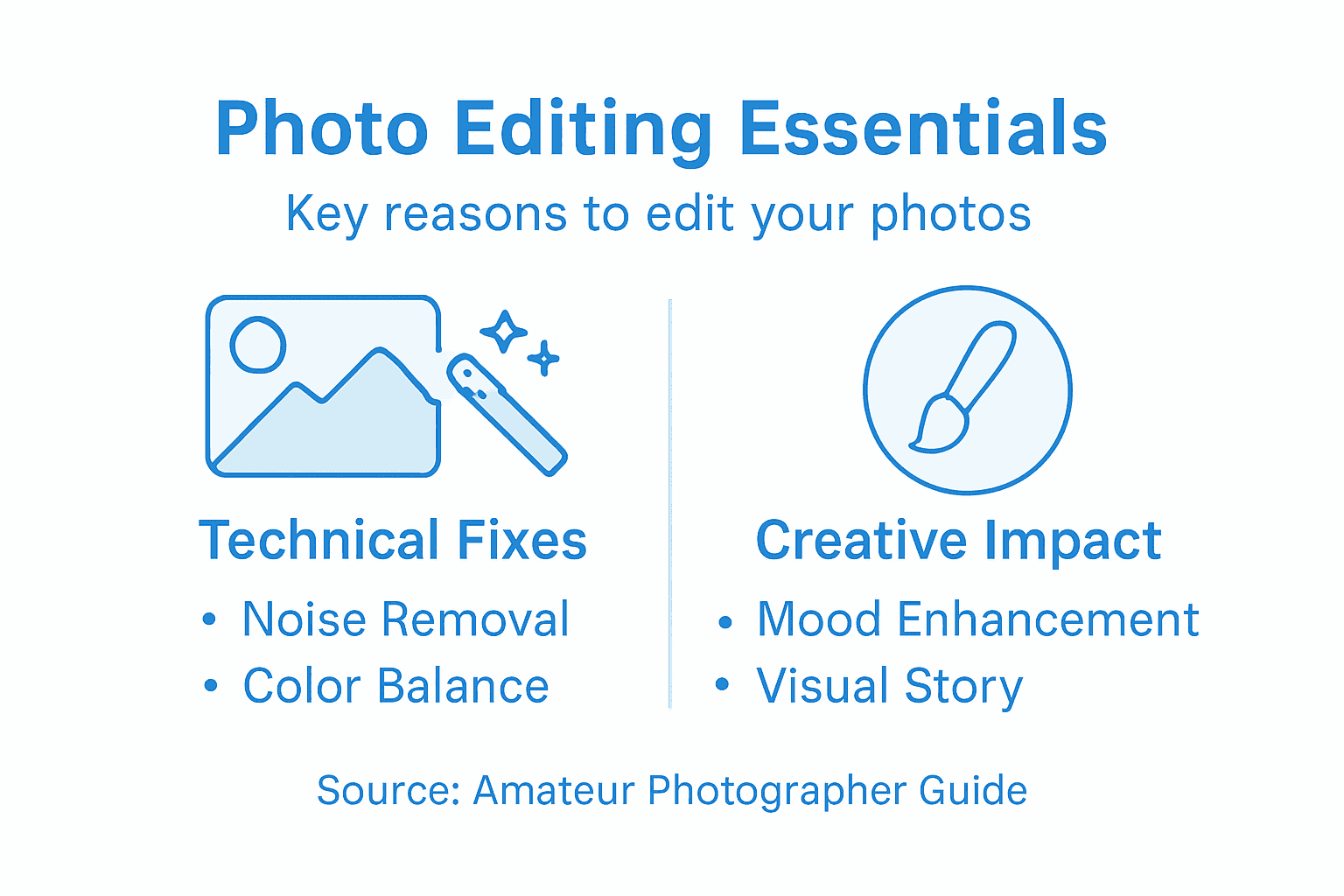
Modern photo editing is less about technical perfection and more about emotional communication. Each edit becomes an intentional artistic choice, transforming photographs from passive records into active storytelling instruments that engage, provoke, and inspire viewers. By understanding editing as a creative language, photographers can develop unique visual voices that communicate complex ideas and feelings.
Pro tip: Experiment with unconventional editing techniques and view each image as a canvas for emotional and narrative expression, not just a literal representation of reality.
Unlock Your Creative Potential with Expert Photo Editing Guidance
Mastering photo editing is the key to overcoming common challenges like exposure issues, color imbalance, and uninspired composition. This article highlights how thoughtful editing can transform your images by correcting technical mistakes and unleashing your unique artistic vision. If you want to move beyond standard corrections and boost your storytelling power through your photography, it is essential to build confidence in your editing skills.

Discover practical tutorials, insightful tips, and easy-to-follow editing methods at Amateur Photographer Guide. Dive into expert advice tailored for hobbyists aiming to elevate their photographs from good to breathtaking. Don’t wait to unlock the full potential of your images. Start your journey toward creative impact today by exploring our comprehensive resources and editing techniques for beginners. Take control of your photography by visiting Amateur Photographer Guide now and turn every shot into a compelling visual story.
Frequently Asked Questions- Why Edit Photographs
What is the core purpose of photo editing?
The core purpose of photo editing is to transform raw images into compelling visual stories by correcting technical imperfections and enhancing visual aesthetics, ultimately guiding viewer perception and expression.
How can photo editing improve image quality?
Photo editing can improve image quality through techniques like noise reduction, exposure correction, color calibration, and lens distortion correction, which enhance the technical precision and overall appeal of the photograph.
What are some common photography mistakes that can be corrected through editing?
Common photography mistakes include exposure issues, blurry focus, white balance errors, and digital noise. These can often be corrected using editing software to adjust highlights, apply selective sharpening, fine-tune colors, and reduce noise.
How does photo editing enhance storytelling in photographs?
Photo editing enhances storytelling by allowing photographers to manipulate elements like color grading, focus, and texture, which establishes mood and emotional tone, guiding the viewer’s attention and evoking deeper engagement with the image.
Recommended
- The Essential Guide to Editing in Photography
- 7 Essential Photo Editing Tips for Amateur Photographers
- How to Edit Photos on Mac: A Comprehensive Guide for Amateur Photographers
- Role of Editing in Photography: Complete Guide
Last update on 2026-03-31 / Affiliate links / Images from Amazon Product Advertising API