Table of Contents
- Key Takeaways
- Best Sellers: Photographic Filters
- What Are Filters in Photography?
- Types of Filters and Their Functions
- How Filters Enhance Your Photos
- Choosing the Right Filter for Your Needs
- Common Mistakes When Using Filters
- Unlock the Full Potential of Photography Filters Today
- Frequently Asked Questions
- Recommended
This blog post may contain affiliate links. As an Amazon Associate I earn from qualifying purchases.
Nearly every stunning landscape shot relies on more than just camera settings and timing. Filters are the hidden tools that over 80 percent of professional photographers use to shape color, reduce glare, and create jaw-dropping effects straight out of the camera.
Whether you want to control tricky lighting or create a unique mood, understanding how filters work can transform your images from ordinary to unforgettable. Discover how the right filter can give your photos a creative edge others will notice.
Key Takeaways
| Point | Details |
|---|---|
| Function of Filters |
Photographic filters manipulate light to enhance image quality, alter color characteristics, and create artistic effects. They are essential tools for adjusting exposure and managing lighting challenges in various shooting scenarios. |
| Types of Filters |
Common filter types include polarizing, neutral density (ND), and graduated ND filters, each serving distinct purposes in controlling light and exposure. Color correction and protective filters also play vital roles in achieving desired photographic outcomes. |
| Choosing Filters |
Selecting the right filter involves understanding your specific photographic goals, shooting conditions, and creative vision. The choice between screw-on and square filters can impact your flexibility in using multiple filters simultaneously. |
| Common Mistakes |
Photographers often make errors such as improper rotation of polarizing filters or neglecting to adjust exposure settings after applying ND filters. Awareness and practice can mitigate these pitfalls and improve image results. |
Best Sellers: Photographic Filters




What Are Filters in Photography?
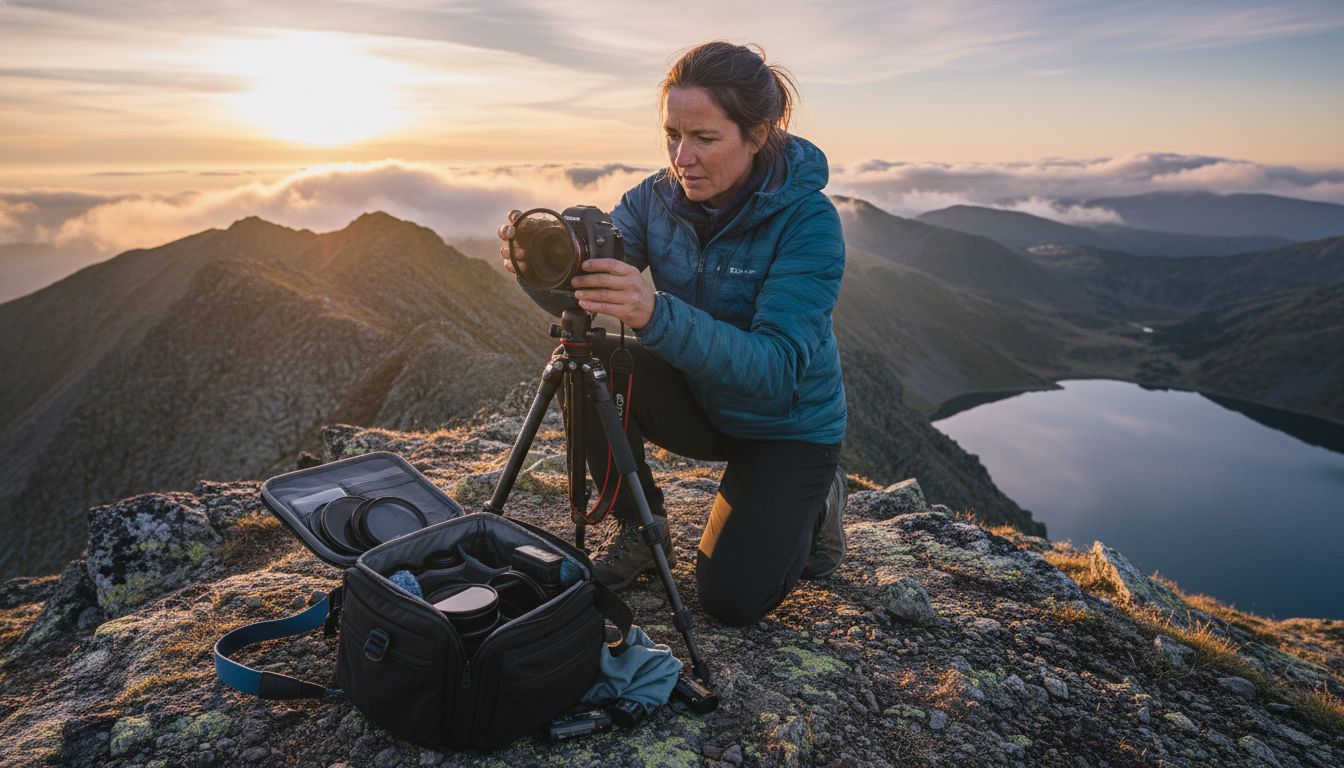
Photographic filters are specialized optical accessories designed to modify light before it reaches your camera’s sensor or film.
Think of them like sunglasses for your camera, selectively transforming how light enters and impacts your image.
These transparent or semi-transparent devices attach directly to your camera lens, allowing photographers to control and manipulate light characteristics in ways impossible through camera settings alone.
At their core, photographic filters serve multiple critical functions. They can alter color temperature, reduce glare, enhance contrast, block specific wavelengths, or create artistic visual effects.
Photographers use filters to solve challenging lighting situations and expand creative possibilities. Whether you’re shooting landscapes, portraits, or street photography, filters provide precise control over image quality and aesthetic mood.
Filters come in several primary materials and designs. Glass remains the most durable and professional option, offering superior optical clarity and resistance to scratching. Plastic filters provide a lightweight, affordable alternative, while high-end professional filters might use specialized materials like resin or gelatin.
Physically, these filters can be categorized into two main types: screw-on filters that directly thread onto lens edges, and square/rectangular filters that slide into specialized holder systems.
Understanding filters requires recognizing their fundamental purpose: light manipulation. By strategically blocking, redirecting, or transforming light wavelengths, photographers can dramatically improve image quality.
From reducing harsh midday sunlight to creating dreamy long exposure effects, filters are powerful tools that transform ordinary scenes into extraordinary photographs.
 For photographers looking to elevate their craft, mastering filter techniques opens up entire new dimensions of creative expression.
If you want to dive deeper into specific filter types, check out our guide on polarizing filters to understand one of the most versatile filter categories in photography.
Types of Filters and Their Functions
Photographers have a diverse toolkit of filter types, each designed to solve specific visual challenges and unlock creative potential. Understanding these filters is like learning a photographer’s secret language of light manipulation.
The most common categories include color correction, light reduction, specialized effect, and protective filters that each serve unique purposes in transforming image quality.
Color and correction filters represent a foundational category with remarkable versatility. Ultraviolet (UV) filters reduce atmospheric haze and protect lens surfaces from dust and scratches.
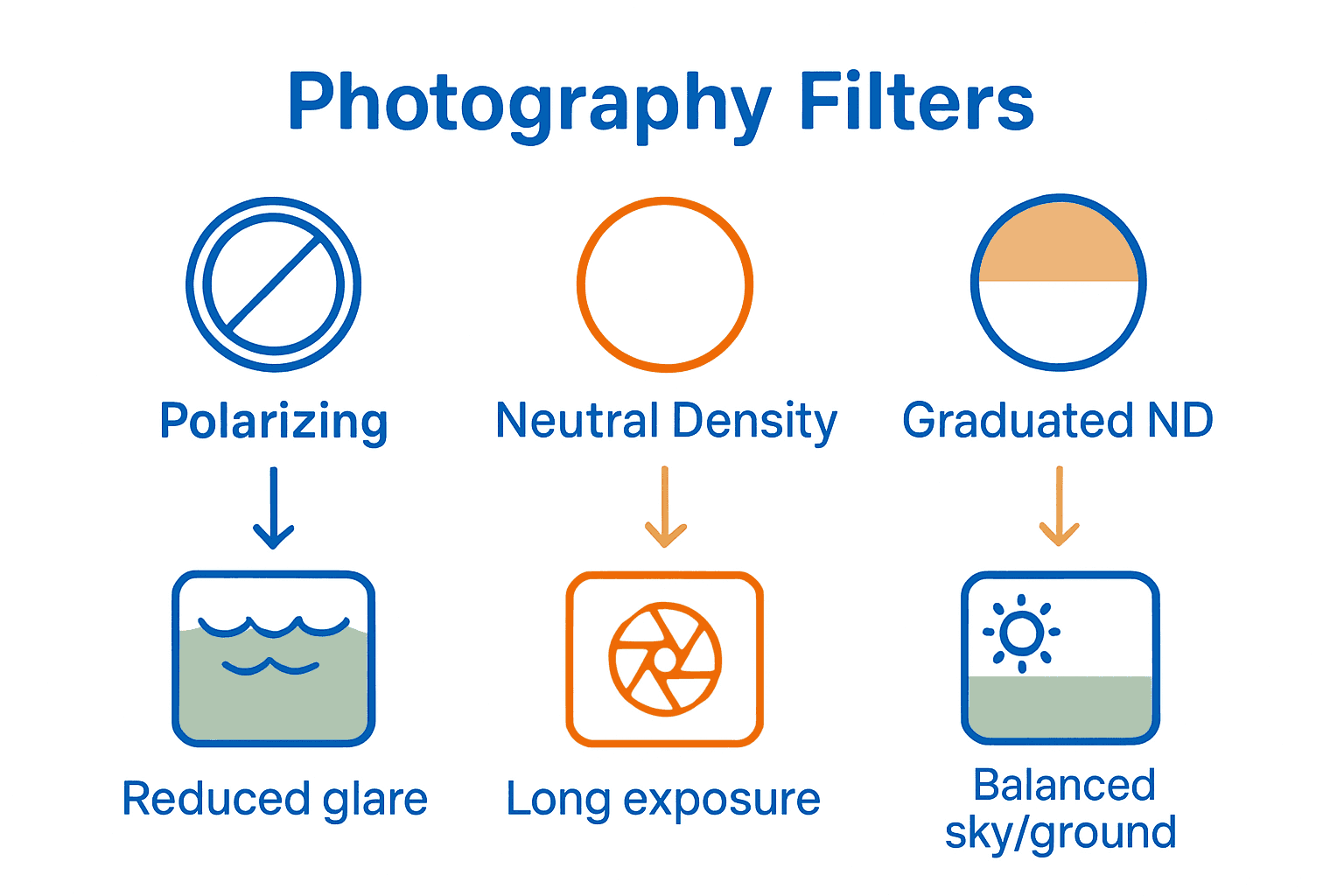
Polarizing filters dramatically reduce reflections and glare, enhancing color saturation and contrast in scenes with water, glass, or foliage.
Color filters for black-and-white photography allow photographers to dramatically modify how different colors translate into monochrome tones – a red filter might darken blue skies, while a yellow filter creates more nuanced grayscale renderings.
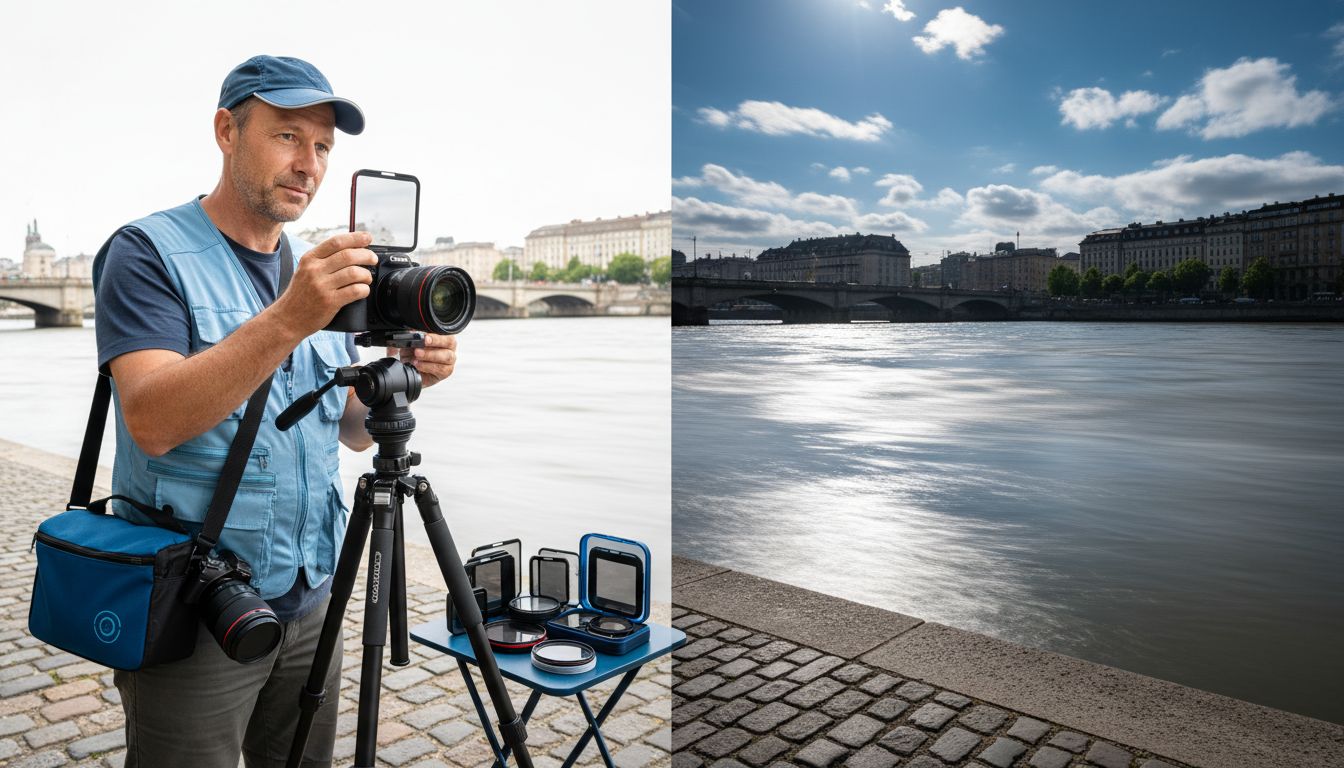
Neutral density (ND) filters are another critical tool in a photographer’s arsenal. These specialized filters reduce light intensity uniformly across all wavelengths, enabling photographers to use longer exposure times or wider apertures without overexposing images.
They’re particularly valuable for creating motion blur effects, smoothing water surfaces, or capturing long-exposure urban scenes where movement becomes an artistic element. Professional ND filters come in various strengths, from light reduction to extreme dark variants that allow exposures lasting minutes.
Specialized effect filters expand creative possibilities even further. Infrared filters block visible light to capture ethereal, dreamlike landscapes.
Graduated neutral density filters help balance exposure between bright skies and darker foregrounds. Soft focus filters introduce gentle diffusion, creating romantic or nostalgic effects perfect for portrait photography.
Each filter type represents a unique tool for transforming ordinary scenes into extraordinary visual narratives.
To explore one of the most versatile filter types in more depth, check out our guide on polarizing filters and learn how they can dramatically enhance your photographic results.
How Filters Enhance Your Photos
Filters are transformative tools that elevate photography from simple image capture to intentional visual storytelling.
Light manipulation becomes an art form through strategic filter use, allowing photographers to overcome challenging lighting conditions and create images that transcend reality.
Whether you’re battling harsh midday sunlight or trying to capture the ethereal mood of a misty landscape, filters provide precise control over image quality and aesthetic expression.
Polarizing filters represent one of the most powerful enhancement tools in a photographer’s arsenal.
By selectively filtering polarized light, these filters dramatically reduce glare from reflective surfaces like water and glass, simultaneously deepening color saturation and increasing image contrast.
Imagine capturing a lake scene where the water’s surface transforms from a washed-out reflection to a crisp, rich visual experience – that’s the magic of polarizing filters.
They cut through atmospheric haze, making distant landscapes appear sharper and more vibrant, turning ordinary scenes into extraordinary compositions.
Graduated neutral density (GND) filters solve one of photography’s most challenging technical problems: managing extreme light variations.
These ingenious accessories help balance exposure in high-contrast scenes, such as landscapes with blindingly bright skies and darker foreground elements.
By gradually transitioning from dark to clear, GND filters allow photographers to correctly expose challenging scenes without resorting to complex post-processing techniques. The result?
Stunning images that capture the full dynamic range of a scene, from the brightest highlights to the deepest shadows.
Beyond technical corrections, filters unlock creative possibilities that transform photographic vision.
Soft focus filters introduce gentle diffusion, creating romantic portrait aesthetics. Infrared filters reveal hidden wavelengths, rendering landscapes in surreal, dreamlike tones.
Color filters for black and white photography allow nuanced tone manipulation, letting photographers control how different colors translate into monochrome gradients.
Each filter type becomes a unique brush in a photographer’s creative palette, enabling visual storytelling that goes far beyond simple point-and-shoot techniques.
For photographers looking to dive deeper into post-capture image refinement, our guide to photo editing techniques can help you further enhance your photographic skills.
Choosing the Right Filter for Your Needs
Selecting the perfect photography filter is like choosing the right tool for a specialized job – it requires understanding your specific photographic goals, shooting environment, and creative vision.
Every photographer’s needs are unique, making filter selection a deeply personal and strategic decision that can dramatically transform image quality and artistic expression.
Start by evaluating your primary photographic genres and typical shooting conditions. Landscape photographers will prioritize different filters compared to portrait or street photographers.
Neutral density (ND) filters become essential for capturing long exposure scenes with silky water or cloud movement.
These filters are measured in stop values, which indicate light reduction – a 3-stop ND filter cuts light by half, while a 10-stop filter creates dramatically extended exposure times.
Professional landscape photographers often carry multiple ND filters to handle varying light intensities and creative requirements.
Consider the physical characteristics of filters as carefully as their optical properties. Glass filters offer superior optical quality and durability but are heavier and more fragile.
Resin filters provide lightweight alternatives with decent performance, while plastic filters represent budget-friendly options for experimental photographers.
Mounting systems matter too – screw-on filters provide quick attachment but limit flexibility, whereas square filter systems with adjustable holders allow more nuanced positioning and stacking of multiple filters. Always check your specific lens diameter to ensure proper filter compatibility.
Beyond technical specifications, think about your creative intentions. A polarizing filter might be perfect for reducing reflections and enhancing color saturation in outdoor scenes.
Graduated neutral density filters help balance exposure in high-contrast landscapes. Infrared and soft focus filters open entirely new artistic dimensions.
Your filter collection should grow organically with your photographic skills, starting with versatile, multipurpose options and expanding as you develop more specialized techniques.
To further refine your post-capture image enhancement skills, explore our guide to photo editing techniques and learn how filters can be complemented by digital refinement.
Common Mistakes When Using Filters
Filter photography is an art form fraught with potential pitfalls that can transform promising shots into disappointing images.
Rookie mistakes often stem from a lack of understanding about how filters interact with light, camera settings, and creative vision. Even experienced photographers can fall into these traps if they’re not careful and intentional about their filter usage.
One of the most frequent errors involves improper polarizing filter rotation. These filters require precise adjustment to maximize their effect, and many photographers simply attach them without understanding the critical importance of angle.
The filter’s impact changes dramatically with each degree of rotation – one moment you might have a washed-out sky, and with a subtle turn, you could create a deep, dramatically saturated landscape.
Inexperienced photographers often forget that polarizing filters work best when positioned at a 90-degree angle from the sun, and their effectiveness varies based on ambient light conditions.
Exposure compensation represents another critical challenge when using neutral density and other light-reducing filters. Photographers frequently neglect to recalculate their camera’s exposure settings after adding a filter, resulting in dramatically under or overexposed images.
A 10-stop ND filter, for instance, dramatically reduces incoming light – which means your camera’s original meter reading becomes essentially useless.
Successful filter photography requires manual calculation or using your camera’s built-in exposure compensation features to ensure accurate light measurement. Professional photographers typically develop a methodical approach, using test shots and incremental adjustments to perfect their exposure.
Quality and maintenance mistakes can also sabotage your photographic efforts. Cheap filters with poor optical quality can introduce significant image degradation – creating unwanted color casts, reducing sharpness, and introducing lens flare.
Equally problematic is improper filter cleaning and storage. Fingerprints, dust, and scratches can permanently damage filter surfaces, reducing image quality in ways that can’t be corrected in post-processing.
Investing in high-quality microfiber cloths, proper storage cases, and developing a careful cleaning routine becomes as important as selecting the right filter for your creative vision.
If you’re looking to refine your post-capture image techniques, our guide to photo editing techniques can help you address and overcome common photographic challenges.
Unlock the Full Potential of Photography Filters Today
Are you ready to elevate your photography by mastering the art of filter use? This guide reveals how filters like polarizing and neutral density can transform your images from ordinary to extraordinary by controlling light, enhancing colors, and solving tricky exposure challenges.
We understand the frustration of struggling with glare, uneven lighting, or washed-out details — and the desire to create photos that truly express your vision.

Dive deeper into practical advice and expert tips tailored for amateur photographers just like you at Amateur Photographer Guide.
Discover step-by-step tutorials, gear recommendations, and editing techniques that build your confidence and help you make smart decisions about the filters that best fit your style.
Don’t wait to turn your passion into stunning images; start exploring now and see the difference focused knowledge can make!
Frequently Asked Questions
What are the main functions of filters in photography?
Filters alter light characteristics, enabling photographers to control color temperature, reduce glare, enhance contrast, and create artistic effects. They serve various critical roles, such as managing difficult lighting conditions and expanding creative options.
How do polarizing filters enhance photographs?
Polarizing filters reduce reflections and glare from surfaces like water and glass, improving color saturation and contrast. They are particularly effective in outdoor photography, as they can also enhance the sharpness of distant landscapes by cutting through atmospheric haze.
What should I consider when choosing a photography filter?
When selecting a filter, consider your photography genre, typical shooting conditions, and creative goals. Factors like filter type (e.g., ND, polarizing), material (glass vs. plastic), and mounting style (screw-on vs. square filters) all affect your choice and image quality.
What are common mistakes photographers make when using filters?
Common mistakes include improper rotation of polarizing filters, failing to adjust exposure compensation when using ND filters, and using low-quality filters that degrade image quality. Additionally, neglecting proper filter cleaning and maintenance can lead to permanent damage affecting your photos.
Recommended
- What Are Polarizing Filters And When Should You Use One – Amateur Photographer Guide
- The Essential Guide to Editing in Photography – Amateur Photographer Guide
- Role of Editing in Photography: Complete Guide – Amateur Photographer Guide
- 7 Essential Photo Editing Tips for Amateur Photographers – Amateur Photographer Guide
Last update on 2026-04-21 / Affiliate links / Images from Amazon Product Advertising API