Table of Contents
- Key Takeaways
- Understanding Core Principles of Landscape Composition
- Core Composition Techniques: Rule of Thirds and Beyond
- Creating Depth through Layering in Composition
- Using Leading Lines and Framing Techniques
- Common Misconceptions About Composition Rules
- Interaction of Light and Composition
- Practical Application of Composition Techniques
- Summary and Next Steps for Improved Photography
- Explore More Photography Resources to Elevate Your Skills
- Frequently Asked Questions
- Recommended
This blog post may contain affiliate links. As an Amazon Associate I earn from qualifying purchases.
You frame a breath taking mountain vista, but your photo falls flat. The scene that moved you feels lifeless on screen. Amateur landscape photographers face this frustration constantly, watching their images fail to capture the essence of what they witnessed. Photographers who learn landscape photo composition systematically see up to 40% improvement in viewer engagement compared to those shooting without compositional intent. This guide teaches practical composition techniques to transform scenic photos into compelling visual stories that captivate viewers.
Key Takeaways
| Point | Details |
|---|---|
| Composition guides attention | Strategic placement of elements directs viewer focus and creates engaging visual narratives |
| Rule of thirds flexibility | Use the grid as a starting guideline, but break rules intentionally for creative impact |
| Layering adds depth | Incorporating foreground, middleground, and background elements creates dimensional storytelling |
| Golden hour advantage | Natural light during golden hour increases viewer engagement by up to 70% |
| Practice drives improvement | Regular experimentation with techniques translates theory into confident field application |
Understanding Core Principles of Landscape Composition
Composition is essential to guide viewer attention and create storytelling impact beyond simple documentation. Think of composition as the invisible architecture that holds your photo together. It determines where viewers look first, how their eyes move through the frame, and what emotional response they experience.
Effective landscape composition relies on several interconnected principles that work together. Balance ensures visual weight distributes evenly across the frame, preventing the image from feeling lopsided or incomplete. Simplicity strips away distracting elements, allowing your main subject to shine. Visual flow creates natural pathways that guide eyes through the scene in a deliberate sequence.
These foundational composition principles serve a purpose beyond aesthetics. They trigger emotional responses that transform casual viewers into engaged audience members. A well-composed landscape photo doesn’t just show a place. It invites viewers to step into that space and experience what you felt when you pressed the shutter.
Core principles to master:
- Balance creates visual stability through thoughtful element placement
- Simplicity eliminates clutter that competes for attention
- Visual flow establishes deliberate pathways through the frame
- Emotional engagement transforms documentation into storytelling
Core Composition Techniques: Rule of Thirds and Beyond
The rule of thirds helps position subjects for balanced, engaging photos but is not an absolute rule. Imagine dividing your frame into nine equal rectangles using two horizontal and two vertical lines. Place your main subjects along these lines or at their intersections to create natural visual interest.
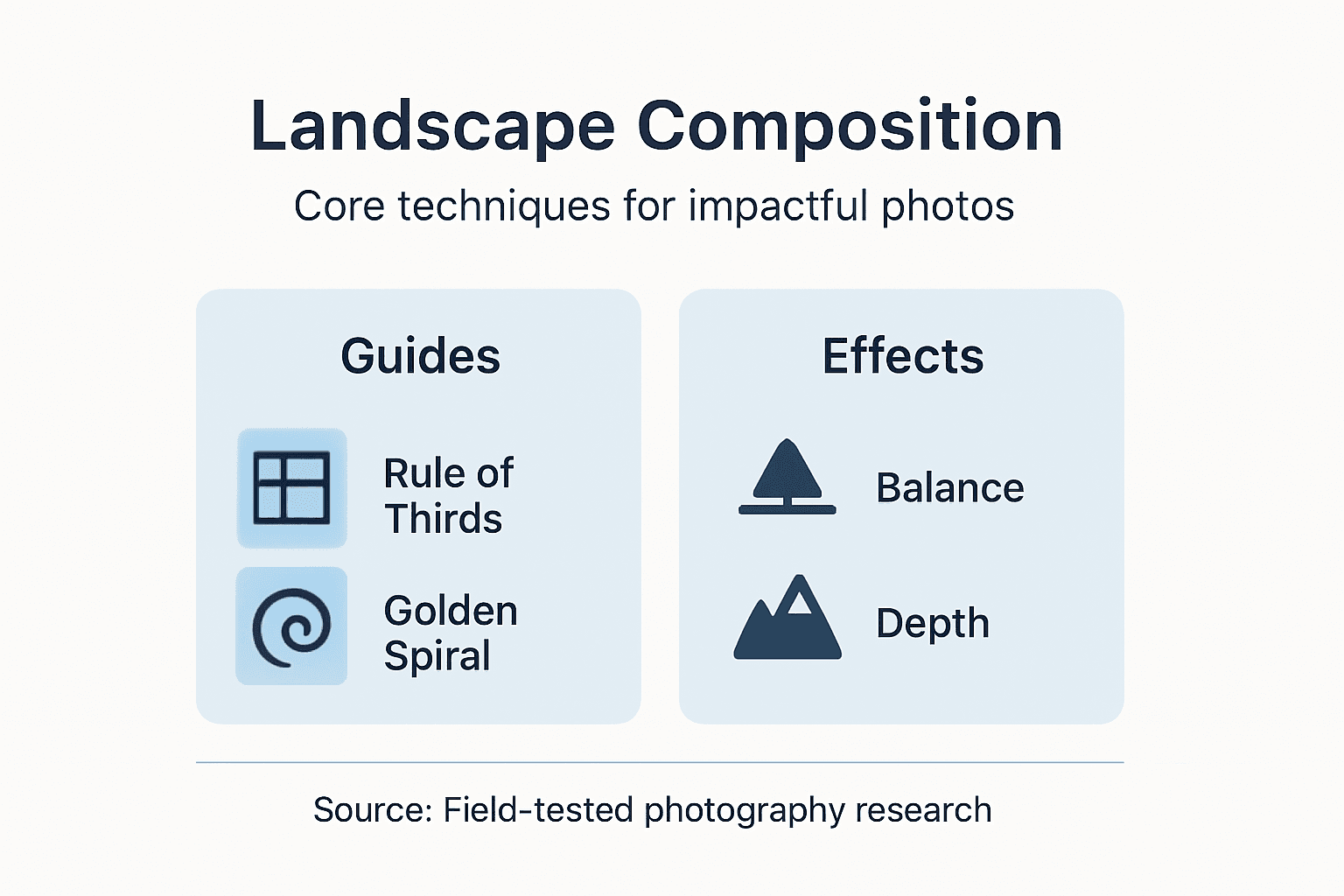
This grid system works because it mirrors how humans naturally scan images. Eyes gravitate toward these intersection points rather than dead center. Positioning a mountain peak at an upper intersection or a lake’s shoreline along the lower horizontal line creates instant balance that feels intuitive.
Pro Tip: Enable your camera’s grid overlay to visualize the rule of thirds for photographers while shooting, but train yourself to see these lines mentally for faster composition.
Alternative frameworks offer fresh perspectives when the standard grid feels limiting. The golden spiral follows natural curves found in shells and galaxies, creating organic flow through your composition. A quadrant system divides the frame into four equal sections, useful for symmetrical landscapes or balanced diptych effects.
Knowing when to break these frameworks separates good photos from memorable ones. A perfectly centered reflection in still water can deliver powerful impact precisely because it violates the rule of thirds. Intentional rule breaking for creative effect demonstrates mastery, not ignorance.
| Technique | Best For | When to Use |
|---|---|---|
| Rule of Thirds | General landscapes | Creating balanced, approachable compositions |
| Golden Spiral | Flowing scenes | Natural curves like rivers or cloud formations |
| Centered Composition | Symmetrical subjects | Reflections, architectural elements, stark minimalism |
| Quadrant Division | Complex scenes | Multiple subjects requiring equal visual weight |
Key flexibility principles:
- Use rule of thirds as your default starting point
- Switch to alternatives when the scene suggests natural patterns
- Break rules deliberately to create tension or emphasize symmetry
- Evaluate each composition based on emotional impact, not rule adherence
Creating Depth through Layering in Composition
Incorporating layered elements draws viewers into the photo, boosting storytelling and immersive quality. Layering transforms flat, two-dimensional images into scenes with tangible depth that viewers can mentally navigate. This technique uses three distinct zones to build dimensional complexity.
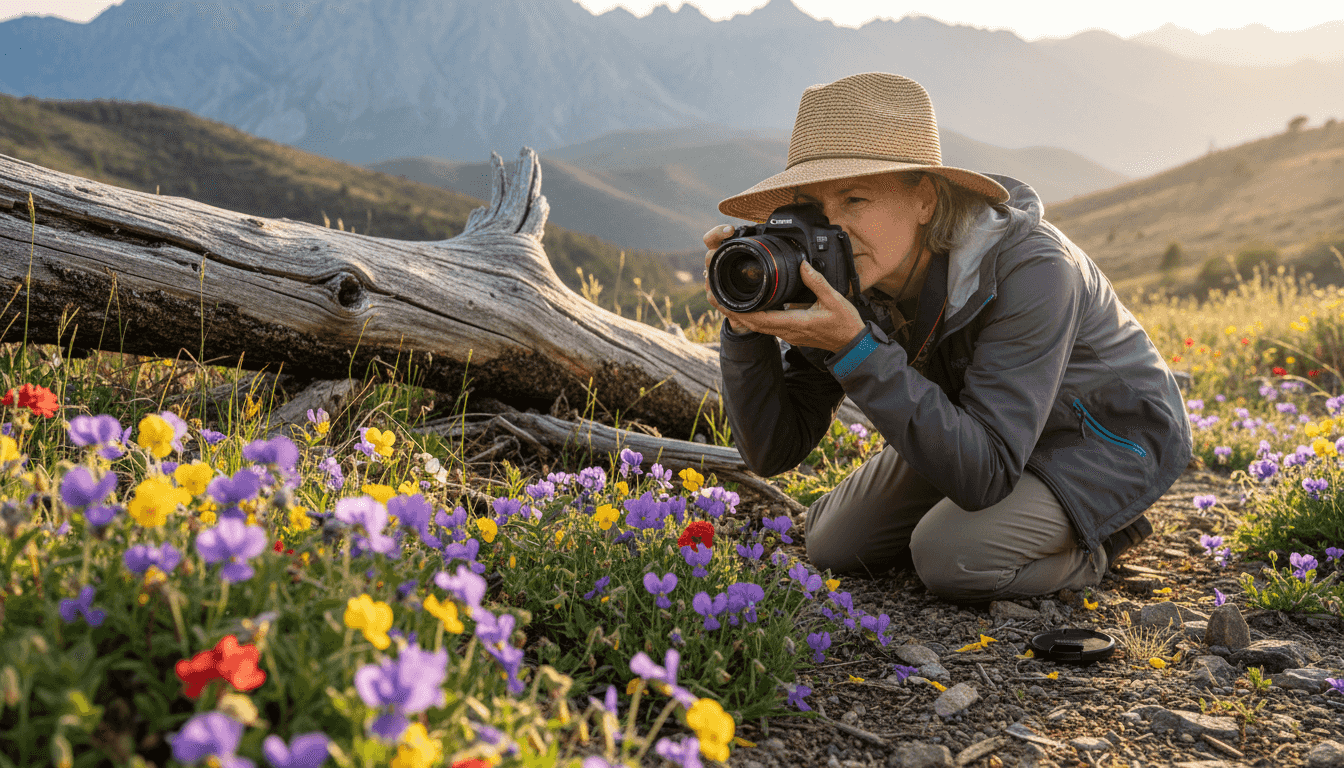
Foreground elements provide an entry point and establish scale. A cluster of wildflowers, textured rocks, or weathered fence posts in the lower portion of your frame invites viewers to step into the scene. These elements anchor the composition and give viewers something immediate to engage with before their eyes travel deeper.
Middleground carries the narrative forward, connecting foreground interest to background grandeur. This zone might feature a winding river, rolling foothills, or a stand of trees that bridge the gap between near and far. The middleground prevents your composition from splitting into disconnected foreground and background sections.
Background elements deliver the payoff, typically featuring your main subject like mountain peaks, dramatic skies, or distant horizons. This layer provides context and scale for everything in front of it. The interplay between all three zones creates a visual journey that mimics how we experience landscapes in person.
Pro Tip: Scout for foreground elements that complement your story rather than compete with it. Look for depth through negative space between layers to prevent visual congestion.
Layering essentials:
- Position foreground elements in lower third for natural entry points
- Use middleground to create visual bridges between near and far
- Ensure each layer contributes unique information to the story
- Adjust aperture to control depth of field across all three zones
Using Leading Lines and Framing Techniques
Natural leading lines like rivers and paths effectively direct viewer attention and create dynamic flow in photos. These visual highways guide eyes through your composition in deliberate patterns, preventing aimless wandering that causes viewers to lose interest. Leading lines transform passive observation into active exploration.
Nature provides abundant leading line opportunities once you train yourself to spot them. Rivers and streams create obvious pathways that pull eyes through multiple zones. Fence lines, stone walls, and hiking trails establish strong linear movement. Even subtle elements like shadows, cloud formations, or rows of trees function as effective guides.
Framing techniques use natural elements to create windows around your main subject. Overhanging tree branches, rock archways, or canyon walls direct attention inward while adding context about the environment. This technique mimics how we naturally focus on interesting elements while remaining aware of surrounding space.
The combination of leading lines in landscape photography with strategic framing creates powerful compositional impact. Lines draw viewers into the frame while frames focus their attention on specific subjects. Together, they establish clear visual hierarchies that prevent confusion about what matters most.
Implementation strategies:
- Position yourself so lines originate near frame corners or edges
- Follow lines to ensure they lead somewhere meaningful, not out of frame
- Use diagonal lines for dynamic energy, horizontal for calm stability
- Combine multiple converging lines to create depth and perspective
- Frame subjects loosely to maintain context without overcrowding
Common Misconceptions About Composition Rules
Strict rule adherence is not required; creative rule breaking leads to higher subjective creativity. Many amateur photographers hesitate to experiment because they believe composition rules are inviolable laws. This mindset stifles creativity and produces generic, forgettable images.
Myth one: The rule of thirds must always be followed. This guideline helps beginners create balanced photos, but centering subjects or using alternative placements often delivers stronger impact. A lone tree perfectly centered against a minimalist sky can evoke isolation more powerfully than off-center placement ever could.
Myth two: Symmetry is required for balance. Visual weight and balance come from many sources beyond perfect symmetry. A small, bright element on one side can balance a larger, darker mass on the other. Color intensity, texture complexity, and subject importance all contribute to perceived balance.
Myth three: Good composition equals strict rules. The best landscape photographers understand rules thoroughly, then break them intentionally to serve their creative vision. Rules provide a foundation, but emotional impact and storytelling trump technical adherence every time.
Flexibility encourages you to respond authentically to each unique scene rather than forcing every landscape into the same compositional template. Your common composition misconceptions often stem from treating guidelines as absolute requirements instead of flexible tools.
Freeing perspectives:
- Use rules as starting points, not final destinations
- Evaluate compositions based on emotional impact first
- Trust your instincts when a scene demands unconventional framing
- Study rule-breaking work from master photographers for inspiration
Interaction of Light and Composition
Photographs taken during golden hour show up to 70% more viewer engagement in online platforms. Light transforms compositional elements from good to extraordinary, adding dimension, mood, and visual interest that flat midday light cannot match. Understanding how light interacts with composition multiplies your creative options.
Golden hour occurs during the first hour after sunrise and the last hour before sunset. The sun’s low angle creates long shadows that emphasize texture and depth in foreground elements. Warm, directional light bathes landscapes in rich tones that enhance color saturation and emotional warmth. This quality of light makes compositional elements pop with three-dimensional presence.
Blue hour, the twilight period before sunrise and after sunset, offers cooler tones and soft, even illumination. This light works beautifully for minimalist compositions where subtle gradations matter more than dramatic contrast. The diffused quality reduces harsh shadows while maintaining enough definition to preserve compositional structure.
Weather conditions interact with time of day to create infinite lighting variations. Overcast skies provide natural softbox lighting that works well for detailed foreground elements and waterfalls. Storm light delivers dramatic contrast with dark clouds and breakthrough sun rays that add theatrical impact. Each condition suggests different compositional approaches.
70% More Engagement: Leveraging golden hour benefits during shoots dramatically increases how viewers interact with your landscape photos across social platforms and galleries.
Light and composition synergy:
- Plan shoots around golden hour for maximum compositional impact
- Use sidelighting to emphasize texture in foreground layers
- Backlight subjects for rim lighting and atmospheric depth
- Adapt composition to available light rather than fighting conditions
Practical Application of Composition Techniques
Using a camera grid overlay and scouting for optimal light can significantly improve compositional quality in the field. Theory means nothing without practical application, so here’s a step-by-step workflow for implementing composition techniques during actual shoots.
Workflow for better composition:
- Observe the scene for five minutes before shooting. Identify potential subjects, natural lines, and layering opportunities.
- Apply rule of thirds positioning. Place your main subject at grid intersections as a starting baseline.
- Add depth layers. Find foreground interest, establish middleground connections, and frame background elements.
- Incorporate leading lines. Position yourself so natural lines guide viewers through all three depth zones.
- Check visual balance. Ensure no single area overwhelms the frame with excessive weight or attention.
- Experiment with alternatives. Try centered composition, different perspectives, and rule-breaking approaches.
Pro Tip: Scout locations in advance when possible. Visit during different lighting conditions to understand how time and weather affect practical composition tips you can implement.
Patience dramatically improves field results. Wait for clouds to move into ideal positions, for wind to calm water surfaces, or for wildlife to enter your carefully composed frame. The difference between acceptable and exceptional often comes down to waiting 20 extra minutes for perfect conditions.
Enable your camera’s grid overlay to visualize rule of thirds lines while composing. This training tool helps you internalize proper placement until you can judge it naturally. Most cameras offer grid options in display settings that won’t appear in final images.
Perspective and focal length refinements matter more than many amateurs realize. Moving three feet left or right, lowering your tripod six inches, or switching from 24mm to 70mm can transform mediocre composition into stunning landscape photo tips that grab attention.
| Technique | Field Application | Expected Outcome |
|---|---|---|
| Grid Overlay | Enable in camera settings before shoot | Faster, more accurate subject placement |
| Location Scouting | Visit 1-2 hours before golden hour | Identify best vantage points and compositions |
| Perspective Shifts | Move position 5-10 times per scene | Find optimal angle for depth and interest |
| Focal Length Tests | Shoot same composition at 3+ focal lengths | Discover which compression serves story best |
Summary and Next Steps for Improved Photography
Mastering landscape composition transforms how you see and capture the natural world. The foundational principles of balance, simplicity, and visual flow provide the framework for all effective compositions. Core techniques like rule of thirds, layering, and leading lines give you practical tools to implement these principles in the field.
Remember that composition rules serve as guidelines, not restrictions. Break them intentionally when your creative vision demands it. The 70% engagement boost from golden hour shooting and the 40% improvement from systematic composition study demonstrate real, measurable benefits from applying these techniques consistently.
Next steps for growth:
- Practice one technique per shooting session until it becomes intuitive
- Review your photos critically to identify what works and what doesn’t
- Study landscape work from photographers you admire for inspiration
- Experiment fearlessly with rule breaking once you understand the fundamentals
Continuous practice and reflection turn technical knowledge into artistic instinct. Each shooting session builds your compositional vocabulary, making it easier to recognize and capture compelling scenes quickly. Apply these lessons in diverse landscape settings to develop versatility and confidence.
Explore More Photography Resources to Elevate Your Skills
Ready to take your photography beyond composition basics? Our beginner’s photography guide addresses the most common camera mistakes holding amateurs back from consistent results. You’ll discover fixes for exposure problems, focus issues, and technical errors that undermine even well-composed shots.

Building strong essential photography habits reinforces the composition skills you’ve learned here. Our habit-building resources help you establish routines for regular practice, systematic improvement, and creative experimentation. Visit Amateur Photographer Guide homepage to explore comprehensive tutorials, gear reviews, and shooting tips tailored specifically for amateur photographers pursuing landscape excellence.
Frequently Asked Questions
How strictly should I follow composition rules when starting out?
Use the rule of thirds guide as your foundation for the first few months. Once you consistently create balanced, engaging photos using standard guidelines, start experimenting with intentional rule breaking. Mastering fundamentals first gives you the knowledge to break rules effectively rather than randomly.
What’s the best time of day for landscape composition?
Golden hour, the first and last hour of sunlight each day, provides optimal conditions for dramatic landscape composition. The warm, directional light enhances depth, texture, and color saturation in ways that midday sun cannot match. Blue hour works beautifully for minimalist compositions requiring subtle tonal gradations.
How do I handle cluttered landscape scenes with too many elements?
Simplify through selective framing and strategic positioning. Move closer to isolate specific subjects, use a longer focal length to compress and exclude distractions, or wait for better conditions like fog that naturally obscures busy backgrounds. Sometimes the best composition means shooting a smaller portion of the scene rather than trying to include everything.
Can I practice composition skills without traveling to scenic locations?
Absolutely. Local parks, urban landscapes, and even your backyard offer endless composition practice opportunities. The principles of layering, leading lines, and balanced framing apply universally. Practicing nearby locations builds skills you’ll apply automatically when you do reach dramatic destinations.
How long does it take to see improvement in my landscape photos?
Most photographers notice measurable improvement within 4-6 weeks of deliberate practice. Shoot regularly, review your work critically after each session, and focus on implementing one new technique at a time. Systematic study and application accelerate learning far more than random shooting without reflection.