
Table of Contents
- Key Takeaways
- Introduction to the Rule of Thirds
- How the Rule of Thirds Influences Viewer Perception
- Common Misconceptions and Mistakes
- Comparing the Rule of Thirds to Other Composition Techniques
- Practical Application: Using the Rule of Thirds in Filming
- Case Studies from Classic and Modern Films
- Conclusion: Beyond the Rule of Thirds
- Explore More Photography Guides to Enhance Your Skills
- Frequently Asked Questions
- Recommended
This blog post may contain affiliate links. As an Amazon Associate I earn from qualifying purchases.
You’ve probably heard the rule of thirds called a golden rule of composition, but here’s the truth: it’s not an unbreakable law. Many beginners think they must follow it rigidly, which stifles creativity. Understanding how to use the rule of thirds flexibly transforms your filmmaking, helping you create balanced, engaging shots that tell better stories. Let’s explore how this simple grid can elevate your work when you master its true purpose.
Key Takeaways
| Point | Details |
|---|---|
| Visualize the 3×3 grid | Divide your frame into nine equal parts with two horizontal and two vertical lines, placing key subjects at intersections. |
| Boosts engagement | Applying the rule of thirds improves viewer engagement by creating natural focal points that guide eye movement. |
| Flexible, not rigid | The rule serves as a creative guide, not a mandate, allowing you to break it intentionally for emotional impact. |
| Common mistakes | 70% of beginners initially misunderstand it as strict, leading to formulaic shots and inhibited creativity. |
| Combine techniques | Mixing the rule of thirds with leading lines, symmetry, and other methods enriches your visual storytelling. |
Introduction to the Rule of Thirds
The rule of thirds is a compositional technique that divides a frame into nine equal parts using two equally spaced horizontal and vertical lines. This creates a 3×3 grid that helps you position key visual elements at intersections or along these lines, generating balance and visual interest. It’s not unique to film; painters, photographers, and designers have used this principle for centuries.
When you place subjects near these intersections rather than dead center, you create dynamic compositions that feel more natural to the human eye. Your brain naturally seeks these points when scanning an image, making them ideal spots for important elements like a character’s eyes, a horizon, or a crucial object. This approach prevents static, boring frames that lack energy.
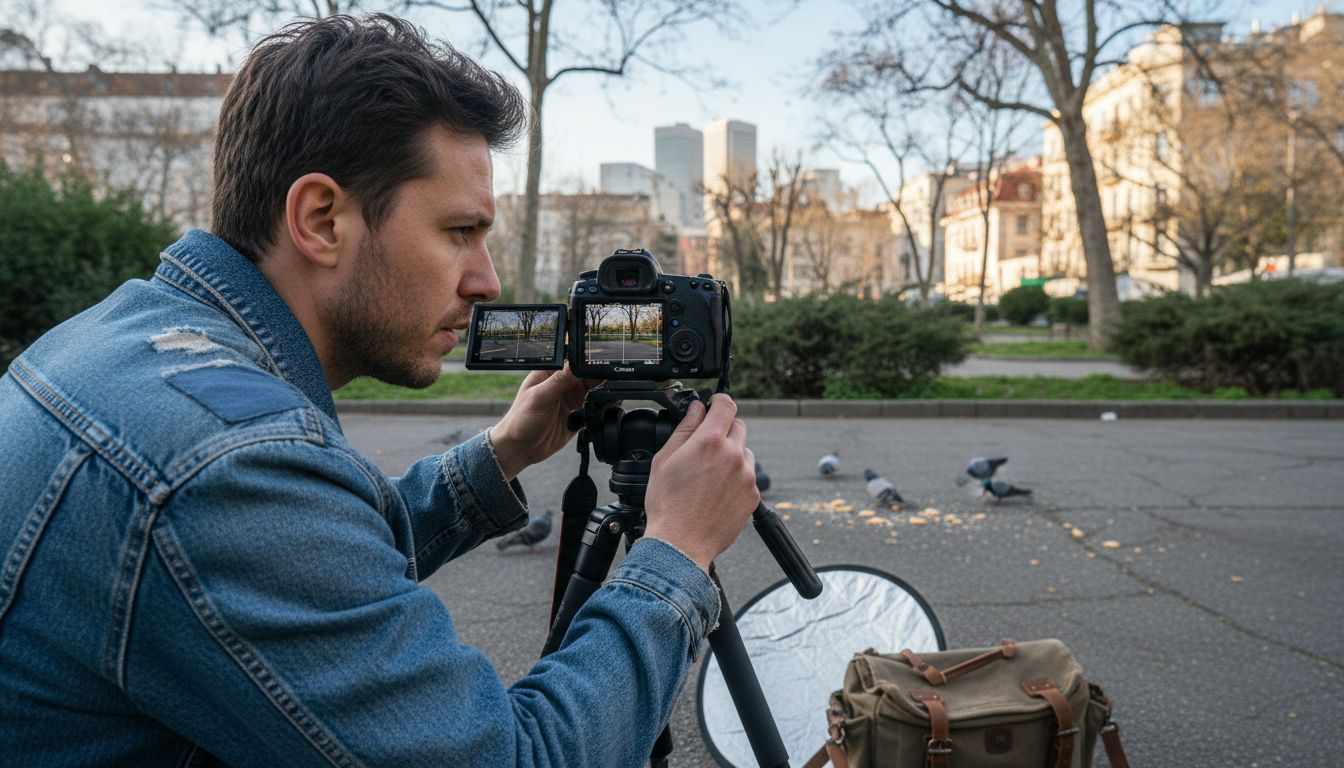
Many modern cameras and editing software include grid overlays that display these lines directly on your viewfinder or screen. These tools make visualizing the rule effortless, especially when you’re just starting out. You can toggle them on during shooting to train your eye, then gradually rely on intuition as you gain experience.
Key applications of the rule of thirds:
- Position characters’ eyes along the upper horizontal line to create natural headroom
- Align horizons with top or bottom thirds to emphasize sky or foreground
- Place moving subjects slightly off center, with space in their direction of travel
- Use intersections for multiple subjects to balance complex scenes
“The beauty of the rule of thirds lies in its simplicity. It gives beginners a reliable framework while leaving room for creative interpretation as skills develop.”
Understanding how the rule of thirds works gives you a foundation to build better compositions. But knowing the grid is just the start. What truly matters is understanding why it works psychologically.
How the Rule of Thirds Influences Viewer Perception
Your audience’s eyes don’t wander randomly across the screen. They follow predictable patterns, and the rule of thirds taps into these natural tendencies. When you position important elements at intersection points, you create focal points that draw attention immediately. This guides viewers exactly where you want them to look.
Research shows that applying the rule of thirds improves viewer engagement with subjects by up to 25%. That’s because balanced but asymmetric compositions feel more dynamic than centered subjects. Your brain finds perfect symmetry less interesting because it requires less processing. Off center placement creates visual tension that keeps viewers engaged.
This technique also supports clearer storytelling. When you consistently place characters along the thirds, you establish visual rhythms that help audiences track relationships and importance. A villain positioned on the left third facing a hero on the right third immediately communicates opposition. The empty space between them amplifies tension.
Psychological effects of thirds based composition:
- Creates natural eye flow from one element to another
- Generates visual breathing room that prevents claustrophobic framing
- Establishes hierarchy by positioning primary subjects at strongest intersections
- Builds anticipation through directional space and implied movement
The visual impact of the rule of thirds extends beyond single frames. When you apply it consistently throughout a scene, you create cohesive visual language that feels professional and intentional. Viewers may not consciously notice the technique, but they’ll sense the improved quality.
“Composition isn’t about following rules blindly. It’s about understanding how visual elements guide emotion and attention, then using that knowledge purposefully.”
Balance matters more than perfection. You’re creating dynamic frames that serve your story, not mathematical exercises. That’s why understanding common mistakes helps you avoid falling into rigid patterns.
Common Misconceptions and Mistakes
The biggest misconception about the rule of thirds is treating it as law rather than guidance. A survey indicated 70% of beginner filmmakers initially misunderstand the rule as an absolute requirement, which leads to inhibited creativity and repetitive compositions. This rigid thinking produces formulaic shots that lack personality.
Overusing the rule creates another problem. When every single frame follows the same grid, your work becomes predictable. Audiences subconsciously recognize patterns, and too much consistency breeds visual boredom. You need variety to maintain engagement, which sometimes means centering subjects or using entirely different compositional approaches.
Many beginners also assume centering subjects always weakens composition. That’s false. Symmetrical framing works beautifully for certain emotional tones, particularly when you want to convey stability, power, or surreal qualities. Expert cinematographers advise breaking the rule intentionally to create specific emotional effects that serve the narrative.
Common beginner errors with the rule of thirds:
- Placing subjects at intersections without considering context or story needs
- Ignoring background elements that distract from the intended focal point
- Using the grid mechanically without adjusting for movement or scene dynamics
- Forgetting that vertical alignment matters as much as horizontal positioning
Pro Tip: Start each shot by asking what emotion or information you need to convey, then choose your composition based on that goal. The rule of thirds should support your intention, not dictate it.
Statistic: 70% of amateur filmmakers initially treat the rule as mandatory, limiting their creative exploration and resulting in cookie cutter framing choices.
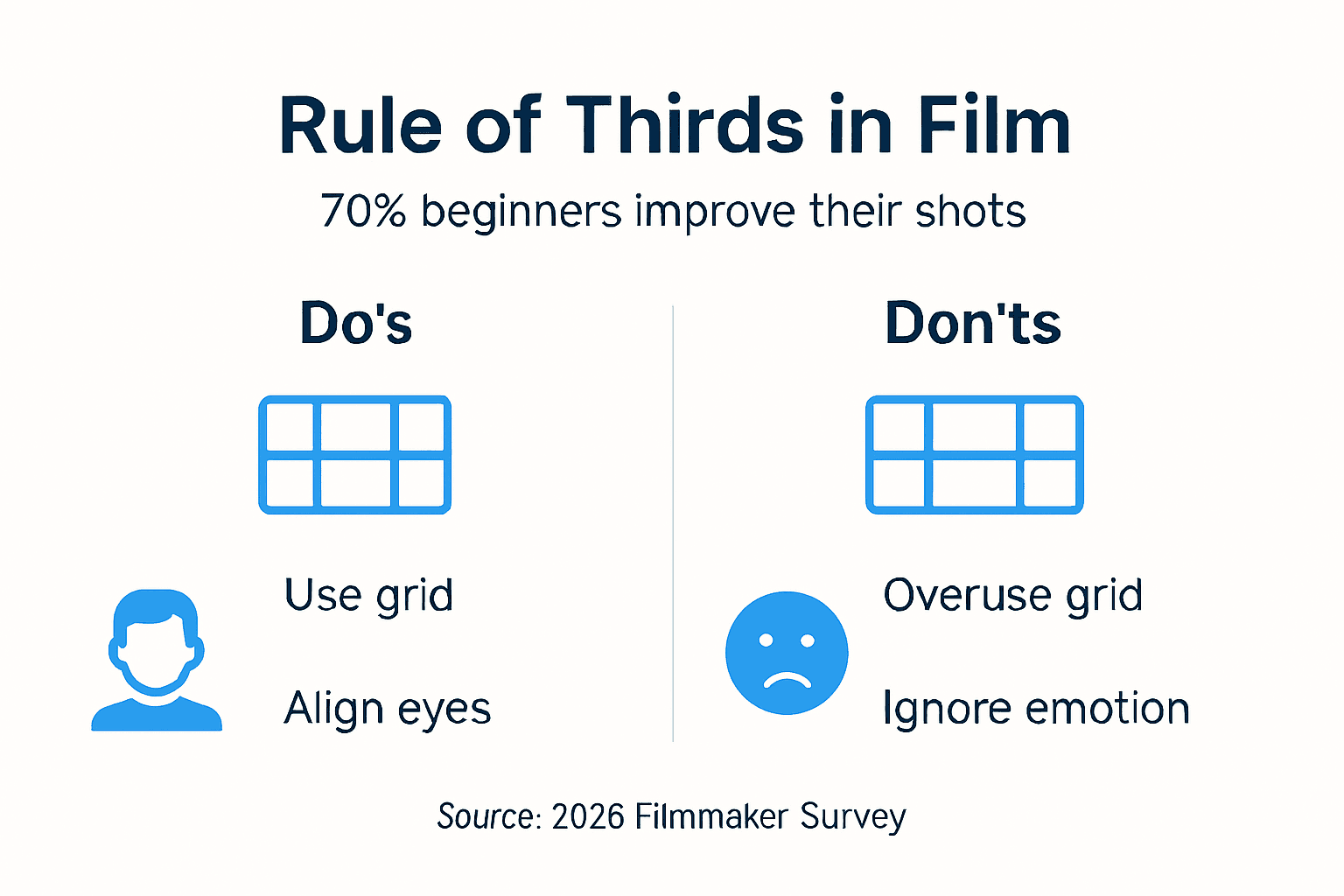
The rule serves as training wheels. Once you understand why it works, you can confidently decide when to apply it and when to ignore it. Avoiding common composition mistakes requires understanding the principles behind techniques, not just memorizing patterns. That flexibility separates competent filmmakers from exceptional ones.
Comparing the Rule of Thirds to Other Composition Techniques
The rule of thirds isn’t your only compositional tool. Leading lines, symmetry, and the golden ratio each offer different strengths depending on your creative goals. Understanding how these techniques compare helps you choose the right approach for each shot.
Leading lines use natural or constructed elements like roads, fences, or architectural features to guide the viewer’s eye toward your subject. They create depth and movement, pulling attention through the frame dynamically. The rule of thirds often works alongside leading lines, with the lines converging at intersection points.
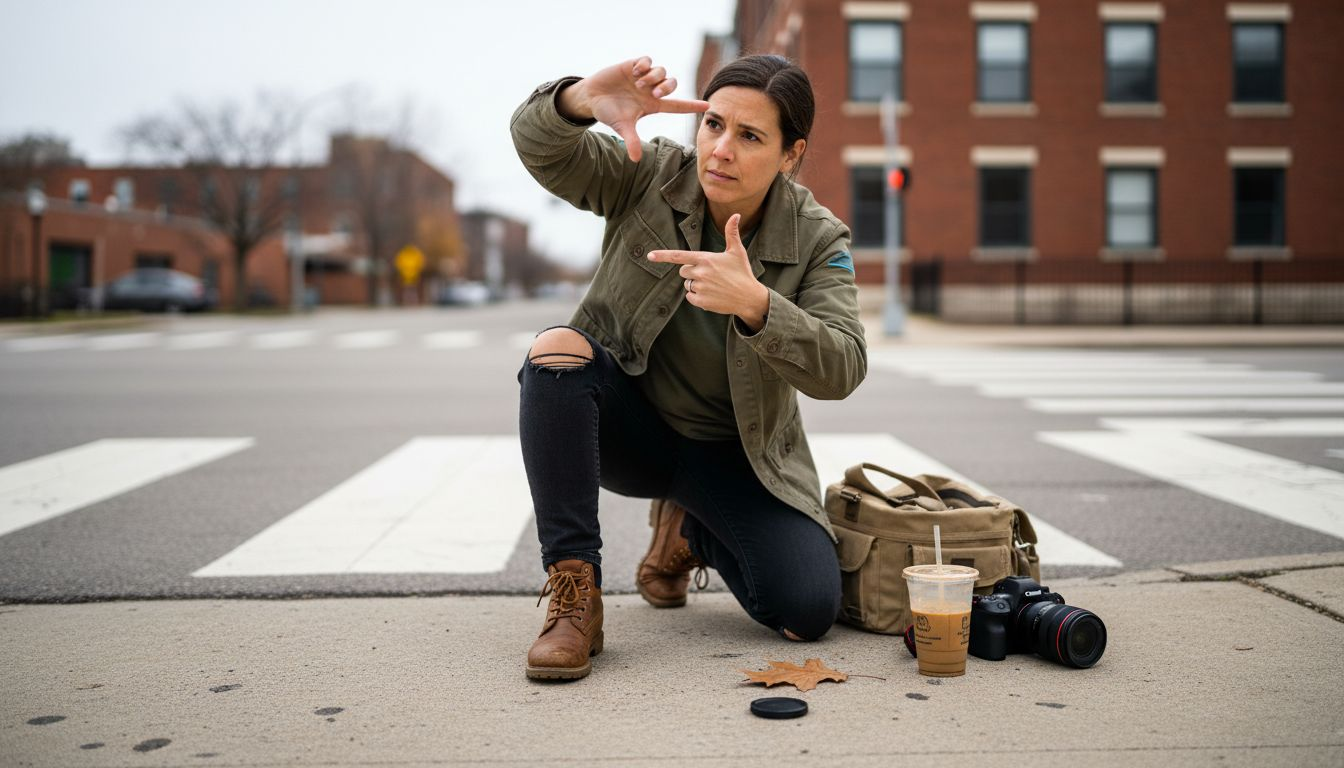
Symmetry takes the opposite approach, centering subjects and creating mirror images across vertical or horizontal axes. This technique conveys balance, formality, or surreal beauty. Wes Anderson frequently uses perfect symmetry to establish his distinctive quirky aesthetic, proving that centered compositions can be just as powerful as off center ones.
The golden ratio offers a more mathematically precise version of the rule of thirds, using a 1:1.618 ratio that appears throughout nature. It creates slightly different intersection points that some find more aesthetically pleasing, though the difference is subtle in practical application.
| Technique | Strengths | Best Used For | Limitations |
|---|---|---|---|
| Rule of Thirds | Easy to learn, versatile, creates natural balance | General scenes, portraits, landscapes | Can feel formulaic if overused |
| Leading Lines | Adds depth, guides eye movement dynamically | Action sequences, establishing shots | Requires appropriate environmental elements |
| Symmetry | Conveys stability, formality, distinctive style | Architectural shots, stylized narratives | Can feel static or rigid |
| Golden Ratio | Mathematically precise, naturally pleasing | Fine art filmmaking, detailed compositions | More complex to calculate and apply |
When to combine techniques:
- Use thirds for subject placement while leading lines guide viewers to that point
- Break symmetry with thirds based elements to add subtle tension
- Apply golden ratio for primary subject, thirds for secondary elements
Mastering multiple composition techniques expands your creative vocabulary. You’ll instinctively know which tool serves each moment best. The rule of thirds remains valuable because it’s simple and effective, making it an ideal starting point before exploring more complex methods.
Practical Application: Using the Rule of Thirds in Filming
Ready to put theory into practice? Start by enabling the grid overlay on your camera. Most modern devices include this feature in settings, displaying the nine section grid directly on your viewfinder or screen. This visual guide helps you position elements accurately while shooting.
Step by step application:
- Activate your camera’s grid overlay in the display settings menu to visualize the thirds lines.
- Position your primary subject near one of the four intersection points rather than dead center.
- Align horizontal elements like horizons or tables along the top or bottom horizontal line.
- Check background elements to ensure they don’t compete with your main subject for attention.
- Leave directional space when subjects are moving or looking toward one side of the frame.
- Review and adjust by checking if the composition feels balanced and supports your story.
Step by step guides that position the horizon line along a horizontal third improve framing balance and reduce headroom or footroom errors in amateur film shots. This simple adjustment prevents awkward compositions where too much empty space sits above a subject’s head or below their feet.
When filming people, align eyes along the upper horizontal third line. This creates natural looking headroom and draws viewers to the most expressive part of the face. For landscapes, decide whether sky or foreground deserves emphasis, then place your horizon accordingly.
Pro Tip: Practice with static subjects first, like still life setups or stationary landscapes. Once you’re comfortable, move to dynamic scenes with movement and multiple subjects.
Don’t obsess over perfect alignment. Being close to the intersection points works fine. The goal is creating balanced, interesting compositions, not achieving mathematical precision. Your story and emotional intent should always take priority over rigid adherence to the grid.
As you gain confidence, you’ll internalize the grid and compose intuitively without the overlay. This natural feel comes from practice and understanding practical photography fundamentals. You might even find yourself combining the rule with techniques you learned while changing film in your camera, applying multiple skills simultaneously.
Case Studies from Classic and Modern Films
Examining how master filmmakers use the rule of thirds reveals its flexibility and power. These examples show the technique enhancing storytelling rather than constraining it.
Wes Anderson builds his signature aesthetic partly through precise compositional control. He often uses symmetrical framing that centers subjects, but within those frames, he applies thirds based positioning for secondary elements. In “The Grand Budapest Hotel,” characters frequently occupy the vertical center while props and architectural details align with intersection points, creating layered compositions that feel both balanced and quirky.
Alfred Hitchcock mastered using the rule of thirds to build suspense. In “Vertigo,” he consistently positioned James Stewart’s character along the right third while leaving empty space on the left, creating visual unease that mirrored the protagonist’s psychological state. This asymmetric framing made audiences feel the character’s instability without explicitly showing it.
What these examples teach:
- Thirds based positioning works even within symmetrical overall framing
- Consistent compositional choices throughout a film build distinctive visual language
- The rule serves emotional and narrative goals, not just aesthetic ones
- Breaking the rule deliberately creates specific effects like discomfort or isolation
Modern cinematographers continue exploring creative applications. Roger Deakins often positions characters at intersection points during dialogue scenes, using the empty space to suggest emotional distance or connection between speakers. Emmanuel Lubezki combines the rule with natural lighting and movement to create fluid, organic compositions that feel unstaged.
These filmmakers demonstrate that the rule of thirds isn’t a beginner’s crutch. It’s a fundamental tool that remains relevant at every skill level when applied thoughtfully and flexibly.
Conclusion: Beyond the Rule of Thirds
The rule of thirds gives you a solid compositional foundation, but it’s just the beginning of your visual storytelling journey. Think of it as a launching point, not a limitation. As you grow more confident, you’ll naturally start breaking the rule when it serves your creative vision.
What matters most is intention. Every compositional choice should support your story’s emotional tone and narrative needs. Sometimes that means placing your subject perfectly at an intersection. Other times it means centering them, using symmetry, or creating deliberately unbalanced frames that generate tension.
Combining the rule of thirds with other techniques creates richer, more sophisticated visuals. Leading lines can guide viewers to your thirds based focal points. Symmetry can provide structure while thirds add subtle dynamism. Experiment freely, understanding that rules exist to be understood, applied thoughtfully, and occasionally broken with purpose.
Pro Tip: Watch films you admire with the rule of thirds in mind. Notice when filmmakers use it and when they deliberately ignore it. This active observation trains your eye faster than any tutorial.
Your unique visual style emerges from understanding principles deeply enough to make informed choices. Master the basics, then push beyond them. The rule of thirds is your foundation; creativity is what you build on top of it.
Explore More Photography Guides to Enhance Your Skills
You’ve learned how composition shapes compelling visuals. Now take the next step in your photography journey. Our beginner’s photography guide helps you fix common camera mistakes that undermine even well composed shots.

Building strong photography habits transforms technical knowledge into consistent results. Whether you’re shooting film or digital, composition works alongside exposure, focus, and timing to create memorable images. Visit Amateur Photographer Guide to explore tutorials, gear recommendations, and inspiration that support your growth from beginner to confident creator.
Frequently Asked Questions
Is the rule of thirds always necessary in film?
No, the rule of thirds is a guideline, not a requirement. Many powerful shots use centered subjects, symmetry, or other compositional approaches. Apply it when it enhances your story, but feel free to break it deliberately for specific emotional effects or creative purposes.
How do I know when to break the rule of thirds?
Break the rule when your story demands it. Use centered framing for stability or formality, extreme off center positioning for unease, or symmetry for stylized aesthetics. Ask what emotion or information each shot needs to convey, then choose the composition that best achieves that goal.
Can I center subjects sometimes instead of using the thirds?
Absolutely. Centered subjects work beautifully for portraits emphasizing symmetry, establishing power dynamics, or creating distinctive visual styles. Many acclaimed filmmakers deliberately center subjects to achieve specific tones that off center framing wouldn’t provide.
What tools help me visualize the rule of thirds on my camera?
Most modern cameras and smartphones include built in grid overlays in display settings. Enable this feature to see the 3×3 grid directly on your viewfinder or screen while shooting. Some editing software also displays grids during post production for composition analysis.
How can I practice using the rule of thirds effectively?
Start with static subjects like still life arrangements or landscapes where you can take time positioning elements. Enable your camera’s grid overlay and consciously place key subjects at intersection points. Review your shots critically, then gradually progress to dynamic scenes with movement as your eye develops intuition.
Recommended
- The Rule Of Thirds Explained: A Photographer’s Ultimate Guide – Amateur Photographer Guide
- Rule of Thirds Explained: Composition for Photographers – Amateur Photographer Guide
- 7 Creative Photography Resolutions Ideas for Beginners – Amateur Photographer Guide
- 7 Creative Photography Resolutions Ideas for Beginners – Amateur Photographer Guide